
Corporate Wellness Market
Report ID: SQMIG35D2337
Report ID: SQMIG35D2337
[email protected]
USA +1 351-333-4748
Report ID:
SQMIG35D2337 |
Region:
Global |
Published Date: December, 2025
Pages:
198
|Tables:
118
|Figures:
72


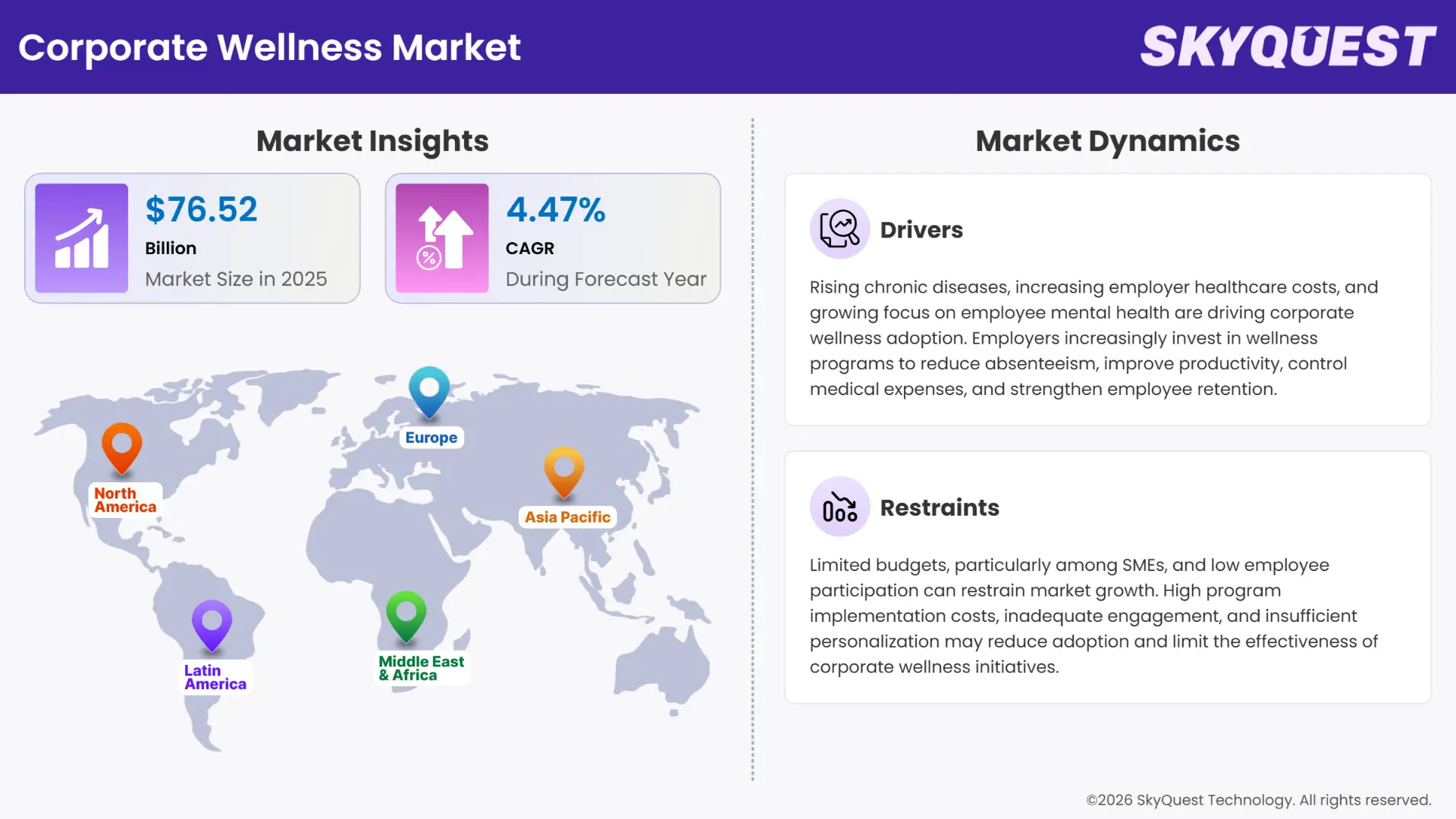
Global Corporate Wellness Market size was valued at USD 73.25 Billion in 2024 and is poised to grow from USD 76.52 Billion in 2025 to USD 108.58 Billion by 2033, growing at a CAGR of 4.47% during the forecast period (2026–2033).
Key Takeaways: Market Trends & Insights
As the market undergoes structural changes, employers are implementing a more thorough and technologically sophisticated wellness model. This shift is being driven by a growing understanding of the link between mental exhaustion, chronic stress, and burnout and the demands of modern work, particularly in remote and hybrid environments. Companies are rethinking wellness as a multidimensional idea and integrating mental health, emotional well-being, sleep quality, social connectivity, and nutrition into integrated programs. As they allow businesses to reach employees in different locations and tailor support to their unique needs and job profiles, virtual delivery formats are growing in popularity.
Accordingly, Ingenovis Health hosted the ACT on Health Virtual Wellness Symposium in February 2025, specifically for healthcare professionals. Important facets of wellness were covered through interactive discussions, expert-led sessions, and virtual workshops on topics like sleep, nutrition, emotional health, and mindful movement.
In addition, the growing incidence of chronic diseases like diabetes, heart disease, and obesity is another significant issue at work. As lifestyle choices are frequently linked to preventive wellness, workplace programs are crucial.
Is Personalized Mental Health Support the Future of Corporate Wellness?
In the corporate wellness sector, one significant technological development has been that of AI-based mental health platforms. These platforms utilize machine learning to develop wellness strategies; track employee mood over time; and implement on-demand support. In February 2024, Lyra Health announced the launch of a new AI-based platform that provides real-time mental health triage and connects employees with various online resources or a licensed therapist.
By mid-2025, many Fortune 500 companies including Salesforce and others, were already utilizing Lyra's platform to improve employee wellness and lessen employee burnout. While these technologies facilitate accessibility and help companies and employees to actively reduce levels of employee stress (improving productivity, satisfaction, and retention) through their early intervention strategies and ongoing data-driven wellness monitoring, these platforms also allow companies to incorporate mental health support in a more timely, deliberate, and visible fashion than traditional models.
To get more insights on this market click here to Request a Free Sample Report
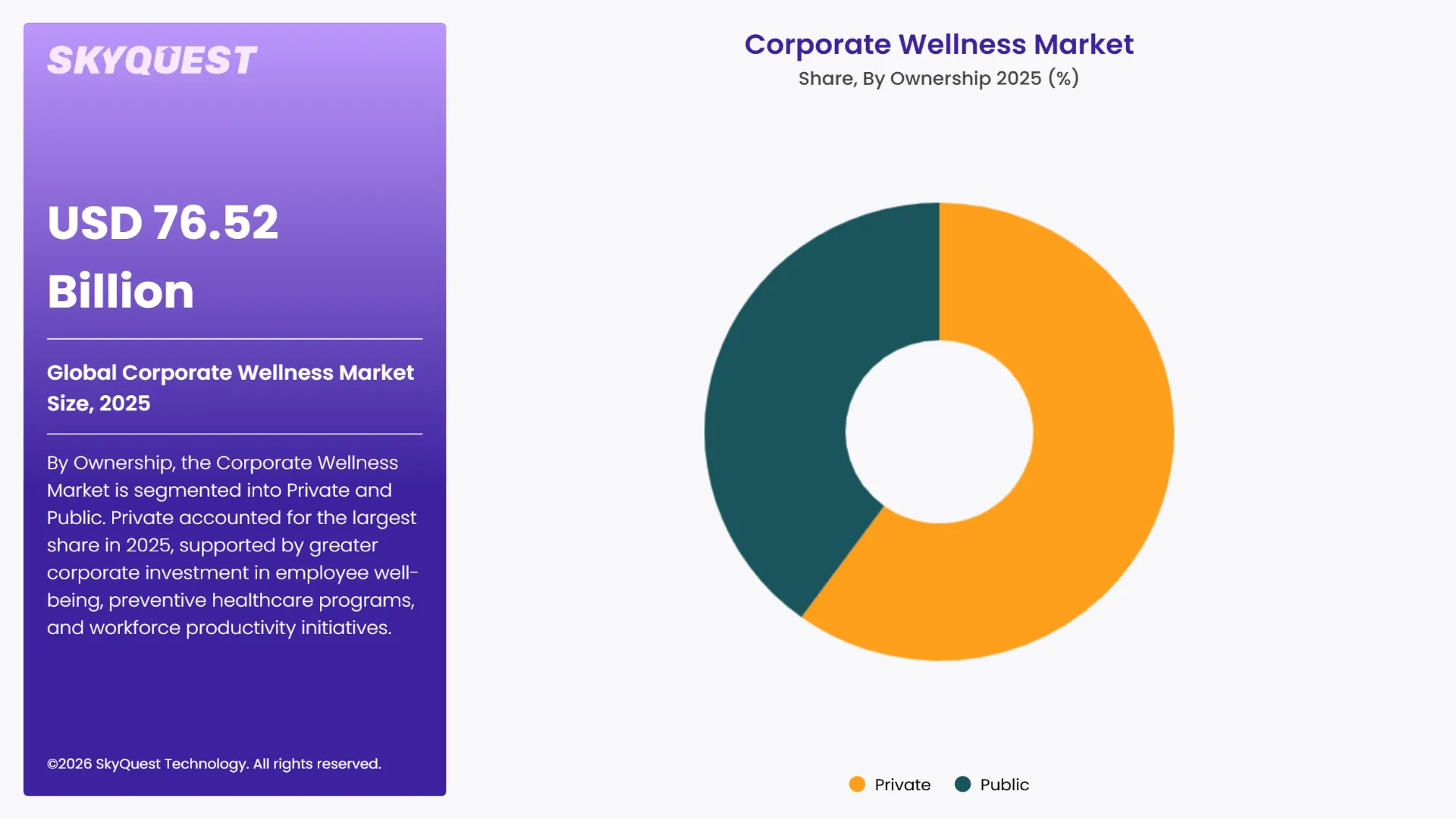
The global corporate wellness market is segmented into service type, delivery model, end user, ownership, and region. By service type, the market is classified into health risk assessment, fitness & nutrition programs, stress management, smoking cessation, and mental & behavioral health management. Depending on delivery model, it is divided into on-site, off-site/virtual, and hybrid. According to end users, the market is categorized into large organizations, small & medium organizations, and the public sector. As per the ownership, it is bifurcated into in-house managed programs and outsourced vendor-managed programs. Regionally, it is analyzed across North America, Europe, Asia-Pacific, Latin America, and the Middle East and Africa.
As per the 2024 corporate wellness market analysis, the health risk assessment held a 26.0% market share in corporate wellness, serving as the diagnostic foundation that guides follow-up interventions. Predictive analytics is based on longitudinal datasets generated by repeated assessments, which help employers better stratify risk and allocate resources. In the corporate wellness market, integrated dashboards, which display wearable data, claims data, and screening results in one view, are growing in popularity. Vendors respond by enhancing interoperability, ensuring that screening results can start automated care pathways such as weight-management coaching or diabetes counseling. Big employers stress that screenings with a smooth integration into broader wellbeing ecosystems, as opposed to standalone events, have a quicker time-to-value.
With a 7.2% CAGR through 2032, the stress management category is predicted to expand at the fastest rate among service lines. The corporate wellness market views mental wellness as the next frontier of productivity due to mounting evidence that unmanaged stress is linked to burnout and turnover. By integrating cognitive-behavioral content, real-time heart-rate variability feedback, and mindfulness exercises, emerging solutions provide a comprehensive toolkit that appeals to a range of employee segments. It has been demonstrated that gamified challenges that provide incentives for consistent journaling or meditation practice are more engaging than didactic e-learning modules. Employers claim that adding stress management strategies to leadership development programs normalizes conversations about mental health, eradicating cultural stigmas, and broadening the program's appeal.
As per the 2024 corporate wellness market forecast, outsourced vendor-managed programs are outperforming in-house models because they offer turnkey expertise and advanced analytics that few employers can replicate internally. By bringing carefully curated networks of clinicians, dietitians, and behavioral scientists, specialist vendors shorten administrative overhead and speed up roll-out timelines. The real-time dashboards that embedded reporting modules provide, which link participation to cost savings, are a feature that appeals to finance stakeholders.
In-house programs continue to be beneficial for organizations that prioritize cultural alignment and proprietary data control. These employers typically stick to their plan when co-sourcing specialized services where outside expertise yields better results, such as metabolic testing or telepsychology. With hybrid ownership structures, businesses can capitalize on vendor innovation while safeguarding their brand identity.
To get detailed segments analysis, Request a Free Sample Report
How are Real-Time Wellness Tools Gaining Ground in North America?
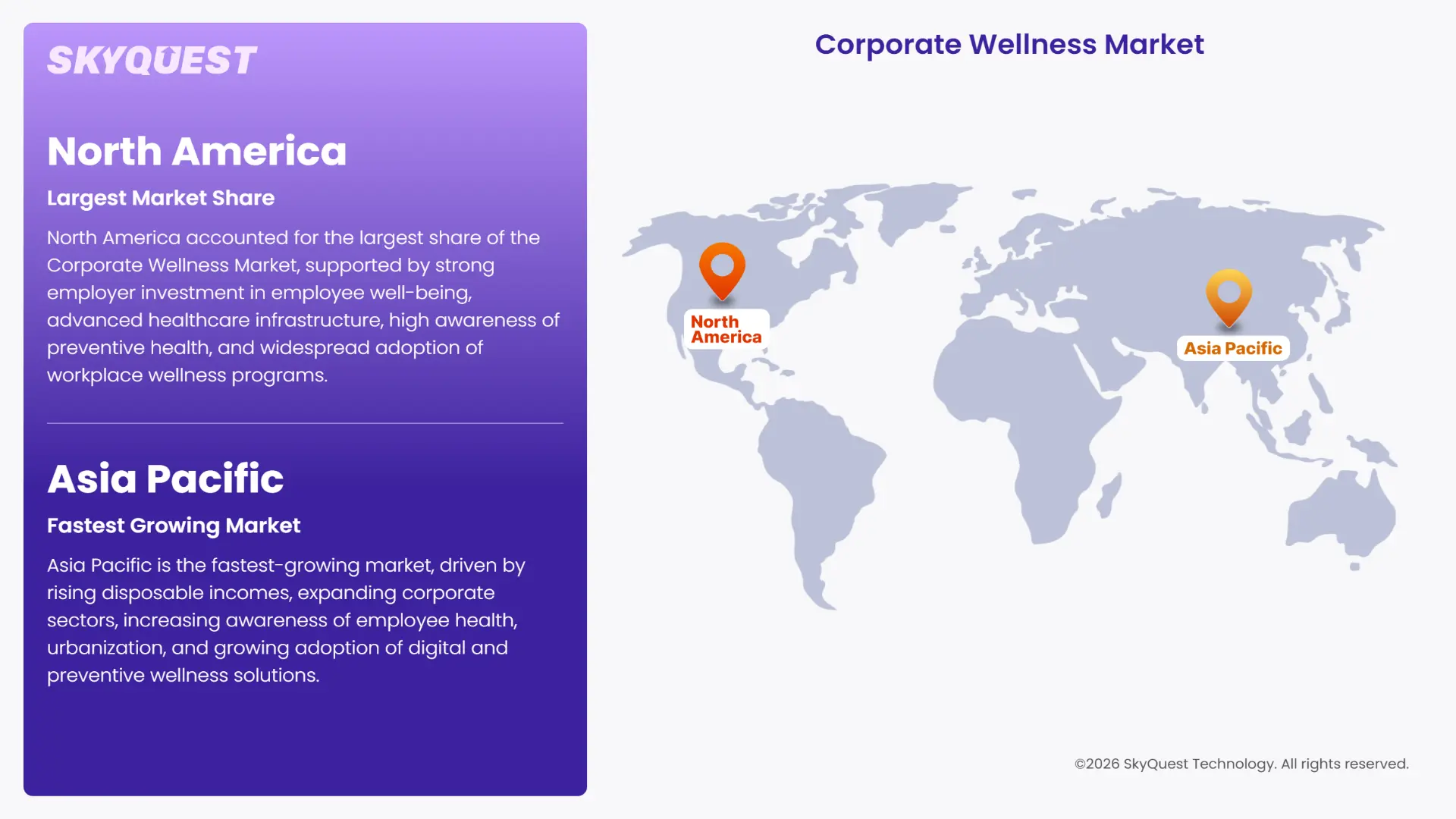
As per the corporate wellness market regional analysis, market share is dominated by the North American market, which was valued at USD 24.53 billion. Several factors are expected to support the market growth in the region, including the shifting preferences of employees toward companies with workplace wellness programs, the growing adoption of these programs by employers to increase employee engagement and decrease absenteeism, the introduction of new workplace wellness programs by companies, and others.
U.S. Corporate Wellness Market
The US leads the global corporate wellness industry because of growing healthcare costs and increased awareness of mental health. By incorporating Limeade's AI-powered platform for stress tracking and emotional well-being, Amazon broadened its employee wellness initiative in 2024. Businesses are providing more comprehensive solutions, like digital coaching and biometric testing. Employers are further encouraged to adopt comprehensive wellness programs that address absenteeism and chronic disease through tax incentives and regulatory pressure.
Canada Corporate Wellness Market
National mental health programs and the growing emphasis on work-life balance are driving growth in Canada's corporate wellness sector. In 2025, RBC (Royal Bank of Canada) teamed up with digital mental health startup MindBeacon to provide its staff with on-demand therapy. Mobile accessibility, bilingual content, and inclusion are highly valued by employers. Demand for virtual fitness, ergonomic evaluations, and mental health services is rising across industries due to government subsidies and flexible work schedules.
Why are European Employers Prioritizing Mental Health and Burnout Prevention?
However, in 2024, Europe held the second-largest corporate wellness market share. One important factor supporting market growth is the increasing number of workplace wellness initiatives being introduced in the region.
UK Corporate Wellness Market
In response to growing burnout rates and worries about the NHS backlog, the UK market is moving toward hybrid wellness products. HSBC introduced Unmind, a digital-first corporate wellness program that prioritizes mindfulness and mental toughness. Businesses prioritize scalable, app-based solutions that support both local and remote workers. Businesses are investing in data-driven wellness platforms that track exercise, sleep, and mental health in response to consumers' growing desire for personalization.
France Corporate Wellness Market
Strict labor laws that demand proactive health management have an impact on France's corporate wellness market. Sanofi launched a national staff wellness initiative in 2025 that included burnout risk assessments and biometric screenings driven by AI. The goal of these programs is to decrease medical leave while upholding occupational health standards. Particularly in high-stress sectors like manufacturing, banking, and pharmaceuticals, employers are increasingly utilizing digital technologies to manage stress and encourage preventative care.
Germany Corporate Wellness Market
In terms of corporate wellness, Germany places a strong emphasis on digital innovation and preventive care. Siemens Healthineers launched a hybrid wellness coaching trial program in 2024 that combined online therapy with in-person workout appointments. German businesses are incorporating wellness into larger corporate health frameworks with the help of mandated health insurance plans. Applications for stress management, sleep analytics, and customized nutrition are being used by more field and desk workers.
What is Driving Corporate Wellness Growth in Asia-Pacific?
Over the course of the forecast period, the Asia Pacific market is expected to show the highest CAGR. Some of the factors driving regional growth include the increasing number of businesses in the region, growing employee awareness of workplace wellness, and the increasing use of these services by employers to lower work-related health issues.
South Korea Corporate Wellness Market
The corporate wellness industry in South Korea is expanding due to worries about mental exhaustion and overwork. Hyundai Motor Group introduced a new wellness program in early 2025 that included real-time emotion tracking and mobile-based mental health assessments. Younger workers are drawn to applications that incorporate mindfulness and gamified fitness challenges. Data-driven solutions that enable remote communication, biometric monitoring, and culturally appropriate mental wellness resources are becoming more popular among employers.
Japan Corporate Wellness Market
To support its aging workforce and growing mental health needs, Japan is improving corporate wellness. Together, Hitachi and FiNC Technologies released wellness applications in 2024 that offer stress reduction, sleep coaching, and dietary advice. Companies with recognized programs are rewarded under the government's "Health and Productivity" program. As they move toward holistic platforms that combine traditional health services with technology, employers see wellness as critical to employee productivity and retention.
To know more about the market opportunities by region and country, click here to
Buy The Complete Report
Chronic Illnesses and Rising Health Care Costs
Take Care of Employee Retention and Mental Health
Small and Mid-Sized Businesses' (SMEs') Financial Limitations
Low Program Utilization and Employee Engagement
Request Free Customization of this report to help us to meet your business objectives.
The global corporate wellness market is fragmented due to the large number of players, such as Virgin Pulse, ComPsych, EXOS, and others. Major players' growing attempts to expand their market presence through strategic business endeavors like partnerships, mergers, and acquisitions, among others, are the primary factors propelling their growth. Vitality, Privia Health, Marino Wellness, and others are other market participants. Their strong worldwide presence, expanding partnerships and collaborations, and expanding new service launches all have an impact on their market share.
Combining Health Analytics with Wearable Technology
Development of AI and Customization in Platforms for Wellness
SkyQuest’s ABIRAW (Advanced Business Intelligence, Research & Analysis Wing) is our Business Information Services team that Collects, Collates, Correlates, and Analyses the Data collected by means of Primary Exploratory Research backed by robust Secondary Desk research.
As per SkyQuest analysis, in the corporate wellness market, dispersed programs are making way for integrated, analytics-driven ecosystems. Employers are investing in scalable, personalized wellness solutions as a result of factors like growing healthcare costs, talent retention objectives, and a growing emphasis on mental health. Examples of technology that facilitate greater engagement and quantifiable return on investment include wearables, artificial intelligence, and real-time dashboards. There are issues, though, particularly with maintaining steady employee participation and SMEs' affordability. Businesses that integrate wellness into more comprehensive HR strategies and use data to provide proactive care will dominate the market. Future expansion depends on wellness initiatives' measurable financial worth, inclusivity, and personalization.
| Report Metric | Details |
|---|---|
| Market size value in 2024 | USD 73.25 Billion |
| Market size value in 2033 | USD 108.58 Billion |
| Growth Rate | 4.47% |
| Base year | 2024 |
| Forecast period | 2026–2033 |
| Forecast Unit (Value) | USD Billion |
| Segments covered |
|
| Regions covered | North America (US, Canada), Europe (Germany, France, United Kingdom, Italy, Spain, Rest of Europe), Asia Pacific (China, India, Japan, Rest of Asia-Pacific), Latin America (Brazil, Rest of Latin America), Middle East & Africa (South Africa, GCC Countries, Rest of MEA) |
| Companies covered |
|
| Customization scope | Free report customization with purchase. Customization includes:-
|
To get a free trial access to our platform which is a one stop solution for all your data requirements for quicker decision making. This platform allows you to compare markets, competitors who are prominent in the market, and mega trends that are influencing the dynamics in the market. Also, get access to detailed SkyQuest exclusive matrix.
Table Of Content
Executive Summary
Market overview
Parent Market Analysis
Market overview
Market size
KEY MARKET INSIGHTS
COVID IMPACT
MARKET DYNAMICS & OUTLOOK
Market Size by Region
KEY COMPANY PROFILES
Methodology
For the Corporate Wellness Market, our research methodology involved a mixture of primary and secondary data sources. Key steps involved in the research process are listed below:
1. Information Procurement: This stage involved the procurement of Market data or related information via primary and secondary sources. The various secondary sources used included various company websites, annual reports, trade databases, and paid databases such as Hoover's, Bloomberg Business, Factiva, and Avention. Our team did 45 primary interactions Globally which included several stakeholders such as manufacturers, customers, key opinion leaders, etc. Overall, information procurement was one of the most extensive stages in our research process.
2. Information Analysis: This step involved triangulation of data through bottom-up and top-down approaches to estimate and validate the total size and future estimate of the Corporate Wellness Market.
3. Report Formulation: The final step entailed the placement of data points in appropriate Market spaces in an attempt to deduce viable conclusions.
4. Validation & Publishing: Validation is the most important step in the process. Validation & re-validation via an intricately designed process helped us finalize data points to be used for final calculations. The final Market estimates and forecasts were then aligned and sent to our panel of industry experts for validation of data. Once the validation was done the report was sent to our Quality Assurance team to ensure adherence to style guides, consistency & design.
Analyst Support
Customization Options
With the given market data, our dedicated team of analysts can offer you the following customization options are available for the Corporate Wellness Market:
Product Analysis: Product matrix, which offers a detailed comparison of the product portfolio of companies.
Regional Analysis: Further analysis of the Corporate Wellness Market for additional countries.
Competitive Analysis: Detailed analysis and profiling of additional Market players & comparative analysis of competitive products.
Go to Market Strategy: Find the high-growth channels to invest your marketing efforts and increase your customer base.
Innovation Mapping: Identify racial solutions and innovation, connected to deep ecosystems of innovators, start-ups, academics, and strategic partners.
Category Intelligence: Customized intelligence that is relevant to their supply Markets will enable them to make smarter sourcing decisions and improve their category management.
Public Company Transcript Analysis: To improve the investment performance by generating new alpha and making better-informed decisions.
Social Media Listening: To analyze the conversations and trends happening not just around your brand, but around your industry as a whole, and use those insights to make better Marketing decisions.
REQUEST FOR SAMPLE
 REQUEST FREE CUSTOMIZATION
Global Corporate Wellness Market size was valued at USD 73.25 Billion in 2024 and is poised to grow from USD 76.52 Billion in 2025 to USD 108.58 Billion by 2033, growing at a CAGR of 4.47% during the forecast period (2026–2033).
Virgin Pulse, ComPsych Corporation, EXOS, HealthComp, Limeade Inc., Optum Inc., Cerner Corporation, Fitbit Health Solutions, Workplace Options, and WebMD Health Services are among the key vendors in the Corporate Wellness Market.
Rising chronic conditions such as obesity, diabetes, and hypertension are increasing employer healthcare costs, encouraging investment in corporate wellness programs that reduce absenteeism, lower medical claims, improve employee productivity, and support long-term workforce health.
Corporate wellness programs are increasingly shifting toward holistic employee well-being, integrating mental health support, stress management, physical fitness, nutrition, and personalized wellness solutions to improve employee engagement, productivity, and retention.
North America accounted for the largest share of the Corporate Wellness Market, supported by high employer spending on employee health programs, strong awareness of workplace wellness, advanced healthcare infrastructure, and widespread adoption of preventive health initiatives.


Want to customize this report? This report can be personalized according to your needs. Our analysts and industry experts will work directly with you to understand your requirements and provide you with customized data in a short amount of time. We offer $1000 worth of FREE customization at the time of purchase.
Feedback From Our Clients


 USA (+1) 351-333-4748

