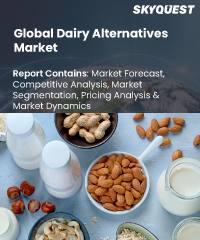
Dairy Alternatives Market
Report ID: SQMIG30I2352
Report ID: SQMIG30I2352
sales@skyquestt.com
USA +1 351-333-4748
Report ID:
SQMIG30I2352 |
Region:
Global |
Published Date: August, 2025
Pages:
183
|Tables:
98
|Figures:
72


Global Dairy Alternatives Market Size was valued at USD 33.1 Billion in 2024 and is poised to grow from USD 37.17 Billion in 2025 to USD 94.03 Billion by 2033, growing at a CAGR of 12.3% during the forecast period (2026–2033).
Increasing incidence of lactose intolerance, high adoption of vegan diets, environmental sustainability concerns, expansion of product variety, and expansion of e-commerce are promoting market development.
Global adoption of veganism and flexitarian diets is slated to primarily boost consumption of dairy alternatives in the future. Growing incidence of lactose intolerance and dairy allergies among people are also estimated to bolster the dairy alternatives market growth over the coming years. Consumer perception of plant-based options as healthier due to lower saturated fat, absence of cholesterol, and potential for added vitamins, minerals, and probiotics is also helping create new opportunities. The rise of e-commerce platforms and direct-to-consumer sales is significantly boosting the availability and accessibility of dairy alternatives. Online grocery platforms, specialty vegan stores, and brand-owned websites allow consumers to explore a wide variety of plant-based options without geographical constraints.
On the contrary, high costs of dairy alternatives as compared to traditional dairy products, taste and texture limitations, nutritional concerns among consumers, and supply chain challenges are anticipated to slow down dairy alternatives market penetration across the study period and beyond.
Market snapshot - 2026-2033
Global Market Size
USD 29.03 billion
Largest Segment
Milk
Fastest Growth
Ice Creamers
Growth Rate
12.3% CAGR
To get more insights on this market click here to Request a Free Sample Report
Global dairy alternatives market is segmented by source, product, distribution channel, and region. Based on source, the market is segmented into soy, almond, coconut, rice, oats, hemp and other sources. Based on product, the market is segmented into milk, ice cream, yogurt, cheese, creamers, butter and others. Based on distribution channel, the market is segmented into retail, food service, and online stores. Based on region, the market is segmented into North America, Europe, Asia Pacific, Latin America, and Middle East & Africa.
Which Dairy Alternative Products are Consumed the Most?
The milk segment is slated to spearhead the global dairy alternatives market revenue generation potential in the future. Increase in global geriatric population and high incidence of lactose intolerance are key factors helping cement the dominance of this segment. Rising preference for low-calorie and healthy foods is also estimated to create new opportunities for market players in the long run.
Meanwhile, the demand for ice cream is slated to rise at a robust pace over the coming years. High demand for guilt-free desserts and advancements in plant-based ice cream processing technologies are also helping boost revenue generation through 2032.
From Which Source are Most Dairy alternatives Derived?
The soy segment is forecasted to hold a major chunk of the global dairy alternatives market share going forward. Use of soy milk as a traditional staple in some Asian diets and its high protein content allow this segment to hold sway over others. Less water requirement for soy farming is also expected to help this segment further cement its dominance across the study period and beyond.
On the other hand, the demand for dairy alternatives made from almonds is slated to rise at an impressive CAGR as per these dairy alternatives industry analysis. Ability to boost metabolism and higher Vitamin B content of almonds is helping boost their popularity among dairy alternatives manufacturers.
To get detailed segments analysis, Request a Free Sample Report
Why Asia Pacific Leads the Consumption of Dairy alternatives?
Surge in lactose intolerance prevalence, rising urbanization, and increasing disposable incomes are helping cement the dominance of this region in terms of dairy alternatives demand. Countries like China, India, and Japan are experiencing a shift from traditional dairy to plant-based options due to health awareness and environmental considerations. Government health campaigns, coupled with growing café culture in metropolitan hubs is also boosting the consumption of dairy alternatives and cementing the dominance of Asia Pacific on a global level.
Dairy Alternatives Market in Japan
Growing health consciousness among people and infleunce from Western diets are supporting dairy alternatives consumption in Japan. Long-standing cultural presence of soy milk has helped its popularity. Functional plant-based drinks, enriched with collagen or vitamins, appeal to wellness trends. Expansion of café culture in urban prefectures such as Tokyo and Osaka is also projected to help create new opportunities for dairy alternative suppliers in the long run.
Dairy Alternatives Market in South Korea
Rise in lactose intolerance rates among people and expanding café culture are boosting the sales of dairy alternatives in the country. Global brands and domestic players such as Maeil Dairy and Vegemil are innovating with functional, fortified plant-based beverages. E-commerce and quick commerce platforms play a crucial role in improving the accessibility of dairy alternatives for consumers in South Korea. Increasing environmental awareness and interest in sustainable diets further support long-term market expansion.
What Influences the Consumption of Dairy Alternatives in Europe?
Robust awareness regarding sustainability, stringent animal welfare standards, and supportive regulations for plant-based labeling are helping Europe emerge as a highly rewarding market for dairy alternatives companies. Supermarkets and foodservice outlets actively promote vegan and dairy-free options, integrating them into mainstream menus. High investments in plant-based cheese and yogurt innovation are also helping boost the demand for dairy alternatives in the long run.
Dairy Alternatives Market in Germany
Strong vegan culture, environmental activism, and demand for organic products help Germany lead the consumption of dairy alternatives in Europe. Supermarkets, discounters, and organic food chains are key distribution channels for plant-based milks, yogurts, and cheeses. Foodservice and retail integration, alongside competitive pricing are helping this country remain a competitive market for dairy alternative suppliers. Sugar-free, fortified, and barista-grade dairy alternative products are estimated to help bolster revenue generation in the country going forward.
Dairy Alternatives Market in United Kingdom
Presence of a high vegan and flexitarian population positions the United Kingdom as a key market for dairy alternatives companies operating in Europe. Oat milk sales are bringing in the most revenue for dairy alternative brands such as Oatly, Alpro, and Minor Figures in the country. Coffee culture is a key driver, with barista blends in widespread use across chains like Costa and Starbucks. The country’s dynamic foodservice sector and e-commerce adoption accelerate accessibility to dairy alternatives.
Dairy Alternatives Market in France
The dairy alternatives industry of France is dependent on a critical balance of its deep-rooted dairy culture with growing plant-based adoption. Increasing health consciousness, rising lactose intolerance awareness, and climate concerns are boosting the adoption of dairy alternatives in the country. Marketing emphasizes French culinary compatibility, such as plant-based creams for sauces and pastries. Regulatory clarity on plant-based labeling along with premium and organic variants, cater to discerning consumers in France to boost revenue generation.
Why Dairy Alternatives Consumption is Rising in North America?
High consumer awareness, strong vegan and flexitarian movements, and well-established retail distribution help boost sales of dairy alternatives in this region. Plant-based options are widely available across supermarkets, cafés, and restaurants, catering to diverse dietary needs, including lactose intolerance, which also helps boost dairy alternatives consumption. Supportive investment in plant-based startups and continuous R&D to ensure product quality improvements, reinforcing North America’s position as a key dairy alternatives innovator and adopter in global market revenue.
Dairy Alternatives Market in United States
Presence of a massive vegan, flexitarian, and lactose-intolerant consumer base makes this country the top market for dairy alternatives companies in North America. Almond, oat, and soy milk dominate sales, with oat milk experiencing the fastest growth due to its creaminess and sustainability profile. Strong foodservice partnerships and celebrity endorsements are also helping boost consumption of dairy alternatives in the United States going forward.
Dairy Alternatives Market in Canada
Rising lactose intolerance rates among certain ethnic populations and growing environmental awareness are helping boost sales of dairy alternatives in Canada. Almond and oat milk lead demand, while soy and coconut options maintain niche appeal in the country. Cold climates make shelf-stable packaging popular. Companies such as Loblaws, Sobeys, and Tim Hortons play a crucial role in driving up the demand for dairy alternatives. E-commerce platforms expand reach, particularly in remote regions, enabling steady market penetration and diversifying consumer choices nationwide.
To know more about the market opportunities by region and country, click here to
Buy The Complete Report
Dairy Alternatives Market Drivers
Rising Emphasis on Environmental Sustainability
Expanding Product Variety and Innovation
Dairy Alternatives Market Restraints
Supply Chain and Raw Material Challenges
Higher Price Point Compared to Dairy
Request Free Customization of this report to help us to meet your business objectives.
Dairy alternative providers should invest in product innovation and R&D to stand out from the competition. Raising awareness regarding benefits of veganism is also a key strategy for dairy alternative vendors. Improving the texture of dairy alternatives through advanced processing technologies is also estimated to be a key strategy as per these dairy alternatives market analysis.
Providing healthier and protein-rich dairy alternatives should be the prime focus of new companies. Here’s a startup that is actively investing in dairy alternative product innovation.
Top Player’s Company Profile
Recent Developments in Dairy Alternatives Market
SkyQuest’s ABIRAW (Advanced Business Intelligence, Research & Analysis Wing) is our Business Information Services team that Collects, Collates, Correlates, and Analyses the Data collected by means of Primary Exploratory Research backed by robust Secondary Desk research.
As per SkyQuest analysis, growing awareness regarding benefits of veganism and high emphasis on sustainability is slated to primarily drive the demand for dairy alternatives going forward. However, high costs and taste and texture challenges are expected to slow down the consumption of dairy alternatives in the future. Asia Pacific is slated to spearhead global dairy alternatives demand owing to rising health consciousness and use of soy milk as a staple in multiple Asian diets. Innovation of plant-based cheeses and development of functional dairy alternatives are key trends driving the dairy alternatives sector in the long run.
| Report Metric | Details |
|---|---|
| Market size value in 2024 | USD 33.1 Billion |
| Market size value in 2033 | USD 94.03 Billion |
| Growth Rate | 12.3% |
| Base year | 2024 |
| Forecast period | 2026-2033 |
| Forecast Unit (Value) | USD Billion |
| Segments covered |
|
| Regions covered | North America (US, Canada), Europe (Germany, France, United Kingdom, Italy, Spain, Rest of Europe), Asia Pacific (China, India, Japan, Rest of Asia-Pacific), Latin America (Brazil, Rest of Latin America), Middle East & Africa (South Africa, GCC Countries, Rest of MEA) |
| Companies covered |
|
| Customization scope | Free report customization with purchase. Customization includes:-
|
To get a free trial access to our platform which is a one stop solution for all your data requirements for quicker decision making. This platform allows you to compare markets, competitors who are prominent in the market, and mega trends that are influencing the dynamics in the market. Also, get access to detailed SkyQuest exclusive matrix.
Table Of Content
Executive Summary
Market overview
Parent Market Analysis
Market overview
Market size
KEY MARKET INSIGHTS
COVID IMPACT
MARKET DYNAMICS & OUTLOOK
Market Size by Region
KEY COMPANY PROFILES
Methodology
For the Dairy Alternatives Market, our research methodology involved a mixture of primary and secondary data sources. Key steps involved in the research process are listed below:
1. Information Procurement: This stage involved the procurement of Market data or related information via primary and secondary sources. The various secondary sources used included various company websites, annual reports, trade databases, and paid databases such as Hoover's, Bloomberg Business, Factiva, and Avention. Our team did 45 primary interactions Globally which included several stakeholders such as manufacturers, customers, key opinion leaders, etc. Overall, information procurement was one of the most extensive stages in our research process.
2. Information Analysis: This step involved triangulation of data through bottom-up and top-down approaches to estimate and validate the total size and future estimate of the Dairy Alternatives Market.
3. Report Formulation: The final step entailed the placement of data points in appropriate Market spaces in an attempt to deduce viable conclusions.
4. Validation & Publishing: Validation is the most important step in the process. Validation & re-validation via an intricately designed process helped us finalize data points to be used for final calculations. The final Market estimates and forecasts were then aligned and sent to our panel of industry experts for validation of data. Once the validation was done the report was sent to our Quality Assurance team to ensure adherence to style guides, consistency & design.
Analyst Support
Customization Options
With the given market data, our dedicated team of analysts can offer you the following customization options are available for the Dairy Alternatives Market:
Product Analysis: Product matrix, which offers a detailed comparison of the product portfolio of companies.
Regional Analysis: Further analysis of the Dairy Alternatives Market for additional countries.
Competitive Analysis: Detailed analysis and profiling of additional Market players & comparative analysis of competitive products.
Go to Market Strategy: Find the high-growth channels to invest your marketing efforts and increase your customer base.
Innovation Mapping: Identify racial solutions and innovation, connected to deep ecosystems of innovators, start-ups, academics, and strategic partners.
Category Intelligence: Customized intelligence that is relevant to their supply Markets will enable them to make smarter sourcing decisions and improve their category management.
Public Company Transcript Analysis: To improve the investment performance by generating new alpha and making better-informed decisions.
Social Media Listening: To analyze the conversations and trends happening not just around your brand, but around your industry as a whole, and use those insights to make better Marketing decisions.
REQUEST FOR SAMPLE
 REQUEST FREE CUSTOMIZATION


Want to customize this report? This report can be personalized according to your needs. Our analysts and industry experts will work directly with you to understand your requirements and provide you with customized data in a short amount of time. We offer $1000 worth of FREE customization at the time of purchase.
Feedback From Our Clients


 USA (+1) 351-333-4748

