
Gene Editing Market
Report ID: SQMIG35H2103
Report ID: SQMIG35H2103
[email protected]
USA +1 351-333-4748
Report ID:
SQMIG35H2103 |
Region:
Global |
Published Date: August, 2025
Pages:
178
|Tables:
91
|Figures:
71


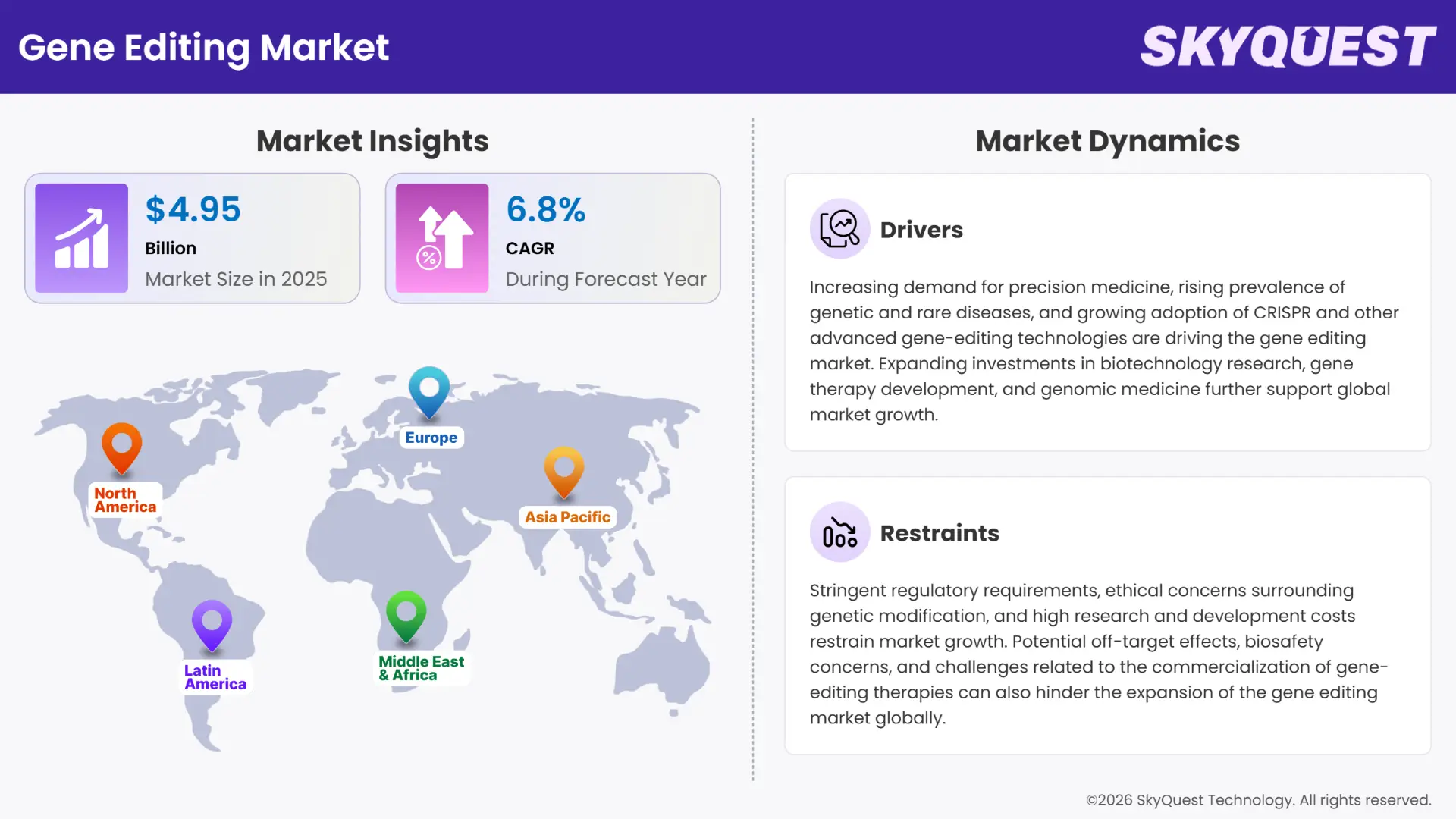
Global Gene Editing Market size was valued at USD 4.64 Billion in 2024 poised to grow between USD 4.95 Billion in 2025 to USD 8.38 Billion by 2033, growing at a CAGR of 6.8% in the forecast period (2026–2033).
Key Takeaways: Market Trends & Insights
The rapid evolution of CRISPR-Cas9 and other gene-editing technologies is a key driver in the global gene editing market. CRISPR has revolutionized genetic research by allowing scientists to make precise, targeted changes to DNA with unprecedented ease and accuracy. Newer versions such as base editing and prime editing further enhance its capabilities, reducing off-target effects and improving safety profiles. These advancements significantly lower costs and time required for gene manipulation, encouraging broader adoption across research institutions and biotech companies. As a result, CRISPR is being integrated into drug discovery, personalized medicine, and agricultural biotechnology, driving strong momentum in the gene editing sector.
The increasing incidence of inherited genetic disorders like thalassemia, haemophilia, and Huntington’s disease is a key trend driving the global gene editing sector. Traditional treatments often manage symptoms without addressing root genetic causes. Gene editing offers a potential cure by correcting mutations at the DNA level. This therapeutic promise has attracted major investments in research and development from pharmaceutical and biotech firms. Consequently, a growing number of clinical trials are being launched to test gene therapies for these conditions. As awareness and diagnosis improve globally, especially in developing regions, the demand for innovative gene editing treatments continues to surge, expanding the market significantly.
What are Off-Target Effects in CRISPR, and How does AI Reduce Them?
Artificial Intelligence is significantly advancing the gene editing market by optimizing design, improving accuracy, and accelerating discovery. AI algorithms can analyze massive genomic datasets to predict the most effective CRISPR guide RNAs, thereby reducing off-target effects and enhancing safety. This boosts confidence among researchers and regulatory bodies, encouraging wider clinical application. For example, in 2023, Profluent launched its AI-powered OpenCRISPR platform, which uses generative AI to design novel CRISPR systems from scratch. This innovation broadens access to customized gene editing tools, shortens development cycles, and enables breakthroughs in therapeutic applications—directly fueling market growth and R&D investments globally.
To get more insights on this market click here to Request a Free Sample Report
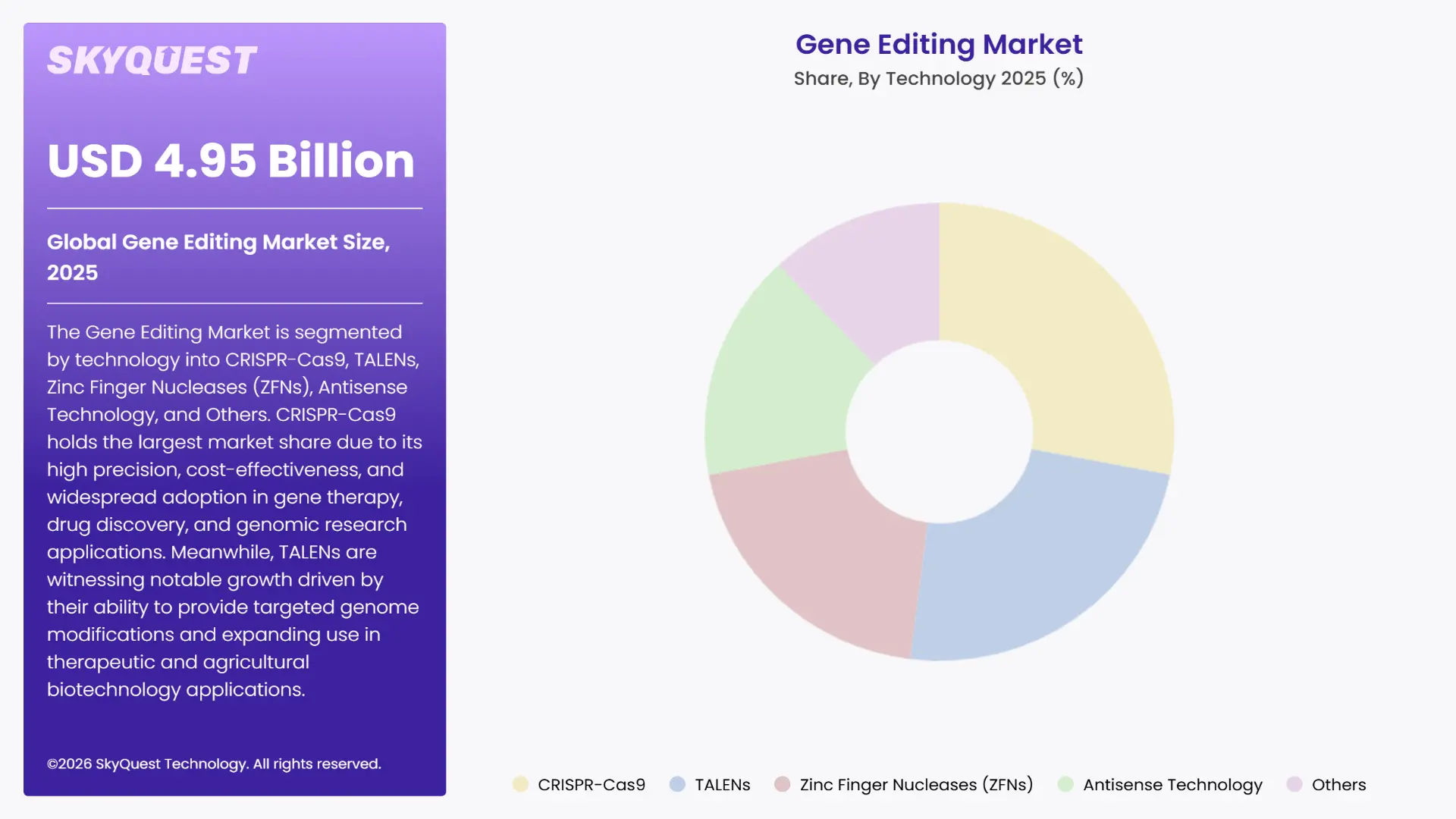
The global gene editing market is segmented based on technology, delivery method, end use, and region. In terms of technology, the market is grouped into (CRISPR)/Cas9, TALENs/MegaTALs, ZFN, meganucleases, and others. Based on delivery method, the market is divided into ex-vivo and in-vivo. Based on end use, the market is grouped into biotechnology & pharmaceutical companies, academic & government research institutes, and contract research organizations. Based on region, the market is segmented into North America, Europe, Asia-Pacific, Central & South America and the Middle East & Africa.
Based on the global gene editing market forecast, CRISPR/Cas9 technology is at the forefront of innovation in the industry due to its precision, efficiency, and cost-effectiveness. Researchers are using it to develop therapies for genetic disorders, engineer disease-resistant crops, and create model organisms for drug testing. Its dominance stems from its simplicity and adaptability compared to older methods like TALENs or ZFNs, making it the preferred tool for both academic research and commercial biotech applications.
ZFN (Zinc Finger Nuclease) technology is projected to be the fastest-growing segment in the global gene editing market due to its established safety profile and clinical trial success in treating genetic diseases like haemophilia and HIV. Its precise targeting and minimal off-target effects make it attractive for therapeutic use, especially in gene therapy and ex vivo cell engineering.
In-vivo delivery methods are dominating the global gene editing market due to their ability to edit genes directly within the body, enabling real-time therapeutic intervention. Recent innovations in lipid nanoparticles and viral vectors, such as AAVs, have significantly improved targeting efficiency and safety. These advancements make in-vivo delivery ideal for treating systemic and hard-to-reach conditions, accelerating clinical adoption and positioning it as the leading approach in gene therapy development worldwide.
Ex-vivo delivery methods are expected to fastest growth in the global gene editing market due to their superior control over editing conditions and safety. By modifying cells outside the body—such as in CAR‑T therapies or HSPC treatments—researchers ensure precision, minimize off-target effects, and validate efficacy prior to reinfusion, accelerating regulatory approval and adoption.
To get detailed segments analysis, Request a Free Sample Report
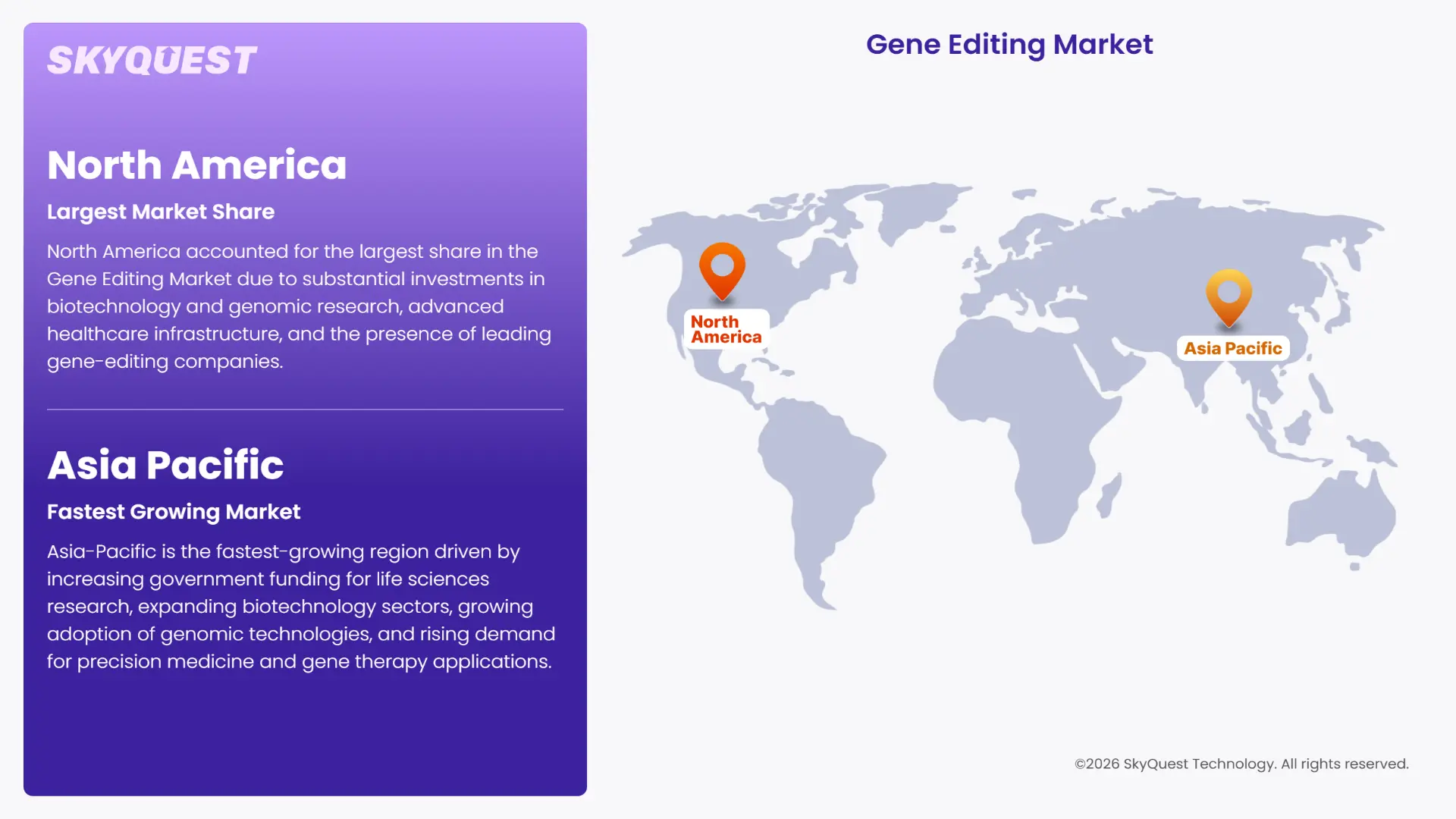
As per the global gene editing market analysis, North America leads the industry due to strong R&D infrastructure, substantial government and private sector investments, and the presence of key biotech players. The U.S. dominates with extensive clinical trials, rapid adoption of CRISPR technologies, and regulatory support for gene therapies. Academic collaborations and strategic partnerships further drive innovation, while rising demand for precision medicine continues to boost market growth across healthcare and agriculture sectors.
US Gene Editing Market
The United States plays a leading role in North America’s gene editing market due to its advanced research ecosystem, strong government funding, and presence of major biotech firms. The country is home to numerous clinical trials involving CRISPR and other gene editing technologies. Additionally, robust support from institutions like the NIH, favorable regulatory pathways, and industry-academic collaborations continue to accelerate innovation, making the U.S. a global hub for gene editing development and commercialization.
Canada Gene Editing Market
Canada contributes significantly to the North America’s gene editing market through its growing biotechnology sector and supportive research environment. The country is witnessing rising investments in CRISPR-based tools and precision medicine initiatives. Canadian universities and biotech firms actively collaborate on gene therapy research, while regulatory bodies provide guidance for emerging genetic technologies. This strong foundation is fostering innovation, attracting international partnerships, and positioning Canada as a key growth area in the gene editing landscape.
Asia-Pacific is the fastest-growing region in the global gene editing market, driven by rising investments in biotechnology, growing demand for precision medicine, and expanding research initiatives. Countries like China, Japan, India, and South Korea are leading innovation through supportive government policies, academic partnerships, and clinical research. The widespread adoption of CRISPR technology and increasing focus on genetic disease treatment are propelling the region’s rapid market expansion across healthcare and agriculture.
Japan Gene Editing Market
Japan plays a significant role in the Asia Pacific gene editing market through strong government funding, advanced healthcare infrastructure, and leading-edge research in regenerative medicine. Japanese institutions and biotech firms actively explore CRISPR-based therapies for rare genetic disorders and cancer. The country also invests in agricultural gene editing to improve crop resilience. Japan’s favorable regulatory environment and focus on innovation make it a key contributor to the growth of gene editing technologies in Asia-Pacific.
South Korea Gene Editing Market
South Korea is emerging as a fast-growing contributor to the Asia Pacific gene editing market, driven by government-backed biotech initiatives and increasing private sector investment. The country emphasizes CRISPR applications in cell and gene therapies, particularly for cancer and inherited diseases. With new regulatory frameworks supporting regenerative medicine and strategic partnerships among universities and biotech firms, South Korea is accelerating both clinical research and commercialization of gene editing technologies across healthcare and agriculture sectors.
Europe is a major contributor to the global gene editing market, driven by strong academic research, government funding, and biotech innovation. Countries like Germany, the UK, and France lead in CRISPR-based research and clinical trials. The region benefits from public-private partnerships and a growing emphasis on personalized medicine. Supportive regulatory developments and investment in precision therapeutics are fostering a dynamic environment for gene editing applications across healthcare and agriculture.
Germany Gene Editing Market
Germany plays a central role in Europe’s gene editing market due to its robust biotech sector, advanced research infrastructure, and supportive funding mechanisms. Companies like Merck KGaA and academic institutions collaborate on CRISPR-based therapies and industrial applications. Government-backed initiatives encourage innovation in genome editing across healthcare and agriculture. With a strong regulatory framework and investment in translational research, Germany continues to be a major driver of gene editing advancements in the region.
Italy Gene Editing Market
Italy is emerging as one of the fastest-growing contributors to Europe’s gene editing market, driven by advancements in gene therapy and regenerative medicine. Institutions like the San Raffaele Institute lead clinical research using viral vectors and CRISPR technologies. Government investments and EU funding support cutting-edge studies targeting genetic diseases. With increasing collaborations between hospitals, universities, and biotech firms, Italy is rapidly expanding its presence in both therapeutic and academic gene editing domains.
UK Gene Editing Market
The United Kingdom stands out in the Europe gene editing market with strong regulatory support and clinical innovation. It was the first country to approve a CRISPR-based therapy, Casgevy, under the NHS. The UK’s Genetic Technology (Precision Breeding) Act promotes the development of gene-edited crops, enhancing agricultural innovation. Coupled with active academic and industry partnerships, the UK’s dual focus on healthcare and aggrotech cements its leadership in Europe’s gene editing progress.
To know more about the market opportunities by region and country, click here to
Buy The Complete Report
Rising Demand for Personalized Medicine
Increasing Government and Private Funding
Ethical and Regulatory Challenges
Off-Target Effects and Safety Risks
Request Free Customization of this report to help us to meet your business objectives.
The global gene editing market outlook is highly competitive, with key players including CRISPR Therapeutics, Editas Medicine, Intellia Therapeutics, Sangamo Therapeutics, and Thermo Fisher Scientific. These companies focus on strategic partnerships, clinical advancements, and product development. For example, Intellia is advancing in-vivo CRISPR therapies, while Sangamo emphasizes zinc finger nuclease (ZFN) technology. Thermo Fisher expands its gene editing tool portfolio through acquisitions and innovation, strengthening its position in research and clinical applications.
As per the global gene editing industry analysis, the market is experiencing rapid transformation driven by agile startups leveraging CRISPR, base editing, and AI-powered innovations. These startups, often formed after 2015, focus on niche applications like microbial editing, gene therapies, and synthetic biology. Supported by venture capital and academic collaborations, they introduce disruptive tools and therapeutic platforms. Their breakthroughs in precision, scalability, and delivery technologies are reshaping the competitive dynamics, challenging incumbents and accelerating commercialization across healthcare, agriculture, and industrial biotech.
Expansion of CRISPR-Based Therapeutics Pipeline
Rising Collaborations and Strategic Alliances
SkyQuest’s ABIRAW (Advanced Business Intelligence, Research & Analysis Wing) is our Business Information Services team that Collects, Collates, Correlates, and Analyses the Data collected by means of Primary Exploratory Research backed by robust Secondary Desk research.
As per SkyQuest analysis, the global gene editing industry is rapidly advancing, powered by innovations like CRISPR-Cas9, expanding AI integration, and rising healthcare demands. Precision, cost-effectiveness, and therapeutic potential are positioning gene editing as a transformative force across medicine and agriculture. Supportive regulatory frameworks, increased funding, and strategic collaborations further accelerate this momentum. North America and Asia-Pacific remain key regions for growth, while Europe contributes through advanced research and policy support.
Startups and major players alike are pioneering breakthroughs in delivery technologies, disease-specific treatments, and AI-guided platforms. Despite ethical and technical challenges, continuous advancements are driving clinical applications and market expansion. As personalized medicine and rare disease therapies evolve, the global gene editing market strategies stand at the forefront of a new era in biotechnology innovation.
| Report Metric | Details |
|---|---|
| Market size value in 2024 | USD 4.64 Billion |
| Market size value in 2033 | USD 8.38 Billion |
| Growth Rate | 6.8% |
| Base year | 2024 |
| Forecast period | 2026–2033 |
| Forecast Unit (Value) | USD Billion |
| Segments covered |
|
| Regions covered | North America (US, Canada), Europe (Germany, France, United Kingdom, Italy, Spain, Rest of Europe), Asia Pacific (China, India, Japan, Rest of Asia-Pacific), Latin America (Brazil, Rest of Latin America), Middle East & Africa (South Africa, GCC Countries, Rest of MEA) |
| Companies covered |
|
| Customization scope | Free report customization with purchase. Customization includes:-
|
To get a free trial access to our platform which is a one stop solution for all your data requirements for quicker decision making. This platform allows you to compare markets, competitors who are prominent in the market, and mega trends that are influencing the dynamics in the market. Also, get access to detailed SkyQuest exclusive matrix.
Table Of Content
Executive Summary
Market overview
Parent Market Analysis
Market overview
Market size
KEY MARKET INSIGHTS
COVID IMPACT
MARKET DYNAMICS & OUTLOOK
Market Size by Region
KEY COMPANY PROFILES
Methodology
For the Gene Editing Market, our research methodology involved a mixture of primary and secondary data sources. Key steps involved in the research process are listed below:
1. Information Procurement: This stage involved the procurement of Market data or related information via primary and secondary sources. The various secondary sources used included various company websites, annual reports, trade databases, and paid databases such as Hoover's, Bloomberg Business, Factiva, and Avention. Our team did 45 primary interactions Globally which included several stakeholders such as manufacturers, customers, key opinion leaders, etc. Overall, information procurement was one of the most extensive stages in our research process.
2. Information Analysis: This step involved triangulation of data through bottom-up and top-down approaches to estimate and validate the total size and future estimate of the Gene Editing Market.
3. Report Formulation: The final step entailed the placement of data points in appropriate Market spaces in an attempt to deduce viable conclusions.
4. Validation & Publishing: Validation is the most important step in the process. Validation & re-validation via an intricately designed process helped us finalize data points to be used for final calculations. The final Market estimates and forecasts were then aligned and sent to our panel of industry experts for validation of data. Once the validation was done the report was sent to our Quality Assurance team to ensure adherence to style guides, consistency & design.
Analyst Support
Customization Options
With the given market data, our dedicated team of analysts can offer you the following customization options are available for the Gene Editing Market:
Product Analysis: Product matrix, which offers a detailed comparison of the product portfolio of companies.
Regional Analysis: Further analysis of the Gene Editing Market for additional countries.
Competitive Analysis: Detailed analysis and profiling of additional Market players & comparative analysis of competitive products.
Go to Market Strategy: Find the high-growth channels to invest your marketing efforts and increase your customer base.
Innovation Mapping: Identify racial solutions and innovation, connected to deep ecosystems of innovators, start-ups, academics, and strategic partners.
Category Intelligence: Customized intelligence that is relevant to their supply Markets will enable them to make smarter sourcing decisions and improve their category management.
Public Company Transcript Analysis: To improve the investment performance by generating new alpha and making better-informed decisions.
Social Media Listening: To analyze the conversations and trends happening not just around your brand, but around your industry as a whole, and use those insights to make better Marketing decisions.
REQUEST FOR SAMPLE
 REQUEST FREE CUSTOMIZATION
Global Gene Editing Market size was valued at USD 4.64 Billion in 2024 poised to grow between USD 4.95 Billion in 2025 to USD 8.38 Billion by 2033, growing at a CAGR of 6.8% in the forecast period (2026–2033).
Key vendors in the Gene Editing Market include CRISPR Therapeutics AG, Editas Medicine Inc., Intellia Therapeutics Inc., Beam Therapeutics Inc., Sangamo Therapeutics Inc., Thermo Fisher Scientific Inc., Merck KGaA, Danaher Corporation, GenScript Biotech Corporation, and Integrated DNA Technologies Inc.. These companies focus on CRISPR-based technologies, genome engineering tools, gene therapies, and research solutions for applications across healthcare, biotechnology, and agriculture.
The key driver of the Gene Editing Market is the increasing demand for advanced genetic therapies and precision medicine solutions. Rising prevalence of genetic disorders, growing adoption of CRISPR and other gene-editing technologies, and increasing investments in biotechnology and genomic research are significantly driving market growth globally.
The key market trend in the Gene Editing Market is the growing adoption of CRISPR-based technologies and next-generation gene-editing platforms for therapeutic and research applications. Increasing focus on precision medicine, development of gene therapies for rare and inherited diseases, and integration of artificial intelligence in genomic research are accelerating innovation and expanding the scope of gene-editing solutions globally.
North America accounted for the largest share in the Gene Editing Market due to substantial investments in biotechnology and genomic research, the presence of leading gene-editing companies, and advanced healthcare and research infrastructure. Strong funding for precision medicine initiatives, increasing clinical trials, and widespread adoption of CRISPR and other gene-editing technologies further support regional market dominance.


Want to customize this report? This report can be personalized according to your needs. Our analysts and industry experts will work directly with you to understand your requirements and provide you with customized data in a short amount of time. We offer $1000 worth of FREE customization at the time of purchase.
Feedback From Our Clients


 USA (+1) 351-333-4748

