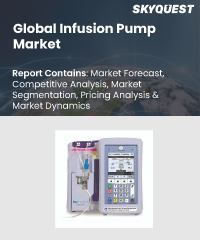
Infusion Pump Market
Report ID: SQMIG35A2184
Report ID: SQMIG35A2184
[email protected]
USA +1 351-333-4748
Report ID:
SQMIG35A2184 |
Region:
Global |
Published Date: December, 2025
Pages:
189
|Tables:
94
|Figures:
71


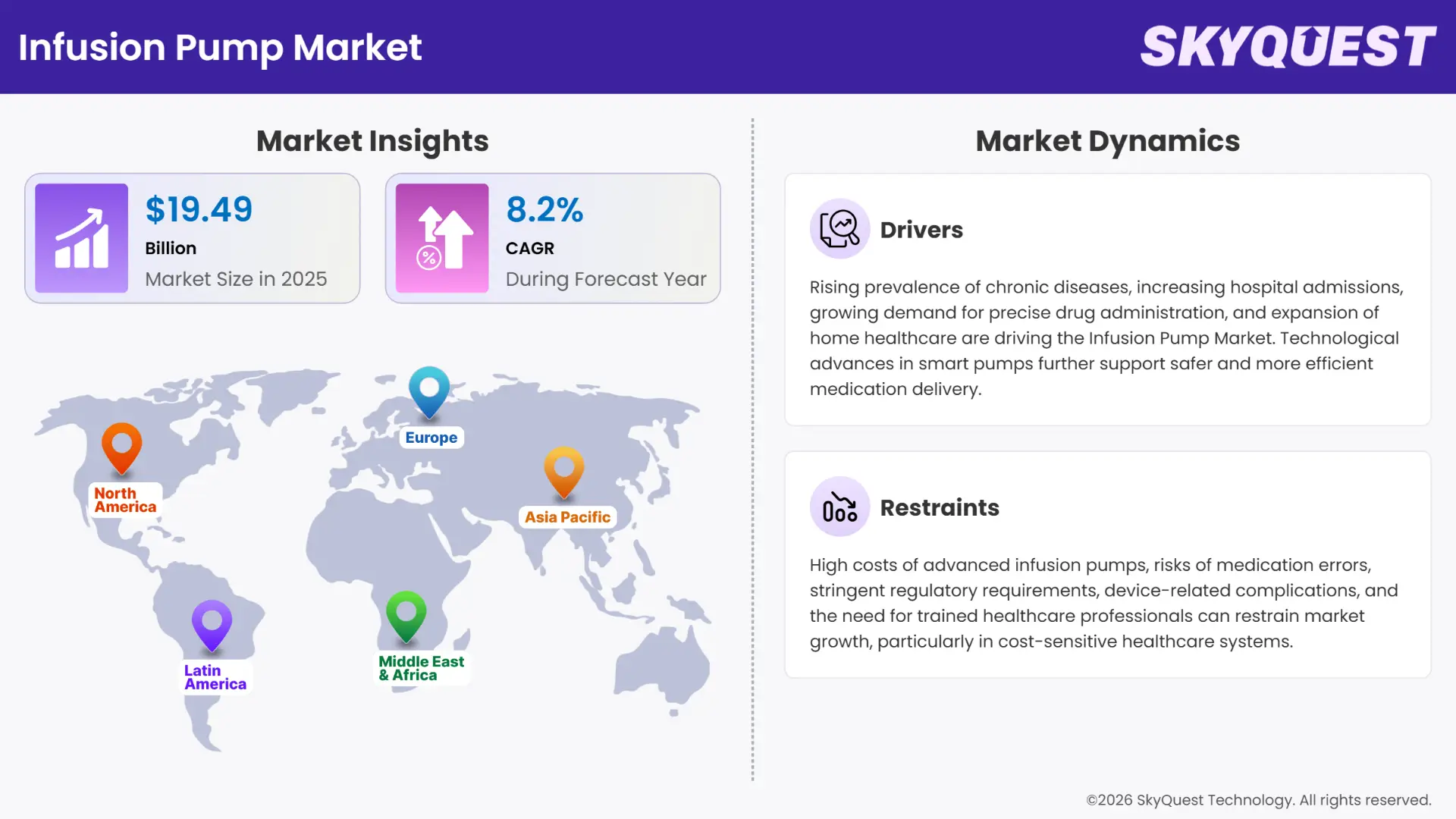
Global Infusion Pump Market size was valued at USD 18.01 Billion in 2024 and is poised to grow from USD 19.49 Billion in 2025 to USD 36.61 Billion by 2033, growing at a CAGR of 8.2% during the forecast period (2026–2033).
Key Takeaways: Market Trends & Insights
The infusion pump market is being significantly propelled by technological innovations, particularly the integration of smart technologies such as wireless connectivity, IoT, and artificial intelligence. These advancements allow real-time monitoring, remote control, and automatic error detection in infusion delivery, minimizing dosage errors and improving patient safety. Additionally, integration with electronic health records (EHR) enhances workflow efficiency for clinicians. As a result, healthcare facilities are increasingly adopting advanced infusion systems to reduce human error, streamline care, and comply with safety regulations—ultimately driving widespread usage in both hospital and homecare settings and boosting overall market growth.
The growing global incidence of chronic diseases such as diabetes, cancer, and cardiovascular conditions significantly contributes to increased demand for infusion therapies. Patients with such conditions often require long-term and continuous drug delivery, including insulin, pain medications, or chemotherapy agents. Infusion pumps offer a controlled and precise method of drug administration, which is vital for managing these illnesses effectively. Consequently, healthcare providers are relying more on infusion systems to ensure consistent therapy and better patient outcomes. This steady demand for chronic disease management solutions is a major factor influencing the expansion and has been key trend directing the global infusion pump sector.
Which Patient Vitals are Monitored by AI-Powered Pumps?
AI‑powered infusion pumps use machine learning‑based algorithms to continuously analyze patient vitals—such as blood pressure and heart rate—and adapt infusion rates automatically to deliver precise drug dosages. This automated adjustment reduces manual errors and enhances patient safety. Additionally, AI-driven predictive maintenance detects early signs of pump malfunction, prompting timely servicing that cuts downtime and boosts reliability. A real-world development: a closed-loop ICU infusion project from Amrita Vishwa Vidyapeetham uses AI-model predictive control to tailor drug delivery based on continuous feedback from patient vitals.
To get more insights on this market click here to Request a Free Sample Report
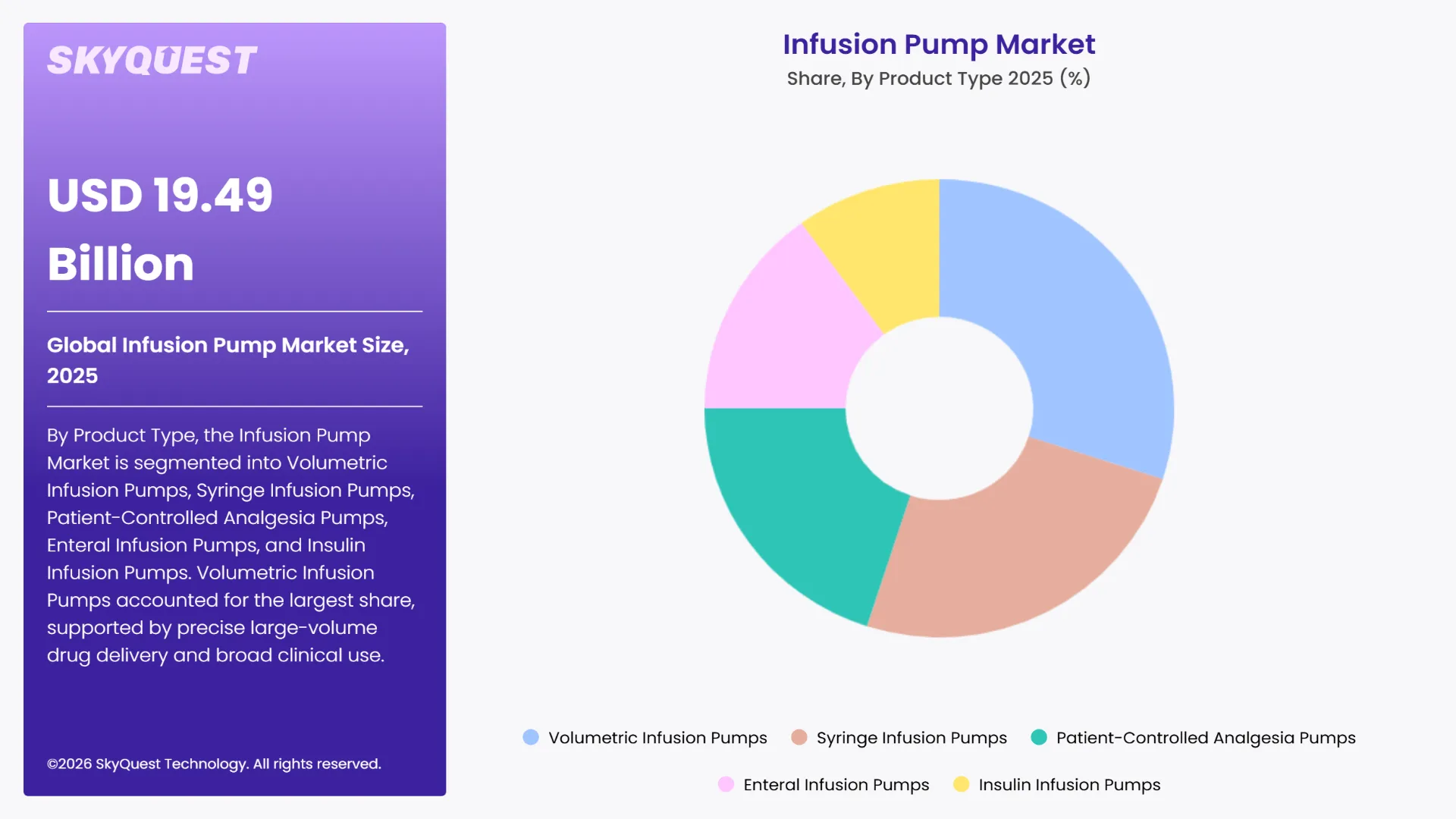
The global infusion pump market is segmented based on product type, application, end user, and region. In terms of product type, the market is grouped into volumetric infusion pumps, syringe infusion pumps, patient-controlled analgesia pumps, enteral infusion pumps, and insulin infusion pumps. Based on application, the market is segmented into oncology, diabetes, pain management, chemotherapy, and pediatric applications. Based on end user, the market is trifurcated into home care settings, ambulatory surgical centers, and long-term care facilities. Based on region, the market is segmented into North America, Europe, Asia-Pacific, Central & South America and the Middle East & Africa.
Based on the global infusion pump market forecast, volumetric infusion pumps are dominating the industry and include integration of smart features—such as dose‑error reduction systems (DERS), wireless connectivity, and barcode-enabled drug libraries. This allows real-time monitoring, alerts, and EMR linkage, significantly enhancing accuracy in oncology, ICU, and parenteral nutrition settings. These pumps dominate the market because they deliver precise large‑volume infusions across diverse therapeutic areas, support complex protocols, and offer unmatched versatility and reliability in critical and home‑care environments.
Syringe infusion pumps is fastest growing segment in the global infusion pump market, as rising chronic disease and surgical volumes are driving rapid growth, demanding precise, small‑volume dosing for chemotherapy, pediatrics, and ICU care. Advancements like smart safety systems and remote monitoring enhance their appeal. Their portability and home‑use suitability further accelerate adoption, making syringe pumps the fastest‑growing segment.
Pain management infusion pumps are dominating the global infusion pump market, as it focusses on smart PCA systems, combining wireless connectivity, advanced drug libraries, and real‑time monitoring with AI-driven dose adjustments to reduce overdose risk and enhance patient comfort. These systems are widely adopted in postoperative care, chronic cancer and neuropathic pain, and increasingly in home-care settings due to their precision and portability. Their dominance is driven by rising chronic pain prevalence, supportive reimbursement, and a shift toward non-opioid, device-based pain relief pathways
Oncology will be the fastest-growing application in the global infusion pump market because rising cancer prevalence demands precise, continuous chemotherapy delivery. The shift toward outpatient and home-based cancer care drives adoption of portable, smart pumps. Advancements in programmable infusion systems and safety features further accelerate growth in oncology settings.
To get detailed segments analysis, Request a Free Sample Report
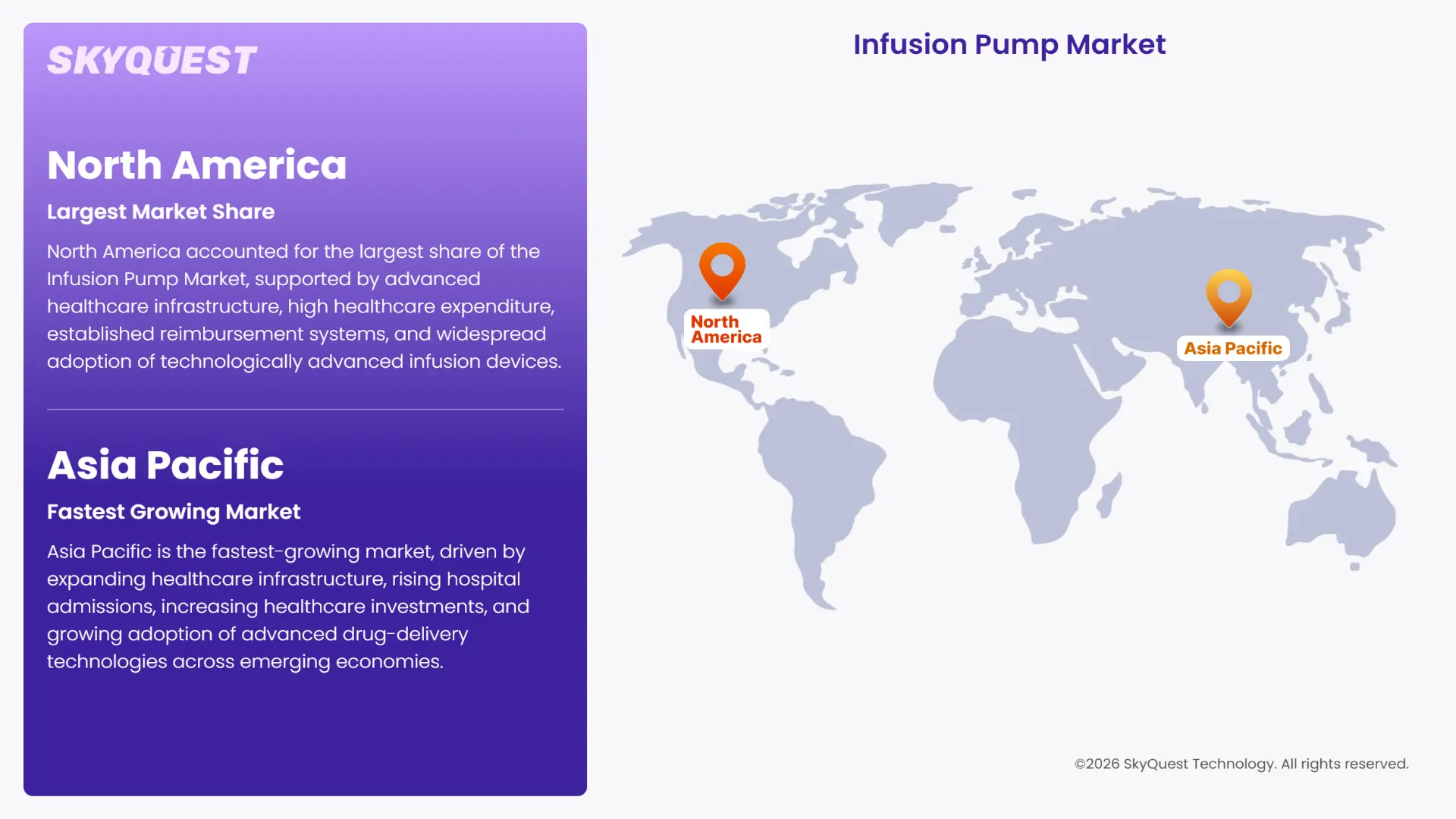
As per the global infusion pump market analysis, North America holds the largest share of the industry due to its advanced healthcare infrastructure, high prevalence of chronic conditions, and strong reimbursement support. The region benefits from early adoption of smart infusion technologies, frequent FDA approvals, and robust presence of key players. Additionally, rising demand for home-based care and government initiatives promoting ambulatory infusion further fuel market growth across the U.S. and Canada.
US Infusion Pump Market
The United States dominates North America’s infusion pump market due to its advanced healthcare infrastructure, high chronic disease burden, and strong presence of key manufacturers. Frequent FDA approvals and innovations in smart pump technologies for fuel market expansion. Supportive reimbursement systems like Medicare and Medicaid promote adoption across hospitals and home care settings. Additionally, increased demand for precision drug delivery and patient safety solutions drives continuous growth in the U.S. infusion pump landscape.
Canada Infusion Pump Market
Canada contributes significantly to North America’s infusion pump market through its rising healthcare investments and growing prevalence of chronic illnesses. Government-funded healthcare systems facilitate infusion pump accessibility across public hospitals and clinics. Increased demand for insulin and ambulatory pumps supports market expansion. Post-pandemic recovery plans and digital health initiatives have further accelerated adoption of smart infusion systems, making Canada a steadily growing market within the regional infusion pump ecosystem.
Asia Pacific is the fastest-growing region in the global infusion pump market, driven by rising chronic disease prevalence, aging populations, and expanding healthcare infrastructure. Countries like China, India, and Japan are witnessing increased adoption of volumetric and insulin pumps, especially in homecare and ambulatory settings. Government investments in healthcare modernization and growing awareness of advanced infusion therapies are accelerating the shift toward smart, connected infusion systems across the region.
Japan Infusion Pump Market
Japan plays a crucial role in the Asia Pacific infusion pump market, supported by its technologically advanced healthcare system and rapidly aging population. High prevalence of chronic conditions like cancer and diabetes drives the demand for precise drug delivery solutions, especially volumetric and insulin pumps. Strong government focus on healthcare innovation and early adoption of smart medical devices have positioned Japan as a key market for connected infusion systems across hospitals and homecare settings.
South Korea Infusion Pump Market
South Korea is an emerging contributor to the Asia Pacific infusion pump market, driven by rising chronic disease rates and a growing demand for home-based care. The country’s well-developed healthcare infrastructure and digital health strategies support the adoption of smart, portable infusion pumps. Increasing use of insulin and ambulatory pumps, along with government efforts to modernize hospitals and improve patient safety, continue to accelerate South Korea’s market growth within the Asia Pacific region.
Europe represents a significant share of the global infusion pump market, driven by an aging population, rising chronic disease prevalence, and strong adoption of digital healthcare technologies. Countries like Germany, France, and the UK are leading in smart infusion system deployment, supported by strict regulatory standards and robust public healthcare funding. Demand for ambulatory and insulin pumps is growing rapidly, especially in home-care and outpatient settings, further fueling the global infusion pump market growth.
Germany Infusion Pump Market
Germany is the largest contributor to Europe’s infusion pump market, supported by its advanced healthcare infrastructure and strong medical technology sector. High demand for volumetric and insulin pumps stems from the country's rising diabetic and aging population. Government initiatives promoting digital health and strict regulatory standards ensure safe and efficient infusion therapy. Germany’s focus on hospital automation and patient safety continues to drive adoption of smart infusion systems across healthcare settings.
UK Infusion Pump Market
The United Kingdom is a fast-growing contributor to Europe’s infusion pump market, driven by NHS modernization and growing demand for home-based care. Infusion pumps are increasingly used in oncology, post-operative recovery, and chronic pain management. The government’s emphasis on healthcare digitalization has accelerated adoption of smart pumps with remote monitoring. High chronic disease prevalence and a well-structured reimbursement framework further support the UK's expanding role in the infusion pump sector.
Italy Infusion Pump Market
Italy’s infusion pump market is steadily expanding, fueled by increasing hospital usage and home infusion demand. The rise in chronic diseases, such as cancer and diabetes, drives the need for volumetric and syringe pumps. Government initiatives to upgrade healthcare infrastructure and improve elderly care have accelerated pump deployment. Italy’s growing acceptance of telehealth and smart medical devices is encouraging greater integration of connected infusion systems across clinical and ambulatory care environments.
To know more about the market opportunities by region and country, click here to
Buy The Complete Report
Growing Demand for Home Healthcare
Rising Surgical Procedures Worldwide
Cybersecurity Risks in Smart Infusion Pumps
Complexity in Operating Advanced Devices
Request Free Customization of this report to help us to meet your business objectives.
The global infusion pump market outlook is highly competitive, with key players including Baxter International, B. Braun Melsungen, ICU Medical, Medtronic, and Fresenius Kabi. Companies focus on strategic mergers, technological innovation, and regulatory approvals to expand market presence. For example, Baxter emphasizes AI-integrated smart pumps, while B. Braun invests in wireless connectivity. ICU Medical’s acquisition of Smiths Medical strengthened its infusion portfolio, enhancing its global distribution and product diversity.
As per the global infusion pump industry analysis, the market is witnessing a surge in startup activity, particularly in precision dosing, wireless connectivity, and AI-based monitoring. These startups focus on affordability, user-friendly interfaces, and compact, portable systems to address gaps in both emerging and developed markets. Leveraging rapid R&D and smart integration, they offer tailored solutions for chronic care and ambulatory settings. Their innovations are increasingly influencing the strategies of established players through partnerships, competition, and tech-driven differentiation.
Shift Toward Home-Based and Ambulatory Infusion Care
Integration of AI and Smart Connectivity
SkyQuest’s ABIRAW (Advanced Business Intelligence, Research & Analysis Wing) is our Business Information Services team that Collects, Collates, Correlates, and Analyses the Data collected by means of Primary Exploratory Research backed by robust Secondary Desk research.
As per SkyQuest analysis, the global infusion pump industry is undergoing a transformative shift, driven by technological innovation, rising chronic disease prevalence, and a growing preference for home-based care. The integration of AI, IoT, and smart connectivity is redefining precision drug delivery, enhancing patient safety, and streamlining clinical workflows. Coupled with supportive regulatory approvals and a surge in startup-led innovation, infusion systems are becoming more adaptive, portable, and data-driven.
Advanced features like real-time monitoring, predictive maintenance, and EHR integration are accelerating adoption across hospitals and homecare settings. As healthcare systems globally prioritize personalized, cost-effective, and safe treatment modalities, infusion pumps are emerging as essential tools across oncology, pain management, and chronic care. This multifaceted growth positions the global infusion pump market revenue for sustained global expansion in the coming years.
| Report Metric | Details |
|---|---|
| Market size value in 2024 | USD 18.01 Billion |
| Market size value in 2033 | USD 36.61 Billion |
| Growth Rate | 8.2% |
| Base year | 2024 |
| Forecast period | 2026–2033 |
| Forecast Unit (Value) | USD Billion |
| Segments covered |
|
| Regions covered | North America (US, Canada), Europe (Germany, France, United Kingdom, Italy, Spain, Rest of Europe), Asia Pacific (China, India, Japan, Rest of Asia-Pacific), Latin America (Brazil, Rest of Latin America), Middle East & Africa (South Africa, GCC Countries, Rest of MEA) |
| Companies covered |
|
| Customization scope | Free report customization with purchase. Customization includes:-
|
To get a free trial access to our platform which is a one stop solution for all your data requirements for quicker decision making. This platform allows you to compare markets, competitors who are prominent in the market, and mega trends that are influencing the dynamics in the market. Also, get access to detailed SkyQuest exclusive matrix.
Table Of Content
Executive Summary
Market overview
Parent Market Analysis
Market overview
Market size
KEY MARKET INSIGHTS
COVID IMPACT
MARKET DYNAMICS & OUTLOOK
Market Size by Region
KEY COMPANY PROFILES
Methodology
For the Infusion Pump Market, our research methodology involved a mixture of primary and secondary data sources. Key steps involved in the research process are listed below:
1. Information Procurement: This stage involved the procurement of Market data or related information via primary and secondary sources. The various secondary sources used included various company websites, annual reports, trade databases, and paid databases such as Hoover's, Bloomberg Business, Factiva, and Avention. Our team did 45 primary interactions Globally which included several stakeholders such as manufacturers, customers, key opinion leaders, etc. Overall, information procurement was one of the most extensive stages in our research process.
2. Information Analysis: This step involved triangulation of data through bottom-up and top-down approaches to estimate and validate the total size and future estimate of the Infusion Pump Market.
3. Report Formulation: The final step entailed the placement of data points in appropriate Market spaces in an attempt to deduce viable conclusions.
4. Validation & Publishing: Validation is the most important step in the process. Validation & re-validation via an intricately designed process helped us finalize data points to be used for final calculations. The final Market estimates and forecasts were then aligned and sent to our panel of industry experts for validation of data. Once the validation was done the report was sent to our Quality Assurance team to ensure adherence to style guides, consistency & design.
Analyst Support
Customization Options
With the given market data, our dedicated team of analysts can offer you the following customization options are available for the Infusion Pump Market:
Product Analysis: Product matrix, which offers a detailed comparison of the product portfolio of companies.
Regional Analysis: Further analysis of the Infusion Pump Market for additional countries.
Competitive Analysis: Detailed analysis and profiling of additional Market players & comparative analysis of competitive products.
Go to Market Strategy: Find the high-growth channels to invest your marketing efforts and increase your customer base.
Innovation Mapping: Identify racial solutions and innovation, connected to deep ecosystems of innovators, start-ups, academics, and strategic partners.
Category Intelligence: Customized intelligence that is relevant to their supply Markets will enable them to make smarter sourcing decisions and improve their category management.
Public Company Transcript Analysis: To improve the investment performance by generating new alpha and making better-informed decisions.
Social Media Listening: To analyze the conversations and trends happening not just around your brand, but around your industry as a whole, and use those insights to make better Marketing decisions.
REQUEST FOR SAMPLE
 REQUEST FREE CUSTOMIZATION
Global Infusion Pump Market size was valued at USD 18.01 Billion in 2024 and is poised to grow from USD 19.49 Billion in 2025 to USD 36.61 Billion by 2033, growing at a CAGR of 8.2% during the forecast period (2026–2033).
Baxter International Inc., B. Braun Melsungen AG, ICU Medical, Inc., Medtronic plc, Fresenius Kabi AG, Smiths Medical, Terumo Corporation, Nipro Corporation, Moog Inc., Avanos Medical, Inc., Zyno Medical LLC, and Mindray are key vendors in the Infusion Pump Market.
The rising prevalence of chronic diseases, increasing hospital admissions, and growing demand for accurate and controlled drug delivery are driving the Infusion Pump Market, particularly across critical care, oncology, diabetes management, and home healthcare settings.
Increasing adoption of smart and connected infusion pumps is a key trend, with manufacturers integrating wireless connectivity, dose-error reduction systems, interoperability, and advanced safety features to improve medication accuracy, patient safety, and clinical workflow efficiency.
North America accounted for the largest share of the Infusion Pump Market, supported by advanced healthcare infrastructure, high healthcare expenditure, strong reimbursement systems, widespread adoption of smart infusion technologies, and the presence of major market players.


Want to customize this report? This report can be personalized according to your needs. Our analysts and industry experts will work directly with you to understand your requirements and provide you with customized data in a short amount of time. We offer $1000 worth of FREE customization at the time of purchase.
Feedback From Our Clients


 USA (+1) 351-333-4748

