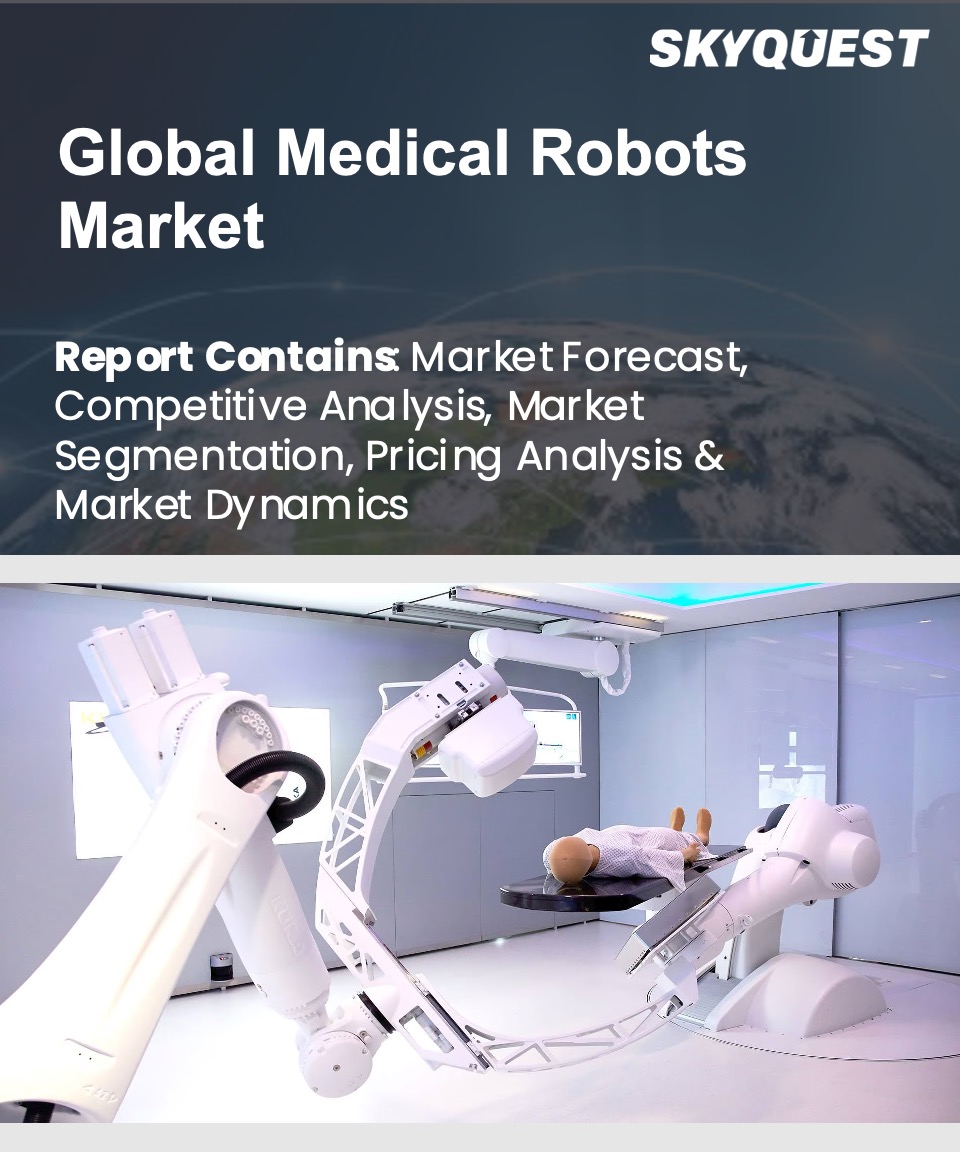
Medical Robots Market
Report ID: SQMIG45I2048
Report ID: SQMIG45I2048
[email protected]
USA +1 351-333-4748
Report ID:
SQMIG45I2048 |
Region:
Global |
Published Date: July, 2025
Pages:
178
|Tables:
121
|Figures:
77


Global Medical Robots Market size was valued at USD 12.52 Billion in 2024 and is poised to grow from USD 14.62 Billion in 2025 to USD 50.66 Billion by 2033, growing at a CAGR of 16.8% during the forecast period (2026–2033).
Growing demand for minimally invasive surgeries, advancements in robotics and AI, dearth of skilled medical professionals, increasing chronic disease burden, and expansion of senescent population are forecasted to bolster the demand for medical robots going forward.
Medical robots enable enhanced precision and control in minimally invasive surgeries, which are growing in popularity among multiple patients around the world. Global healthcare systems face a growing shortage of skilled surgeons, nurses, and rehabilitation professionals. medical robots address this gap by assisting in surgical procedures and automating repetitive tasks. Elderly individuals are more susceptible to chronic diseases, mobility issues, and surgical interventions. Medical robots assist in complex surgeries, rehabilitation, and elder care with greater precision, safety, and efficiency. Rising investments from both private and public sectors are accelerating innovation and driving global medical robots market growth.
On the contrary, high costs of robotic systems and maintenance, stringent regulatory approvals, safety concerns, limited technical expertise, and ethical and employment concerns are slated to inhibit the global medical robots market penetration across the forecast period and beyond.
How is AI Changing the Way Medical Robots Function?
Artificial intelligence (AI) and machine learning (ML) are increasingly integrated into medical robots to enhance autonomy, adaptability, and decision-making. These technologies enable robots to learn from vast surgical datasets, optimize movement, and provide predictive analytics during procedures. AI-powered robots can assist in pre-surgical planning, real-time navigation, and post-operative monitoring. In rehabilitation and elder care, ML algorithms personalize therapy regimens and adapt to patient progress. As AI evolves, robots are moving beyond assistive roles toward more intelligent, semi-autonomous systems. This trend is central to the evolution of precision medicine and the development of next-generation smart robots in healthcare.
Market snapshot - 2026-2033
Global Market Size
USD 8.1 Billion
Largest Segment
Hospitals
Fastest Growth
Rehabilitation Centers
Growth Rate
17.4% CAGR
To get more insights on this market click here to Request a Free Sample Report
The global medical robots' market is segmented based on product type, application, end user, and region. Based on product type, the market is segmented into surgical robots, telemedicine robots, rehabilitation robots, noninvasive radio surgery robots, pharmacy and hospital automation robots. Based on application, the market is segmented into neurology, cardiology, orthopedic, laparoscopy, pharmacy, physical rehabilitation, and others. Based on end user, the market is segmented into hospitals, rehabilitation centers, ambulatory surgical centers (ASCs), and others. Based on region, the market is segmented into North America, Europe, Asia Pacific, Latin America, and Middle East & Africa.
Which Type of Medical Robots are Used Extensively?
The surgical robots' segment is expected to spearhead the global medical robots market revenue generation potential in the future. Growing emphasis on improving efficacy of surgeries and minimization of risk and scarring are promoting the adoption of surgical robots. Enhanced precision, improved dexterity, and less risk of error from surgeons by using surgical robots is also helping this segment hold sway over others.
Meanwhile, the demand for pharmacy and hospital automation robots is slated to rise at a rapid pace as per this global medical robot's industry analysis. Growing demand for operational efficiency enhancement in pharmacies and adoption of evidence-based care in hospitals are forecasted to create new opportunities in the long run.
Which Establishment Accounts for Highest Adoption of Medical Robots?
The hospitals segment is estimated to hold the highest global medical robots market share in the long run. Emphasis on improving workplace safety and a growing number of minimally invasive procedures is helping hospitals lead the adoption of medical robots. High investments in hospital infrastructure development and procurement of advanced equipment are further cementing the high share of this segment.
On the other hand, demand for medical robots in rehabilitation centers is expected to rise at a significant pace over the coming years. The growing geriatric population around the world and need for better elderly care are expected to bolster the adoption of medical robots in rehabilitation centers going forward.
To get detailed segments analysis, Request a Free Sample Report
Why is North America Seen as a Safe Haven for Medical Robots Developers?
Early adoption of robotic technologies and presence of an advanced healthcare infrastructure position North America as a global leader in medical robots adoption. High per capita healthcare spending, favorable reimbursement policies, and skilled workforce are forecasted to cement the dominance of this region in the future. Growing preference for minimally invasive surgical procedures and growing chronic disease burden are also anticipated to help bolster the high share of this region going forward.
Medical Robots Market in United States
Strong robotics R&D infrastructure and the presence of major players like Intuitive Surgical and Medtronic are helping this country lead global medical robot adoption. Availability of favorable reimbursement policies and regulatory support from the FDA are promoting the rapid deployment of medical robots in the United States. Growing preference for minimally invasive surgeries and expanding aging population are also creating new business scope for market players operating in the country.
Medical Robots Market in Canada
The presence of a strong public healthcare ecosystem and high demand for healthcare automation are slated to steadily uplift the demand for medical robots. Government funding and partnerships with universities drive R&D initiatives in assistive and rehabilitation robotics. High costs of medical robots and limited reimbursement for robotic healthcare procedures are expected to create a major barrier for adoption of medical robots in Canada over the coming years. The adoption of telemedicine and emphasis on AI integration are driving up the sales of medical robots in the country.
What Brings Medical Robots Companies to Asia Pacific?
Rapid digitization of healthcare sector and growing investments in healthcare infrastructure development position Asia Pacific as the most opportune region for medical robot's companies. Robust increase in geriatric population in countries such as Japan, China, and India is also expected to boost the demand for medical robots in this region. Governments are promoting AI and robotics through national innovation agendas, while rising medical tourism further boosts the popularity of robotic surgeries and medical robots. Growing healthcare expenditure and acceptance of robots in medical applications are also slated to boost revenue generation for market players in the long run.
Medical Robots Market in Japan
The presence of a robust robotics industry and the launch of new innovative new robots to address healthcare labor shortages are driving sales of medical robots in the country. Use of robots for eldercare is predicted to increase at a robust pace in the long run. Japan’s cultural openness to automation and strong engineering base facilitates domestic innovation. High healthcare standards and early adoption of technology ensure Japan remains a global leader in both clinical and consumer healthcare robotics.
Medical Robots Market in South Korea
Government backed AI and robotics initiatives make South Korea a rapidly developing market for medical robots in the future. The country’s world-class ICT infrastructure and strong manufacturing base foster innovation in surgical and service robotics. Meere Company and Curexo are local medical robot companies that are gaining global recognition. Workforce shortages due to an expanding senescent population are also predicted to promote the adoption of medical robots. South Korea’s strategic focus on healthcare digitization, supported by 5G connectivity and smart hospital models positions it as a key market in Asia Pacific.
Will Europe Offer Good Returns on Investments for Medical Robots?
High emphasis on healthcare modernization and the presence of stringent regulatory frameworks is expected to steadily influence the sales of medical robots in this region. The launch of EU-funded research and training initiatives is also expected to foster innovation in the medical robots industry. The surge in popularity of minimally invasive surgeries and precision care are also expected to generate new revenue generation potential for market players in the future.
Medical Robots Market in United Kingdom
The demand for medical robots in the country is expected to be augmented by strong academic research and NHS-backed modernization programs. Growing emphasis on exploring the use of medical robots for rehabilitation, pharmacy automation, and elder care is creating new business scope for market players in the United Kingdom. Public sector budget limitations are expected to slow down the adoption of medical robots in the country to a certain extent in the future.
Medical Robots Market in Germany
Germany is slated to emerge as the leader in medical robot adoption in Europe backed by its robust healthcare infrastructure and strong presence of medtech companies. The growing aging population in the co untry, coupled with high surgical demand, are slated to boost the adoption of robotic-assisted care. Germany’s leadership in precision manufacturing and medical training positions it as a pioneer in robotic surgery and rehabilitative care technologies.
Medical Robots Market in France
Launch of supportive healthcare reforms and increase in public-private robotic R&D investments are driving medical robots demand in France. Government programs like “Ma Santé 2022” are promoting digital health integration, which in turn is slated to uplift the sales of medical robots in the country going forward. Robocath and Quantum Surgical are key domestic medical robot innovators helping boost adoption of medical robots in France. Regulatory support for medtech adoption in the country is also slated to augment the sales of medical robots.
To know more about the market opportunities by region and country, click here to
Buy The Complete Report
Medical Robots Market Drivers
Advancements in Robotics and AI Technologies
Strategic Collaborations to Advanced Medical Robot R&D
Medical Robots Market Restraints
Ethical and Employment Concerns
Limited Technical Expertise and Training Challenges
Request Free Customization of this report to help us to meet your business objectives.
Medical robot providers should focus on enhancing the accuracy and efficacy of their offerings in the future. Integrating advanced AI and machine learning technologies can also help create new business scope for market players as per this global medical robots industry analysis.
There are multiple startups working in the medical robots space as investments in developing new robots rises. Here’s a startup that is influencing the demand for medical robots on a global level.
Recent Developments in Medical Robots Market
SkyQuest’s ABIRAW (Advanced Business Intelligence, Research & Analysis Wing) is our Business Information Services team that Collects, Collates, Correlates, and Analyses the Data collected by means of Primary Exploratory Research backed by robust Secondary Desk research.
As per SkyQuest analysis, high demand for minimally invasive surgeries and rising investments in robot tech R&D are slated to primarily drive the demand for medical robots going forward. However, ethical and employment concerns, and high costs of ownership are anticipated to slow down the sales of medical robots in the future. North America is slated to emerge as the dominant region owing to quick adoption of advanced AI and robotic technologies in the healthcare industry. Demand for remote surgery and expansion of robotic-assisted surgery beyond current applications are slated to create new business scope for medical robot companies in the long run.
| Report Metric | Details |
|---|---|
| Market size value in 2024 | USD 12.52 Billion |
| Market size value in 2033 | USD 50.66 Billion |
| Growth Rate | 16.8% |
| Base year | 2024 |
| Forecast period | 2026-2033 |
| Forecast Unit (Value) | USD Billion |
| Segments covered |
|
| Regions covered | North America (US, Canada), Europe (Germany, France, United Kingdom, Italy, Spain, Rest of Europe), Asia Pacific (China, India, Japan, Rest of Asia-Pacific), Latin America (Brazil, Rest of Latin America), Middle East & Africa (South Africa, GCC Countries, Rest of MEA) |
| Companies covered |
|
| Customization scope | Free report customization with purchase. Customization includes:-
|
To get a free trial access to our platform which is a one stop solution for all your data requirements for quicker decision making. This platform allows you to compare markets, competitors who are prominent in the market, and mega trends that are influencing the dynamics in the market. Also, get access to detailed SkyQuest exclusive matrix.
Table Of Content
Executive Summary
Market overview
Parent Market Analysis
Market overview
Market size
KEY MARKET INSIGHTS
COVID IMPACT
MARKET DYNAMICS & OUTLOOK
Market Size by Region
KEY COMPANY PROFILES
Methodology
For the Medical Robots Market, our research methodology involved a mixture of primary and secondary data sources. Key steps involved in the research process are listed below:
1. Information Procurement: This stage involved the procurement of Market data or related information via primary and secondary sources. The various secondary sources used included various company websites, annual reports, trade databases, and paid databases such as Hoover's, Bloomberg Business, Factiva, and Avention. Our team did 45 primary interactions Globally which included several stakeholders such as manufacturers, customers, key opinion leaders, etc. Overall, information procurement was one of the most extensive stages in our research process.
2. Information Analysis: This step involved triangulation of data through bottom-up and top-down approaches to estimate and validate the total size and future estimate of the Medical Robots Market.
3. Report Formulation: The final step entailed the placement of data points in appropriate Market spaces in an attempt to deduce viable conclusions.
4. Validation & Publishing: Validation is the most important step in the process. Validation & re-validation via an intricately designed process helped us finalize data points to be used for final calculations. The final Market estimates and forecasts were then aligned and sent to our panel of industry experts for validation of data. Once the validation was done the report was sent to our Quality Assurance team to ensure adherence to style guides, consistency & design.
Analyst Support
Customization Options
With the given market data, our dedicated team of analysts can offer you the following customization options are available for the Medical Robots Market:
Product Analysis: Product matrix, which offers a detailed comparison of the product portfolio of companies.
Regional Analysis: Further analysis of the Medical Robots Market for additional countries.
Competitive Analysis: Detailed analysis and profiling of additional Market players & comparative analysis of competitive products.
Go to Market Strategy: Find the high-growth channels to invest your marketing efforts and increase your customer base.
Innovation Mapping: Identify racial solutions and innovation, connected to deep ecosystems of innovators, start-ups, academics, and strategic partners.
Category Intelligence: Customized intelligence that is relevant to their supply Markets will enable them to make smarter sourcing decisions and improve their category management.
Public Company Transcript Analysis: To improve the investment performance by generating new alpha and making better-informed decisions.
Social Media Listening: To analyze the conversations and trends happening not just around your brand, but around your industry as a whole, and use those insights to make better Marketing decisions.
REQUEST FOR SAMPLE
 REQUEST FREE CUSTOMIZATION
Global Medical Robots Market size was valued at USD 12.52 Billion in 2024 and is poised to grow from USD 14.62 Billion in 2025 to USD 50.66 Billion by 2033, growing at a CAGR of 16.8% during the forecast period (2026–2033).
Medical robot providers should focus on enhancing the accuracy and efficacy of their offerings in the future. Integrating advanced AI and machine learning technologies can also help create new business scope for market players as per this global medical robots industry analysis. 'Intuitive Surgical Inc. ', 'Stryker ', 'Becton, Dickinson and Company ', 'Medtronic ', 'Omnicell Inc. ', 'Zimmer Biomet ', 'Ekso Bionics Holdings Inc. ', 'Arxium ', 'Asensus Surgical, Inc. ', 'Renishaw PLC ', 'Bionik Laboratories Corp. ', 'Zap Surgical Systems, Inc. ', 'Media Group (Kuka AG) ', 'CMR Surgical ', 'Accuracy Incorporated ', 'DIH Medical ', 'Johnson & Johnson ', 'Cyberdyne Inc. ', 'Smith and Nephew PLC (Blue Belt Technologies) ', 'Avateramedical GmbH'
Medical robot capabilities are being improved drastically by increasing investments in R&D of novel technologies such as robotics, artificial intelligence (AI), machine learning, and computer vision. Integration of real-time data analytics, haptic feedback, and enhanced navigation improves surgical outcomes and operational efficiency. Moreover, innovations such as soft robotics, 5G-enabled remote surgery, and wearable exoskeletons are expanding the application of robots beyond operating rooms to rehabilitation and elderly care.
Expansion of Robot-Assisted Surgery Beyond Major Specialties: Medical robot manufacturers are expected to focus on expanding application ot robotics surgeries beyond traditional areas. Fields such as orthopedics, cardiology, ENT, and general surgery are expected to witness a rise in adoption of medical robots. New-generation surgical robots offer better articulation, haptic feedback, and AI-based guidance, making them suitable for more complex, delicate procedures. Advancements in robotics technologies are slated to make this an indispensable medical robots industry trend for the future.
Why is North America Seen as a Safe Haven for Medical Robots Developers?


Want to customize this report? This report can be personalized according to your needs. Our analysts and industry experts will work directly with you to understand your requirements and provide you with customized data in a short amount of time. We offer $1000 worth of FREE customization at the time of purchase.
Feedback From Our Clients


 USA (+1) 351-333-4748

