
Rigid Plastic Packaging Market
Report ID: SQMIG15E2333
Report ID: SQMIG15E2333
[email protected]
USA +1 351-333-4748
Report ID:
SQMIG15E2333 |
Region:
Global |
Published Date: June, 2025
Pages:
191
|Tables:
130
|Figures:
77


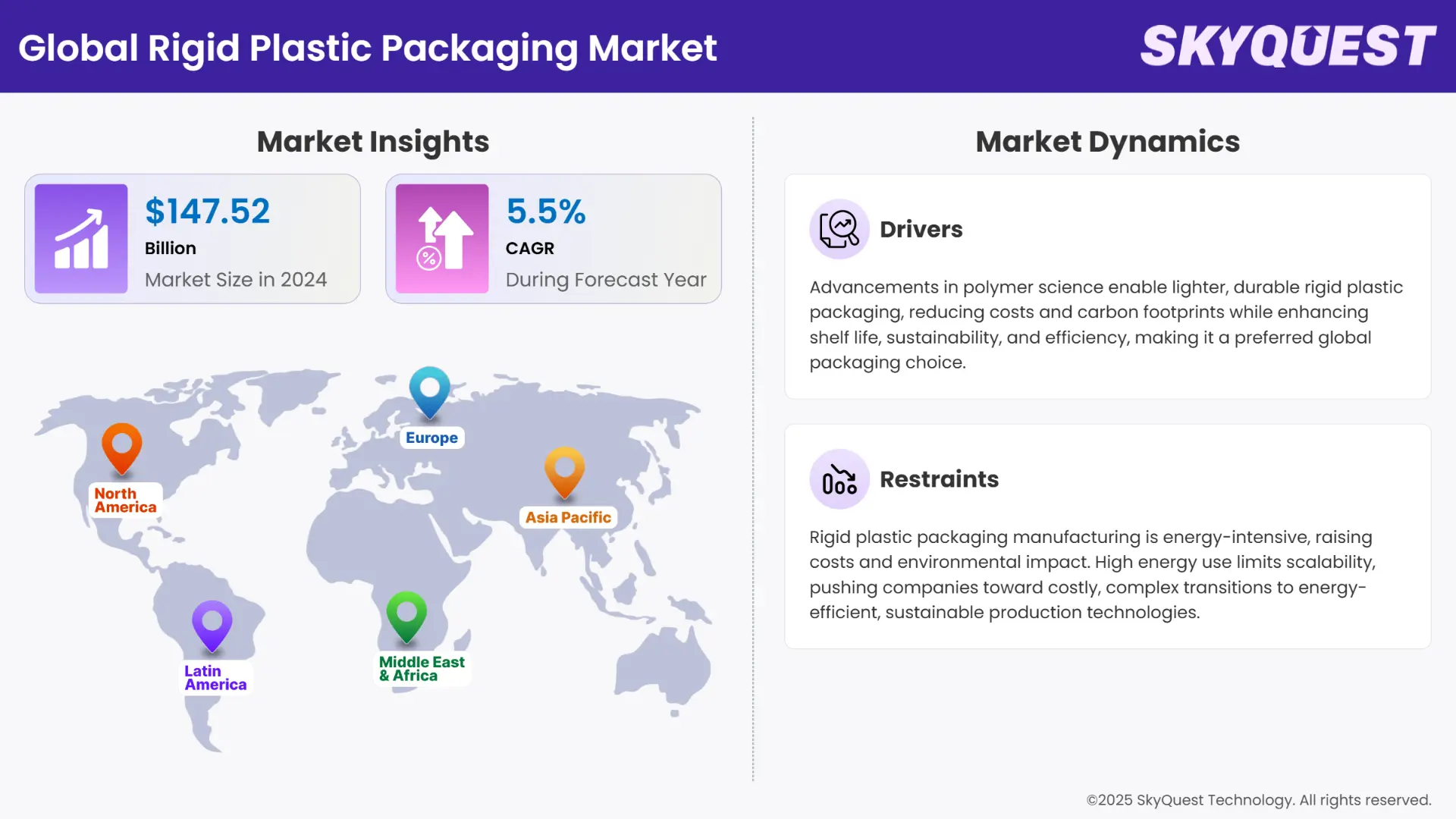
Global Rigid Plastic Packaging Market size was valued at USD 147.52 Billion in 2024 and is poised to grow from USD 155.63 Billion in 2025 to USD 238.85 Billion by 2033, growing at a CAGR of 5.5% in the forecast period (2026–2033).
The rigid plastic packaging industry, while under environmental pressure, continues to develop and expand in response to industry demands for cost-effective, tough, and lightweight materials. Rigid plastics are expected to remain an important contributor to growth in food/beverage, personal care, and pharmaceuticals (specifically in emerging markets). Increased urbanization, along with increased middle-class population are creating demand for packaged products. In addition to population growth trends, advances in competencies such as enhanced barrier properties, tamper evidence, and sustainably recyclable materials, will spur adoption across sectors. Rigid plastics offer durability and wide applications for bottles, containers, trays, and caps used for food-grade and industrial applications.
On the negative side, the rigid plastic packaging business is facing challenges related to increased environmental regulations and scrutiny with regards to the dangers of plastic waste. Many countries are tightening regulations around single-use-plastic and manufacturers are feeling pressure to pivot to sustainable alternatives, or to offer increased recyclability. Increasing raw material prices also contribute to decreased profitability and to challenges related to PET production provided raw materials come from petrochemical feedstock. Furthermore, consumer preferences are shifting more toward eco-friendly, and biodegradable packaging. This consumer preference would challenge the rigid plastic formats long term, however, it should also open development opportunities especially in regards to circular economy investments, and the use of recycled-content rigid plastics.
The escalating demand for packaged food and beverages is a significant driver for the rigid plastic packaging market. Consumers' shift towards convenience foods, ready-to-eat meals, and on-the-go beverages necessitates packaging solutions that ensure product safety, extend shelf life, and offer ease of use. Rigid plastic packaging, known for its durability and protective qualities, meets these requirements effectively. Materials like polyethylene terephthalate (PET) and polypropylene (PP) are commonly used due to their strength and resistance to moisture and shock. This trend is particularly evident in regions like North America and Europe, where the consumption of packaged foods is on the r ise. The ability of rigid plastic packaging to maintain product integrity during transportation and storage makes it an ideal choice for food and beverage manufacturers aiming to meet consumer expectations and regulatory standards.
The rapid growth of e-commerce and global trade has significantly impacted the rigid plastic packaging market. As more consumers turn to online shopping, the need for packaging that can withstand the rigors of shipping and handling has increased. Rigid plastic packaging offers the necessary strength and durability to protect products during transit, reducing the risk of damage and returns. Additionally, the global trade of commodities requires packaging solutions that are not only robust but also lightweight to minimize shipping costs. Rigid plastic packaging meets these criteria, making it a preferred choice for manufacturers and retailers. The expansion of e-commerce platforms and international trade agreements further amplifies this demand, positioning rigid plastic packaging as a critical component in the global supply chain.
To get more insights on this market click here to Request a Free Sample Report
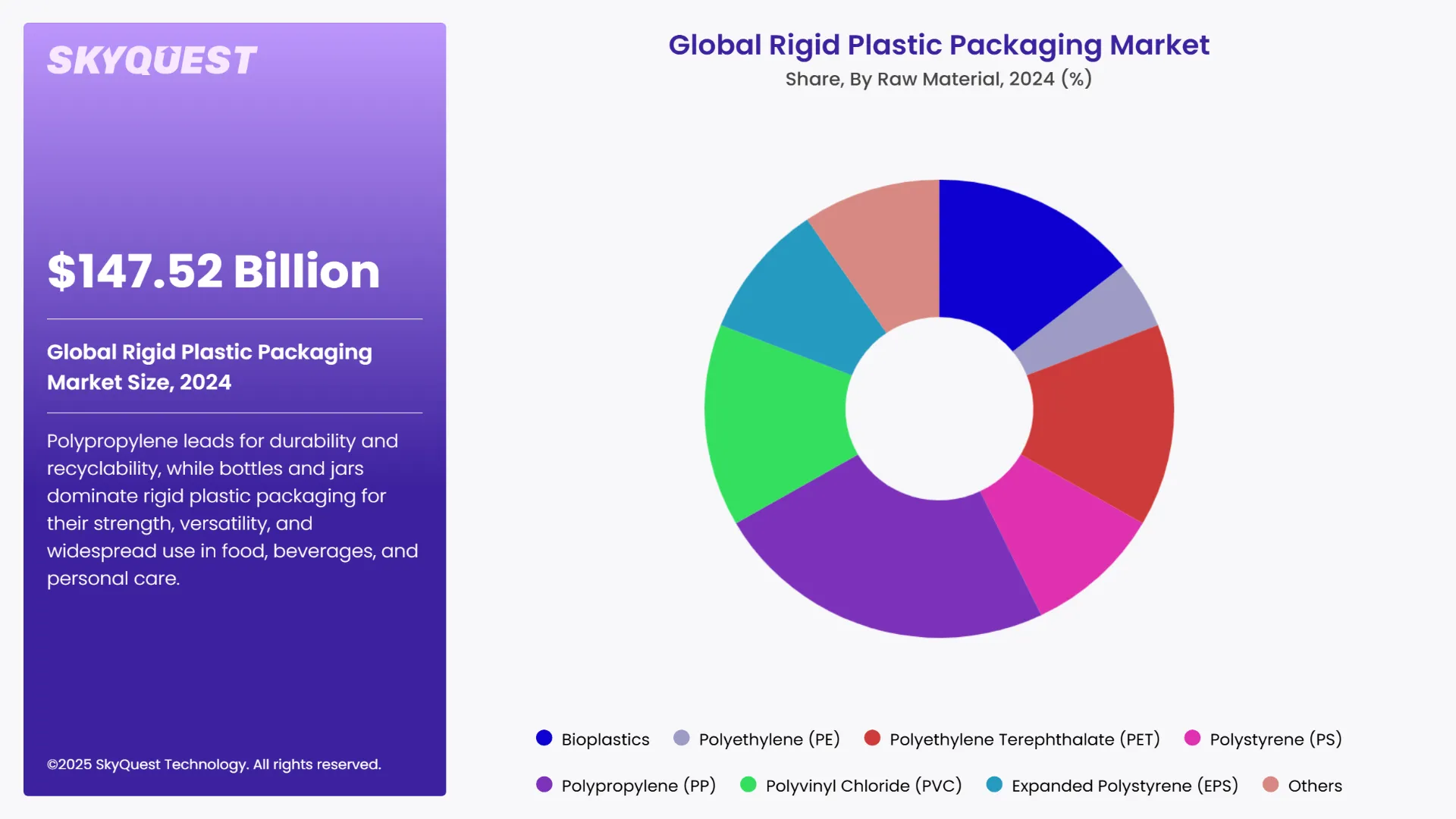
Global Rigid Plastic Packaging Market is segmented by Production Process, Raw Material, Packaging Type, End User and region. Based on Production Process, the market is segmented into Extrusion, Injection Molding, Blow Molding, Thermoforming and Others. Based on Raw Material, the market is segmented into Bioplastics, Polyethylene (PE), Polyethylene Terephthalate (PET), Polystyrene (PS), Polypropylene (PP), Polyvinyl Chloride (PVC), Expanded Polystyrene (EPS) and Others. Based on Packaging Type, the market is segmented into Bottles & Jars, Rigid Bulk Products, Trays, Tubs, Cups, & Pots and Others. Based on End User, the market is segmented into Food & Beverages, Healthcare, Cosmetics & Toiletries, Industrial and Others. Based on region, the market is segmented into North America, Europe, Asia Pacific, Latin America and Middle East & Africa.
Polypropylene (PP) stands out as the dominating sub-segment under the PET raw material category in the rigid plastic packaging market due to its superior performance attributes and versatile application range. PP offers excellent chemical resistance, fatigue resistance, and insulation properties, making it ideal for packaging food, beverages, and consumer goods. It is lightweight yet durable, which makes it highly favorable for reducing transportation costs without compromising on strength. Additionally, PP's compatibility with high-temperature applications and microwavability makes it a preferred choice in food-grade packaging.
The recyclability of polypropylene is also gaining regulatory and consumer support in line with sustainability trends, especially in regions like Europe and North America where circular economy initiatives are in full swing. With advancements in polymer blending and improved molding technologies, PP continues to offer manufacturers cost-efficiency, extended shelf-life capabilities, and design flexibility—all critical for modern packaging needs.
Bottles & jars dominate the rigid plastic packaging market due to their widespread use across multiple high-demand industries such as beverages, food, personal care, and pharmaceuticals. These packaging formats offer excellent protection, durability, and shelf-life extension for both liquid and solid products. Their compatibility with various closures and dispensing mechanisms also enhances consumer convenience. PET and HDPE are commonly used in bottle and jar manufacturing, providing clarity, strength, and recyclability.
The beverage industry's reliance on rigid PET bottles for carbonated drinks, water, and juices, along with growing demand in emerging markets, significantly contributes to the segment’s market leadership. Moreover, the shift from glass to plastic bottles in certain product categories due to weight and breakage concerns further fuels demand. As brand owners seek visually appealing and cost-effective packaging with tamper-evidence features, bottles and jars continue to be the go-to choice for both mass-market and premium product lines.
To get detailed segments analysis, Request a Free Sample Report
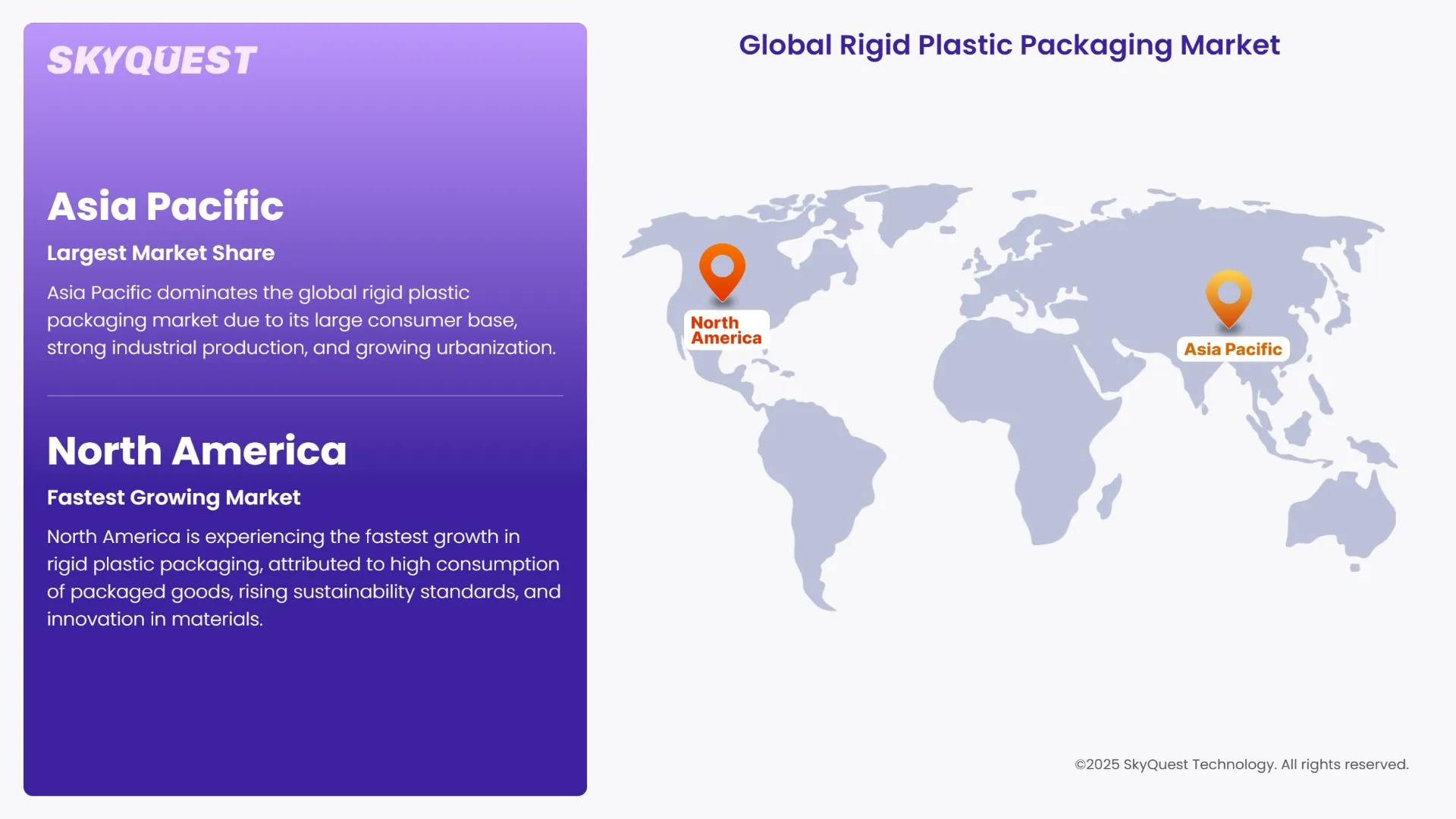
Asia Pacific dominates the global rigid plastic packaging market due to its large consumer base, strong industrial production, and growing urbanization. The rising demand for packaged food, personal care, and pharmaceutical products across developing economies like China, India, and Southeast Asia significantly drives the market. The region's large-scale manufacturing capabilities, low production costs, and availability of raw materials such as polypropylene (PP), polyethylene (PE), and PET support cost-effective production. Moreover, increasing environmental awareness is pushing manufacturers to adopt recyclable and lightweight rigid packaging materials. Expansion in e-commerce and organized retail sectors further fuels demand. According to the Packaging Industry Association of India (PIAI), India's packaging industry is growing at 22–25% annually, reinforcing regional leadership. Additionally, Japan and South Korea’s focus on high-quality, eco-conscious packaging solutions adds technological edge to the region's dominance.
China Rigid Plastic Packaging Market
China commands a dominant position in the Asia Pacific rigid plastic packaging market, supported by its massive consumer base, world-class manufacturing infrastructure, and export-oriented production. The Chinese packaging sector is expected to exceed USD 400 billion by 2025, with rigid plastic packaging accounting for a substantial share due to its wide application across beverages, household products, and electronics. The country is also seeing a shift toward sustainable packaging driven by central government policies under the "Plastic Pollution Control Action Plan."
In February 2024, Silgan Holdings, a global packaging giant, announced a $50 million expansion of its Suzhou facility. The investment targets increasing output of high-performance rigid plastic containers for beverages and nutraceuticals, aiming to cater to the domestic and Southeast Asian markets.
India Rigid Plastic Packaging Market
India is emerging as a key growth hub in the rigid plastic packaging market, owing to its fast-growing food processing, healthcare, and e-commerce industries. Rising middle-class income, increased demand for ready-to-eat meals, and changing lifestyles are major demand drivers. The government's emphasis on local manufacturing (Make in India) and initiatives to curb plastic waste have also spurred the development of recyclable rigid plastics. India's packaging market is projected to reach USD 204 billion by 2025, and rigid plastics constitute a significant portion of this growth.
In October 2023, UFlex Ltd. launched a new product line of recyclable rigid PET containers at its Sanand (Gujarat) facility. This line targets personal care, food, and medical sectors and aligns with India’s single-use plastic ban, focusing on circular economy practices.
North America is experiencing the fastest growth in rigid plastic packaging, attributed to high consumption of packaged goods, rising sustainability standards, and innovation in materials. Demand is being driven by the food & beverage and healthcare industries, which require tamper-proof and sterile packaging solutions. The shift toward convenience packaging—especially among millennials—has accelerated rigid packaging for beverages, sauces, ready meals, and supplements. Technological advancements like barrier-enhanced PET and lightweight HDPE containers are also gaining ground. Furthermore, increasing investment in post-consumer recycled (PCR) plastics and bio-based plastics is reshaping the market landscape. According to the Flexible Packaging Association, rigid plastic packaging accounted for over 25% of the total U.S. packaging market in 2024, with significant year-on-year growth.
U.S. Rigid Plastic Packaging Market
The U.S. leads regional growth due to its strong domestic demand and advanced technological ecosystem. Rigid plastic is widely used in frozen foods, healthcare, cleaning products, and personal care. Stringent FDA regulations for food safety and packaging compliance drive innovation in materials and barrier properties. Major players like Berry Global, Amcor, and Graham Packaging are investing in sustainable solutions.
In January 2024, Berry Global announced an investment of $70 million to upgrade its Evansville, Indiana plant. The upgrade includes new lines for producing 100% PCR content containers for leading FMCG clients, supporting corporate ESG goals and new regulatory demands on recycled content in packaging.
Canada Rigid Plastic Packaging Market
Canada is witnessing rapid growth in the rigid plastic packaging market, driven by regulatory frameworks promoting circularity and producer responsibility. The Canadian government has mandated minimum recycled content in plastic packaging by 2025, pushing brands to transition away from virgin plastic. Industries such as dairy, fresh produce, and personal care are rapidly adopting PET and PP containers.
Europe holds the third position in the rigid plastic packaging market, driven by stringent environmental regulations, rising consumer awareness on sustainability, and strong industrial demand. The region emphasizes circular economy principles, leading to increased adoption of recyclable and bio-based rigid plastics. Key industries such as food & beverage, pharmaceuticals, cosmetics, and automotive are significant contributors to demand. Innovations in lightweight, barrier-enhanced, and reusable rigid packaging formats are gaining traction across European markets.
Additionally, government mandates like the EU’s Single-Use Plastics Directive and Extended Producer Responsibility (EPR) schemes compel manufacturers to reduce plastic waste and increase recycled content. Germany, France, and Italy represent critical markets within Europe, each with unique drivers reflecting their economic priorities and regulatory environments.
Germany Rigid Plastic Packaging Market
Germany is one of Europe's leading markets for rigid plastic packaging due to its advanced manufacturing capabilities and high environmental standards. The packaging sector is driven by demand for sustainable, high-performance containers in the food, chemical, and pharmaceutical industries. German firms are focusing on mono-material and 100% recyclable rigid formats.
In 2024, ALPLA Group opened a new €60 million rigid packaging plant in Leipzig, dedicated to the production of eco-friendly packaging for food and household products.
France Rigid Plastic Packaging Market
France actively drives sustainable rigid plastic packaging adoption through strict regulatory frameworks, including a ban on non-recyclable plastics since 2022. The country focuses on bio-based and enzyme-recycled plastics to meet circular economy goals. The food and cosmetics sectors are leading adopters of these innovative materials.
Italy Rigid Plastic Packaging Market
Italy is an important market for rigid plastic packaging, driven primarily by the cosmetics, food, and beverage sectors. The country combines traditional design expertise with modern packaging innovation, focusing on aesthetic appeal and functional performance such as barrier protection and lightweighting. Italian companies are also advancing in smart packaging technologies to improve consumer engagement.
To know more about the market opportunities by region and country, click here to
Buy The Complete Report
Innovation in Lightweight and Durable Materials
Growing Pharmaceutical and Healthcare Packaging Needs
High Energy Consumption in Production
Limited Recycling Infrastructure
Request Free Customization of this report to help us to meet your business objectives.
The rigid plastic packaging market is characterized by strategic maneuvers aimed at innovation, sustainability, and regional expansion. Amcor, a global leader, has committed to delivering 100% recyclable or reusable rigid plastic packaging by 2025, underscoring its dedication to environmental responsibility. Similarly, Plastipak Holdings has expanded its Luxembourg facility to boost recycled PET production by 136%, aligning with the industry's shift towards circular economy practices. Regional players are also making significant strides. Manjushree Technopack, based in India, has enhanced its recycling capabilities with a new plant in Bidadi, Karnataka, addressing the growing demand for sustainable packaging solutions in the Indian market. Logoplaste, headquartered in Portugal, has pioneered the "Hole in the Wall" concept, establishing in-house manufacturing facilities adjacent to client production sites, thereby reducing logistics costs and carbon footprints. These strategic initiatives reflect a concerted effort within the rigid plastic packaging industry to innovate, embrace sustainability, and expand regionally, ensuring competitiveness in a dynamic market landscape.
SkyQuest’s ABIRAW (Advanced Business Intelligence, Research & Analysis Wing) is our Business Information Services team that Collects, Collates, Correlates, and Analyses the Data collected using Primary Exploratory Research backed by robust Secondary Desk research.
As per SkyQuest analysis, The Rigid Plastic Packaging Market is witnessing substantial growth driven primarily by the rising demand for lightweight, durable, and cost-effective packaging solutions across sectors like food & beverages, personal care, and pharmaceuticals. One of the key drivers is the increasing consumption of packaged and convenience food products, especially in urban centers, where the need for extended shelf life and safe transport is critical. Rigid plastic packaging offers superior protection against contamination and damage, making it a preferred choice among manufacturers. Additionally, ongoing innovations in design and barrier technologies are enhancing the recyclability and sustainability of these products, supporting their adoption in line with environmental regulations.
Polyethylene Terephthalate (PET) dominates the market by raw material, owing to its clarity, strength, recyclability, and suitability for food-grade applications. Among packaging types, bottles and jars lead the segment due to their wide usage in beverage and personal care industries. Regionally, Asia Pacific emerges as the dominating market, fueled by rapid industrialization, growing consumer base, and rising disposable incomes in countries like China, India, and Southeast Asia.
| Report Metric | Details |
|---|---|
| Market size value in 2024 | USD 147.52 Billion |
| Market size value in 2033 | USD 238.85 Billion |
| Growth Rate | 5.5% |
| Base year | 2024 |
| Forecast period | 2026-2033 |
| Forecast Unit (Value) | USD Billion |
| Segments covered |
|
| Regions covered | North America (US, Canada), Europe (Germany, France, United Kingdom, Italy, Spain, Rest of Europe), Asia Pacific (China, India, Japan, Rest of Asia-Pacific), Latin America (Brazil, Rest of Latin America), Middle East & Africa (South Africa, GCC Countries, Rest of MEA) |
| Companies covered |
|
| Customization scope | Free report customization with purchase. Customization includes:-
|
To get a free trial access to our platform which is a one stop solution for all your data requirements for quicker decision making. This platform allows you to compare markets, competitors who are prominent in the market, and mega trends that are influencing the dynamics in the market. Also, get access to detailed SkyQuest exclusive matrix.
Table Of Content
Executive Summary
Market overview
Parent Market Analysis
Market overview
Market size
KEY MARKET INSIGHTS
COVID IMPACT
MARKET DYNAMICS & OUTLOOK
Market Size by Region
KEY COMPANY PROFILES
Methodology
For the Rigid Plastic Packaging Market, our research methodology involved a mixture of primary and secondary data sources. Key steps involved in the research process are listed below:
1. Information Procurement: This stage involved the procurement of Market data or related information via primary and secondary sources. The various secondary sources used included various company websites, annual reports, trade databases, and paid databases such as Hoover's, Bloomberg Business, Factiva, and Avention. Our team did 45 primary interactions Globally which included several stakeholders such as manufacturers, customers, key opinion leaders, etc. Overall, information procurement was one of the most extensive stages in our research process.
2. Information Analysis: This step involved triangulation of data through bottom-up and top-down approaches to estimate and validate the total size and future estimate of the Rigid Plastic Packaging Market.
3. Report Formulation: The final step entailed the placement of data points in appropriate Market spaces in an attempt to deduce viable conclusions.
4. Validation & Publishing: Validation is the most important step in the process. Validation & re-validation via an intricately designed process helped us finalize data points to be used for final calculations. The final Market estimates and forecasts were then aligned and sent to our panel of industry experts for validation of data. Once the validation was done the report was sent to our Quality Assurance team to ensure adherence to style guides, consistency & design.
Analyst Support
Customization Options
With the given market data, our dedicated team of analysts can offer you the following customization options are available for the Rigid Plastic Packaging Market:
Product Analysis: Product matrix, which offers a detailed comparison of the product portfolio of companies.
Regional Analysis: Further analysis of the Rigid Plastic Packaging Market for additional countries.
Competitive Analysis: Detailed analysis and profiling of additional Market players & comparative analysis of competitive products.
Go to Market Strategy: Find the high-growth channels to invest your marketing efforts and increase your customer base.
Innovation Mapping: Identify racial solutions and innovation, connected to deep ecosystems of innovators, start-ups, academics, and strategic partners.
Category Intelligence: Customized intelligence that is relevant to their supply Markets will enable them to make smarter sourcing decisions and improve their category management.
Public Company Transcript Analysis: To improve the investment performance by generating new alpha and making better-informed decisions.
Social Media Listening: To analyze the conversations and trends happening not just around your brand, but around your industry as a whole, and use those insights to make better Marketing decisions.
REQUEST FOR SAMPLE
 REQUEST FREE CUSTOMIZATION
Global Rigid Plastic Packaging Market size was valued at USD 147.52 Billion in 2024 and is poised to grow from USD 155.63 Billion in 2025 to USD 238.85 Billion by 2033, growing at a CAGR of 5.5% in the forecast period (2026–2033).
The rigid plastic packaging market is characterized by strategic maneuvers aimed at innovation, sustainability, and regional expansion. Amcor, a global leader, has committed to delivering 100% recyclable or reusable rigid plastic packaging by 2025, underscoring its dedication to environmental responsibility. Similarly, Plastipak Holdings has expanded its Luxembourg facility to boost recycled PET production by 136%, aligning with the industry's shift towards circular economy practices. Regional players are also making significant strides. Manjushree Technopack, based in India, has enhanced its recycling capabilities with a new plant in Bidadi, Karnataka, addressing the growing demand for sustainable packaging solutions in the Indian market. Logoplaste, headquartered in Portugal, has pioneered the "Hole in the Wall" concept, establishing in-house manufacturing facilities adjacent to client production sites, thereby reducing logistics costs and carbon footprints. These strategic initiatives reflect a concerted effort within the rigid plastic packaging industry to innovate, embrace sustainability, and expand regionally, ensuring competitiveness in a dynamic market landscape. 'Amcor Plc', 'Berry Global Inc.', 'Sealed Air Corporation', 'ALPLA Group', 'Silgan Holdings Inc.', 'Sonoco Products Company', 'Huhtamaki Oyj', 'DS Smith Plc', 'Plastipak Holdings Inc.', 'Winpak Ltd.', 'AptarGroup Inc.', 'Tekni-Plex Inc.', 'Brand-Building Packaging', 'Pactiv Evergreen Inc.', 'Graham Packaging Company', 'Anchor Packaging Inc.', 'Coveris Holdings S.A.', 'Altium Packaging', 'Mauser Packaging Solutions', 'Takween Advanced Industries'
Advancements in polymer science and material engineering have led to the development of lighter yet more durable rigid plastic packaging solutions. These innovations reduce material usage without compromising strength, improving transportation efficiency and lowering carbon footprints. Lightweight packaging also cuts shipping costs and enhances convenience for consumers. Innovations like multilayer barriers and improved sealing technologies help extend product shelf life, especially for perishable goods. Such improvements make rigid plastic packaging highly attractive to manufacturers seeking cost-effective, sustainable, and high-performance packaging, fueling market expansion globally.
Short-Term: In the short term, the market is witnessing heightened demand for hygienic and tamper-proof packaging due to increased health awareness post-COVID-19. Food & beverage and pharmaceutical sectors are driving volume growth, especially in emerging economies. Manufacturers are responding with lightweight yet durable rigid plastics to ensure supply chain efficiency and lower logistics costs.
Asia Pacific dominates the global rigid plastic packaging market due to its large consumer base, strong industrial production, and growing urbanization. The rising demand for packaged food, personal care, and pharmaceutical products across developing economies like China, India, and Southeast Asia significantly drives the market. The region's large-scale manufacturing capabilities, low production costs, and availability of raw materials such as polypropylene (PP), polyethylene (PE), and PET support cost-effective production. Moreover, increasing environmental awareness is pushing manufacturers to adopt recyclable and lightweight rigid packaging materials. Expansion in e-commerce and organized retail sectors further fuels demand. According to the Packaging Industry Association of India (PIAI), India's packaging industry is growing at 22–25% annually, reinforcing regional leadership. Additionally, Japan and South Korea’s focus on high-quality, eco-conscious packaging solutions adds technological edge to the region's dominance.


Want to customize this report? This report can be personalized according to your needs. Our analysts and industry experts will work directly with you to understand your requirements and provide you with customized data in a short amount of time. We offer $1000 worth of FREE customization at the time of purchase.
Feedback From Our Clients


 USA (+1) 351-333-4748

