
Teleradiology Market
Report ID: SQMIG35G2343
Report ID: SQMIG35G2343
[email protected]
USA +1 351-333-4748
Report ID:
SQMIG35G2343 |
Region:
Global |
Published Date: December, 2025
Pages:
189
|Tables:
91
|Figures:
70


Global Teleradiology Market size was valued at USD 9.58 Billion in 2024 and is poised to grow from USD 11.06 Billion in 2025 to USD 34.77 Billion by 2033, growing at a CAGR of 15.4% during the forecast period (2026–2033).
Key Takeaways: Market Trends & Insights
The increase is occurring while radiologists are becoming increasingly scarce, broadband is developing quickly, and cloud-first imaging platforms are making remote reading, once an optional service, a vital clinical tool. Due to workforce shortages, which are expected to leave the UK 40% short of radiologists by 2028 and mirror shortages among OECD members, remote diagnostics will always be in demand. Health systems are being forced to outsource overnight coverage, and subspecialty reads because of the growing need for cross-sectional imaging in aging populations and rising radiology volumes.
AI-enabled triage and zero-footprint viewers reduce turnaround times and capital costs, attracting providers seeking flexible growth. American College of Radiology, "Teleradiology," acr.org Consolidation is happening at an accelerating rate: ONRAD notified investors that teleradiology has evolved from a dispersed service to a layer of strategic infrastructure by acquiring Direct Radiology in January 2025, creating a scalable platform that serves 550 locations.
In addition, the global teleradiology market growth is expanding because of an increase in diagnostic imaging volumes worldwide. Health systems already facing a staffing shortage are further burdened by the 2055 modality growth projections, which include CT at 25.1%, nuclear medicine at 26.9%, X-ray at 17.8%, ultrasound at 17.3%, and MRI at 16.9%. Chronic diseases, growing screening programs, and aging populations are the main causes of the volume increase. Teleradiology allows facilities to handle increases in workload without experiencing corresponding payroll growth and ensures that subspecialists interpret complex cases without requiring patients to travel to tertiary centers.
How are Hospitals Leveraging AI for Faster Teleradiology Reports?
By improving diagnostic precision, expediting image interpretation, and simplifying the process of prioritizing urgent cases, artificial intelligence is revolutionizing the teleradiology market outlook. Using deep learning algorithms greatly reduced radiologists' workloads while maintaining good diagnostic consistency.
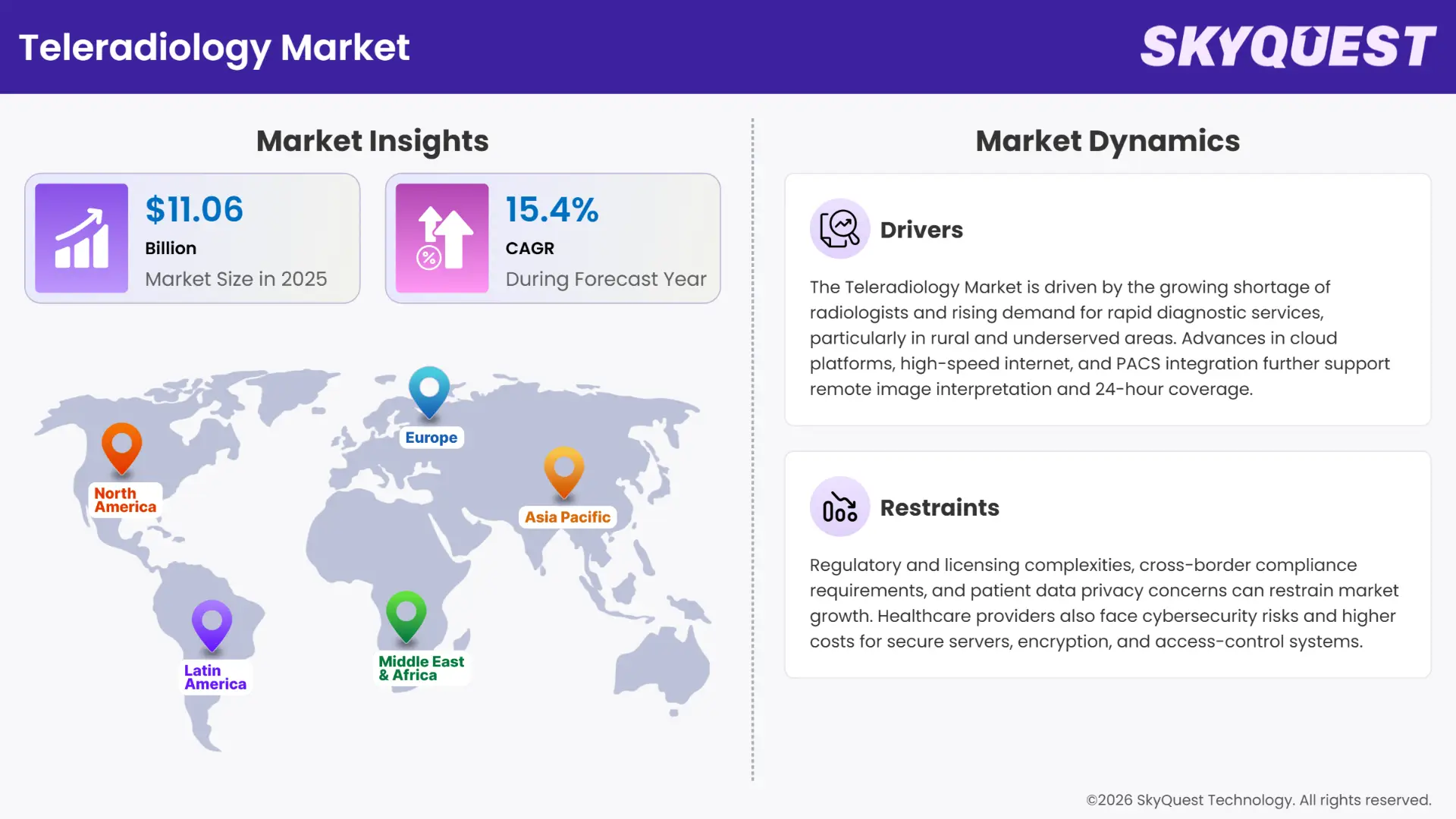
To get more insights on this market click here to Request a Free Sample Report
The global teleradiology market is segmented into product, report type, end use, and region. By product, the market is classified into computed tomography (CT), ultrasound, x-ray, nuclear imaging, and magnetic resonance imaging (MRI). Depending on report type, it is bifurcated into preliminary reports and final reports. According to end use, the market is divided into hospitals, radiology clinics, and ambulatory imaging centers. Regionally, it is analyzed across North America, Europe, Asia-Pacific, Latin America, and the Middle East and Africa.
As per the 2024 teleradiology market analysis, the X-ray segment led the industry with a market share of roughly 28.6%, and it is expected to continue to do so for the duration of the forecast. Numerous factors, such as low costs, extensive use in primary diagnosis, and the introduction of innovative systems like filmless X-ray systems, have contributed to this segment's dominance. Furthermore, this technique has many applications in a range of healthcare domains, such as orthopedics, cancer screening, cardiovascular diagnostics, chest imaging, and dental imaging.
The computed tomography (CT) category is expected to grow at the fastest rate during the forecast period, with a compound annual growth rate (CAGR) of 26.4%. CT's capacity to generate faster and more accurate images of complex body organs like the brain, heart, and lungs has aided its development. Growing technological advancements and industry digitization are also expected to support this segment’s growth.
As per the 2024 teleradiology market forecast, the preliminary report category dominated the market. As preliminary reports are more cost-effective and can be produced much more quickly than final reports, they are commonly used in emergency treatment. Higher insurance coverage is offered to providers outside of regular business hours by hospitals and imaging centers. Faster growth is therefore expected.
Since many providers are now favoring final reads because of the precise, detailed data with fewer errors, the final report category is predicted to grow at the fastest CAGR of 27.0%. Medicare is moving away from standard preliminary reads and toward preliminary and final reads that incorporate comprehensive radiologists' reports. Increased competition in teleradiology services has led to technological advancements that have made it easier for off-site radiologists to communicate with the facilities they are looking for. This encourages more final reads from teleradiology providers.
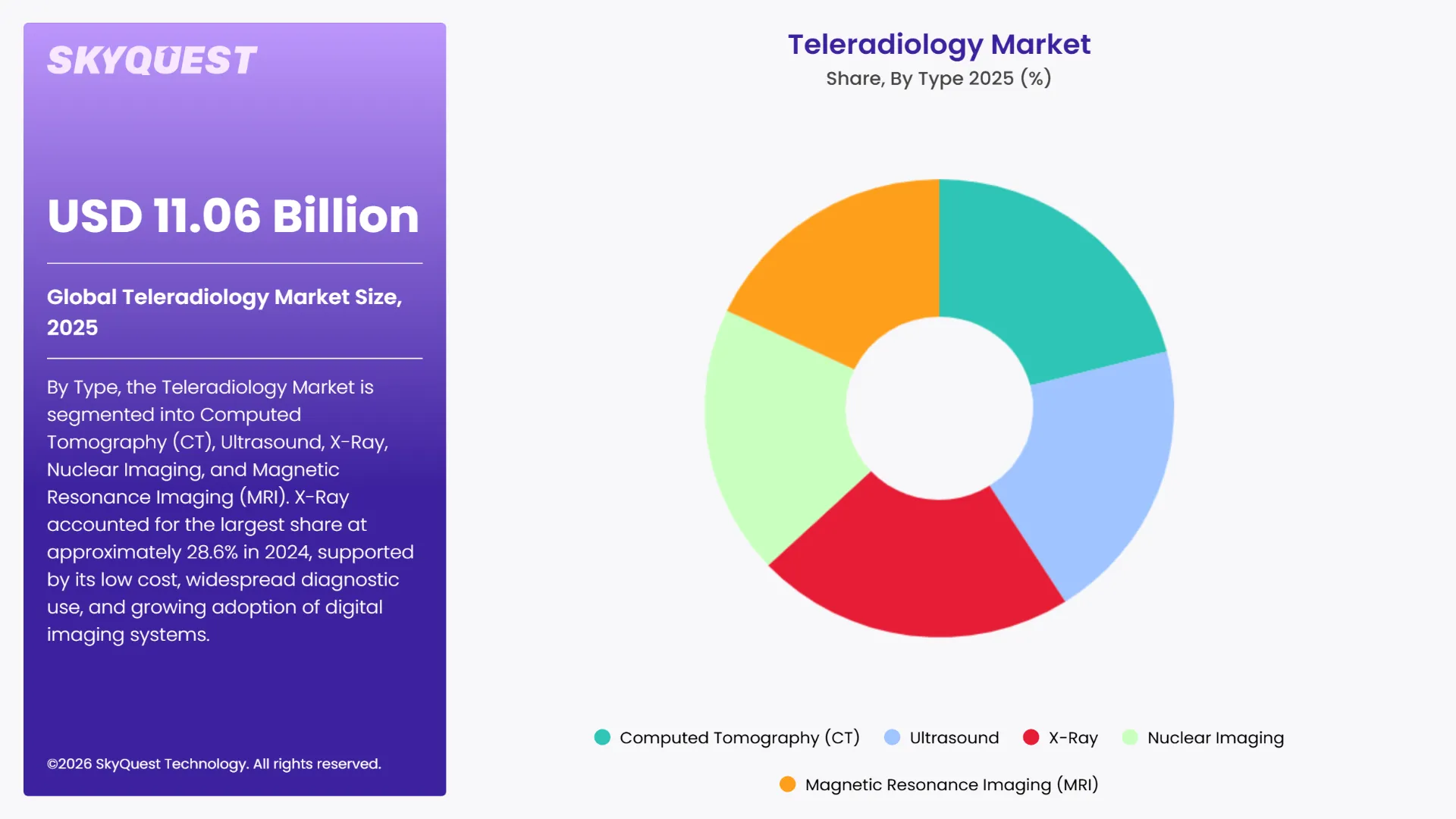
To get detailed segments analysis, Request a Free Sample Report
As per the teleradiology market regional analysis, at 38.5%, the North American market had the largest share. Due to improvements in imaging and telecommunications infrastructure, medical images can now be transmitted smoothly, allowing healthcare providers to remotely access radiological expertise. The market is expanding because more healthcare facilities utilizing teleradiology services.
U.S. Teleradiology Market
As the US healthcare system shifts to value-based care and patient-centric models, which prioritize efficacy, accessibility, and care quality, the teleradiology sector is expected to grow. Teleradiology helps achieve these objectives by enabling medical practitioners to diagnose and treat patients more rapidly across geographic boundaries by offering quick and remote access to radiological expertise.
Canada Teleradiology Market
The teleradiology market is expected to grow because of the shortage of radiologists in some parts of Canada, particularly in remote and rural areas. Due to this shortage, teleradiology solutions are now needed to handle staffing issues and ensure timely interpretation of medical images. By using remote radiology services, healthcare providers can improve patient care and outcomes by increasing patient access to radiological expertise and streamlining workflow efficiency.
The rising incidence of chronic illnesses and the aging population's greater need for diagnostic imaging contributed to the European teleradiology market's share in 2024. Healthcare systems depend more on teleradiology to provide prompt and precise diagnoses as a result of the growth of medical imaging operations throughout the continent. The region's market expansion is further supported by favorable regulatory environments and improvements in telecommunications infrastructure.
UK Teleradiology Market
If the National Health Service (NHS) continues to actively implement digital healthcare solutions, the UK teleradiology industry is expected to grow gradually. The NHS is increasingly using teleradiology to maintain prompt diagnosis in response to the ongoing shortage of radiologists, particularly in underserved or remote areas. Teleradiology services are becoming more well-liked and efficient nationwide because of investments in digital infrastructure and the UK's larger drive towards healthcare modernization.
Germany Teleradiology Market
The need for remote healthcare services brought on by the COVID-19 pandemic is driving a significant expansion in Germany's teleradiology sector. Hospitals and clinics implemented teleradiology to ensure continuity in diagnostic services because it was necessary to reduce physical contact and follow social distancing. Given the growing need for effective radiological services in both urban and rural areas, it is anticipated that ongoing digitization initiatives and healthcare reforms that support telemedicine will continue along this trajectory.
France Teleradiology Market
The French teleradiology market is anticipated to expand profitably over the forecast period because of supportive regulations that encourage telemedicine and innovation in digital healthcare. Teleradiology is now more widely accepted due to the French government's investments in developing digital health infrastructure and promoting remote diagnostics. The increasing need for prompt radiology interpretations in rural areas emphasizes the significance of remote imaging services in the French healthcare system.
The teleradiology market is expected to grow significantly during the forecast period due to Asia-Pacific rapidly growing healthcare infrastructure and digital transformation. Providers are being encouraged to use remote radiology solutions by government support for healthcare modernization and rising investments in telehealth technologies. Effective diagnostic imaging services are becoming more necessary as the prevalence of chronic diseases rises in countries like China, India, and Southeast Asia.
China Teleradiology Market
The teleradiology market in China is expanding because of large investments in medical facilities, technological developments, and a rise in the need for diagnostic services. Teleradiology offers a scalable way to address regional differences in radiologist availability as the nation continues to urbanize and increase access to healthcare, particularly in rural areas. The deployment and efficacy of teleradiology services are also being accelerated by government initiatives that facilitate the integration of AI and telemedicine into Chinese healthcare systems.
Japan Teleradiology Market
The teleradiology market in Japan is expected to expand gradually because of the country's aging population and growing demand for frequent diagnostic testing. Healthcare providers are using teleradiology to meet increasing imaging needs without placing an excessive burden on the infrastructure as a result of an aging population and a declining birth rate. Furthermore, Japan is the perfect place to incorporate cutting-edge telehealth solutions, like teleradiology, into routine care delivery because of its emphasis on technological innovation and automation.
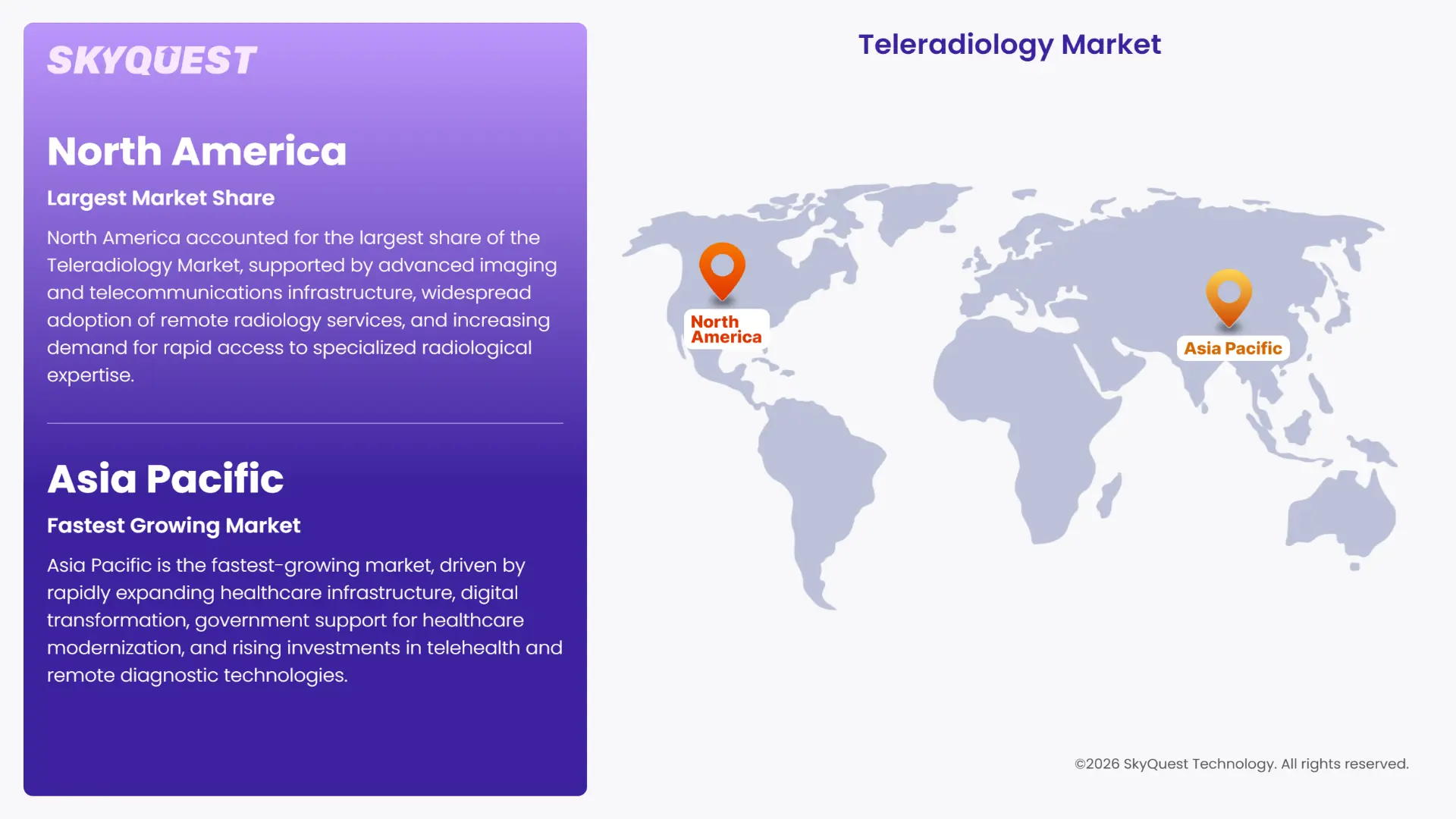
To know more about the market opportunities by region and country, click here to
Buy The Complete Report
Growing Need for Remote Diagnostic Services
Developments in PACS Integration and Image Transmission
Difficulties with Regulation and Licensing
Privacy and Data Security Issues
Request Free Customization of this report to help us to meet your business objectives.
Major rivals in the relatively fragmented global teleradiology market are concentrating on mergers, service development, and AI integration. For example, Teleradiology Solutions extended its business to Africa in 2024, and GE HealthCare and Philips Healthcare are integrating advanced analytics into their imaging platforms. While some suppliers are forming strategic partnerships with nearby hospitals to increase market penetration, others, like RadNet, are investing in cloud-based technology and artificial intelligence to improve workflow efficiency.
Using AI to Help Read Images
Changing Teleradiology Landscape in Developing Countries
SkyQuest’s ABIRAW (Advanced Business Intelligence, Research & Analysis Wing) is our Business Information Services team that Collects, Collates, Correlates, and Analyses the Data collected by means of Primary Exploratory Research backed by robust Secondary Desk research.
As per SkyQuest analysis, the teleradiology market is predicted to experience rapid growth due to multiple factors including the implementation of AI, technological advancements, and the expanding global demand for remote diagnostic services. Due to a growing lack of radiologists, particularly in rural and underserved areas, teleradiology is becoming an essential part of modern healthcare. However, regulatory issues and data security are significant barriers to development. Startups are occupying an important role, primarily in poorer countries, providing cost-effective and scalable investments. Teleradiology will continue to evolve into an important part of globally integrated digital healthcare systems as providers increasingly prioritize efficiency and accessibility.
| Report Metric | Details |
|---|---|
| Market size value in 2024 | USD 9.58 Billion |
| Market size value in 2033 | USD 34.77 Billion |
| Growth Rate | 15.4% |
| Base year | 2024 |
| Forecast period | 2026–2033 |
| Forecast Unit (Value) | USD Billion |
| Segments covered |
|
| Regions covered | North America (US, Canada), Europe (Germany, France, United Kingdom, Italy, Spain, Rest of Europe), Asia Pacific (China, India, Japan, Rest of Asia-Pacific), Latin America (Brazil, Rest of Latin America), Middle East & Africa (South Africa, GCC Countries, Rest of MEA) |
| Companies covered |
|
| Customization scope | Free report customization with purchase. Customization includes:-
|
To get a free trial access to our platform which is a one stop solution for all your data requirements for quicker decision making. This platform allows you to compare markets, competitors who are prominent in the market, and mega trends that are influencing the dynamics in the market. Also, get access to detailed SkyQuest exclusive matrix.
Table Of Content
Executive Summary
Market overview
Parent Market Analysis
Market overview
Market size
KEY MARKET INSIGHTS
COVID IMPACT
MARKET DYNAMICS & OUTLOOK
Market Size by Region
KEY COMPANY PROFILES
Methodology
For the Teleradiology Market, our research methodology involved a mixture of primary and secondary data sources. Key steps involved in the research process are listed below:
1. Information Procurement: This stage involved the procurement of Market data or related information via primary and secondary sources. The various secondary sources used included various company websites, annual reports, trade databases, and paid databases such as Hoover's, Bloomberg Business, Factiva, and Avention. Our team did 45 primary interactions Globally which included several stakeholders such as manufacturers, customers, key opinion leaders, etc. Overall, information procurement was one of the most extensive stages in our research process.
2. Information Analysis: This step involved triangulation of data through bottom-up and top-down approaches to estimate and validate the total size and future estimate of the Teleradiology Market.
3. Report Formulation: The final step entailed the placement of data points in appropriate Market spaces in an attempt to deduce viable conclusions.
4. Validation & Publishing: Validation is the most important step in the process. Validation & re-validation via an intricately designed process helped us finalize data points to be used for final calculations. The final Market estimates and forecasts were then aligned and sent to our panel of industry experts for validation of data. Once the validation was done the report was sent to our Quality Assurance team to ensure adherence to style guides, consistency & design.
Analyst Support
Customization Options
With the given market data, our dedicated team of analysts can offer you the following customization options are available for the Teleradiology Market:
Product Analysis: Product matrix, which offers a detailed comparison of the product portfolio of companies.
Regional Analysis: Further analysis of the Teleradiology Market for additional countries.
Competitive Analysis: Detailed analysis and profiling of additional Market players & comparative analysis of competitive products.
Go to Market Strategy: Find the high-growth channels to invest your marketing efforts and increase your customer base.
Innovation Mapping: Identify racial solutions and innovation, connected to deep ecosystems of innovators, start-ups, academics, and strategic partners.
Category Intelligence: Customized intelligence that is relevant to their supply Markets will enable them to make smarter sourcing decisions and improve their category management.
Public Company Transcript Analysis: To improve the investment performance by generating new alpha and making better-informed decisions.
Social Media Listening: To analyze the conversations and trends happening not just around your brand, but around your industry as a whole, and use those insights to make better Marketing decisions.
REQUEST FOR SAMPLE
 REQUEST FREE CUSTOMIZATION
Global Teleradiology Market size was valued at USD 9.58 Billion in 2024 and is poised to grow from USD 11.06 Billion in 2025 to USD 34.77 Billion by 2033, growing at a CAGR of 15.4% during the forecast period (2026–2033).
Key vendors in the Teleradiology Market include Philips Healthcare, GE HealthCare, ZettaHealth, Siemens Healthineers, Fujifilm Holdings Corporation, RamSoft, Agfa-Gevaert Group, Medica Group PLC, Everlight Radiology, Teleradiology Solutions, Radiology Partners, USARAD Holdings Inc., Konica Minolta, and ONRAD Inc.
The key driver of the Teleradiology Market is the growing shortage of radiologists and increasing need for rapid diagnostic services, particularly in rural and underserved areas. Remote interpretation enables 24-hour coverage, faster diagnosis, improved workflow, and access to specialized radiological expertise.
The key market trend in the Teleradiology Market is the increasing adoption of AI-powered diagnostic tools and cloud-based imaging platforms, enabling faster image analysis, remote collaboration, workflow automation, and improved access to specialized radiology services.
North America accounted for the largest share at 38.5%, supported by advanced imaging and telecommunications infrastructure, increasing adoption of teleradiology services, and growing demand for remote radiological expertise.


Want to customize this report? This report can be personalized according to your needs. Our analysts and industry experts will work directly with you to understand your requirements and provide you with customized data in a short amount of time. We offer $1000 worth of FREE customization at the time of purchase.
Feedback From Our Clients


 USA (+1) 351-333-4748

