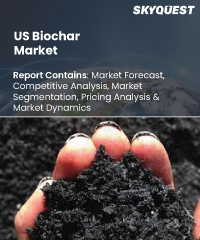
U.S. Biochar Market
Report ID: SQMIC15E2520
Report ID: SQMIC15E2520
[email protected]
USA +1 351-333-4748
Report ID:
SQMIC15E2520 |
Region:
Country |
Published Date: December, 2025
Pages:
184
|Tables:
62
|Figures:
77


U.S. Biochar Market size was valued at USD 229.54 Million in 2024 and is poised to grow from USD 257.77 Million in 2025 to USD 652.04 Million by 2033, growing at a CAGR of 12.3% during the forecast period 2026–2033.
Biochar is produced by the oxygen-free thermal degradation of biomass. It is a solid, porous material that is created when biomass is carbonised. It is being used more and more in a variety of settings, including household, agricultural (big farms), research, and gardening. The primary market participants are concentrating on raising biochar production for use in agricultural fields to boost soil productivity. By boosting crop output, biochar greatly increases soil fertility.
The regular application of fertilisers to promote crop yield may make the soil more acidic. To neutralise the soil, this necessitates the employment of carbon-based chemicals. This aspect is thought to be a significant market growth driver for biochar in the United States. This is due to increased demand for the product to improve crop yields, which has resulted in increased fertilizer use in the agricultural sector, resulting in increased acidity levels in the soil. Carbon-based additives such as compost and the product are becoming popular for neutralising these soils. The product is a commercial item that is primarily used in the livestock and animal feed industries. Thermal decomposition of plant-based biomass is a common source of it.
While wood is the primary raw material used in the production of biochar, woody debris, organic wastes, and manure litter are also used. In the United States, the product is in the introduction stage of its lifecycle. With the proliferation of substitutes for conventional inorganic soil amendment products and the rise of new farming systems, some farmers are attempting to become aware of various organic matters, including biochar, and their benefits. The U.S. government is also working to promote the product's use in agriculture.
U.S. Biochar Market is poised to grow at a sustainable CAGR for the next forecast year.
Market snapshot - 2026–2033
Global Market Size
USD 204.4 million
Largest Segment
Pyrolysis
Fastest Growth
Gasification
Growth Rate
12.3% CAGR
To get more insights on this market click here to Request a Free Sample Report
U.S. Biochar Market is segmented by Technology, Application and region. Based on Technology, the market is segmented into Pyrolysis, Gasification and Other Technologies. Based on Application, the market is segmented into Agriculture, Animal Feed, Health & Beauty Products and Other Applications.
Due to its high-quality output and significant production volume, pyrolysis is responsible for a major part of the biochar market. The pyrolysis process for producing biochar has become popular due to its convenience and ease of equipment availability. Additionally, small manufacturing facilities favour pyrolysis technology over alternatives since the setup is less expensive and simpler than alternatives. Over the projection period, the gasification segment is anticipated to experience a CAGR of 16.9% in terms of revenue. The high technological superiority of this method is credited with this significant share.
A large portion of this can be attributed to the growing use of biochar in agriculture to improve soil fertility, plant growth, and crop nutrition. It is in charge of raising crop output, which raises total productivity. The market's most significant consumers are farmers. Gardening, horticulture, field crops, landscaping, and turfs are among agriculture's most important application fields. States in the U.S. have begun allocating land for hemp growing, creating a new market for goods producers. Although Colorado and Montana are predicted to present California with stiff competition, California is anticipated to remain the major state. The large percentage is a result of the nation's increasing demand for animal feed. The nation's producers of animal feed are upbeat about the inclusion of biochar in animal feed. The absence of regulatory assistance is the main factor impeding the expansion of this market.
To get detailed segments analysis, Request a Free Sample Report
On the basis of region, it is segmented into North America, Europe, Asia Pacific, Latin America and Middle East and Africa(MEA). The U.S. biochar market was dominated by California. The country is expected to experience a CAGR of 17%. The expansion of agricultural enterprises in the state of California is blamed for the increase in demand. It produces more than 400 different types of cash crops, including top-selling items like strawberries, almonds, avocados, marijuana, rice, and grapes. Due to higher productivity and growing awareness among farmers, this state is anticipated to have the highest consumption of the commodity. Additionally, the state's consumption of biochar has increased as a result of the embrace of organic farming. The majority of American farmers who are certified organic are located in California. 90% of the nation's organically cultivated nuts and almonds come from California. In California, where there is a severe water shortage, biochar is a significant soil additive due to its strong capacity to retain water. Texas is the second-largest state in terms of its participation in the product's consumption in the U.S.. The state's high demand for biochar is being driven by the sheer volume of farms and land used for agriculture. The market also gains from the fact that the state is home to a sizable number of manufacturers. Since cattle represent more than 50% of the agricultural sector, Texas can anticipate to see significant utilisation of the commodity in animal feed.
To know more about the market opportunities by region and country, click here to
Buy The Complete Report
Beneficial Properties to Boost Demand for Biochar in The U.S
Lack of Awareness to Hinder Market Growth
Request Free Customization of this report to help us to meet your business objectives.
Given that the biochar sector in the United States is still in its infancy, there are expected to be several chances for growth. The promotion of the product is the primary goal of the makers. In order to lower production and product costs, industry participants are also concentrating on creating low-cost and low-carbon emission manufacturing procedures. Major players are concentrating on adopting more affordable and efficient manufacturing techniques because they receive corporate or public funding for R&D. Due to its reputation as a safe and environmentally friendly product, some businesses are also experimenting with using it in other application areas. For instance, Biochar Supreme created a technique for using biochar to treat stormwater.
SkyQuest's ABIRAWA (Advanced Business Intelligence, Research & Analysis Wing) is our Business Information Services team that Collects, Collates, Correlates, and Analyses the Data collected utilizing Primary Exploratory Research backed by the robust Secondary Desk research
According to our analysis, Organic food is becoming more popular around the world as consumers become more health-conscious. They are willing to pay a premium for food that is free of harmful chemicals and pesticides. This is a major driver for the biochar market because it is a natural and effective way to improve soil fertility and crop yield. Another major driver of the biochar market is the need for soil fertility and soil health. Because of the overuse of chemical fertilisers and pesticides, soil fertility and health are declining. As a result, sustainable and natural methods to improve soil fertility are required. Biochar is an effective way to improve soil fertility because it aids in the retention of nutrients and moisture. Biochar production is becoming more efficient and cost-effective as technology advances. This is encouraging news for those who want to use biochar to reduce their carbon footprint or as a soil amendment. The use of biochar is becoming more common as people become more aware of its numerous benefits. This is leading to increased investment in R&D, which is expanding our understanding of how to best utilise this incredible resource.
| Report Metric | Details |
|---|---|
| Market size value in 2024 | USD 229.54 Million |
| Market size value in 2033 | USD 652.04 Million |
| Growth Rate | 12.3% |
| Base year | 2024 |
| Forecast period | 2026–2033 |
| Forecast Unit (Value) | USD Million |
| Segments covered |
|
| Regions covered | North America (US, Canada), Europe (Germany, France, United Kingdom, Italy, Spain, Rest of Europe), Asia Pacific (China, India, Japan, Rest of Asia-Pacific), Latin America (Brazil, Rest of Latin America), Middle East & Africa (South Africa, GCC Countries, Rest of MEA) |
| Companies covered |
|
| Customization scope | Free report customization with purchase. Customization includes:-
|
To get a free trial access to our platform which is a one stop solution for all your data requirements for quicker decision making. This platform allows you to compare markets, competitors who are prominent in the market, and mega trends that are influencing the dynamics in the market. Also, get access to detailed SkyQuest exclusive matrix.
Table Of Content
Executive Summary
Market overview
Parent Market Analysis
Market overview
Market size
KEY MARKET INSIGHTS
COVID IMPACT
MARKET DYNAMICS & OUTLOOK
Market Size by Region
KEY COMPANY PROFILES
Methodology
For the U.S. Biochar Market, our research methodology involved a mixture of primary and secondary data sources. Key steps involved in the research process are listed below:
1. Information Procurement: This stage involved the procurement of Market data or related information via primary and secondary sources. The various secondary sources used included various company websites, annual reports, trade databases, and paid databases such as Hoover's, Bloomberg Business, Factiva, and Avention. Our team did 45 primary interactions Globally which included several stakeholders such as manufacturers, customers, key opinion leaders, etc. Overall, information procurement was one of the most extensive stages in our research process.
2. Information Analysis: This step involved triangulation of data through bottom-up and top-down approaches to estimate and validate the total size and future estimate of the U.S. Biochar Market.
3. Report Formulation: The final step entailed the placement of data points in appropriate Market spaces in an attempt to deduce viable conclusions.
4. Validation & Publishing: Validation is the most important step in the process. Validation & re-validation via an intricately designed process helped us finalize data points to be used for final calculations. The final Market estimates and forecasts were then aligned and sent to our panel of industry experts for validation of data. Once the validation was done the report was sent to our Quality Assurance team to ensure adherence to style guides, consistency & design.
Analyst Support
Customization Options
With the given market data, our dedicated team of analysts can offer you the following customization options are available for the U.S. Biochar Market:
Product Analysis: Product matrix, which offers a detailed comparison of the product portfolio of companies.
Regional Analysis: Further analysis of the U.S. Biochar Market for additional countries.
Competitive Analysis: Detailed analysis and profiling of additional Market players & comparative analysis of competitive products.
Go to Market Strategy: Find the high-growth channels to invest your marketing efforts and increase your customer base.
Innovation Mapping: Identify racial solutions and innovation, connected to deep ecosystems of innovators, start-ups, academics, and strategic partners.
Category Intelligence: Customized intelligence that is relevant to their supply Markets will enable them to make smarter sourcing decisions and improve their category management.
Public Company Transcript Analysis: To improve the investment performance by generating new alpha and making better-informed decisions.
Social Media Listening: To analyze the conversations and trends happening not just around your brand, but around your industry as a whole, and use those insights to make better Marketing decisions.
REQUEST FOR SAMPLE
 REQUEST FREE CUSTOMIZATION
U.S. Biochar Market size was valued at USD 229.54 Million in 2024 and is poised to grow from USD 257.77 Million in 2025 to USD 652.04 Million by 2033, growing at a CAGR of 12.3% during the forecast period (2026–2033).
Given that the biochar sector in the United States is still in its infancy, there are expected to be several chances for growth. The promotion of the product is the primary goal of the makers. In order to lower production and product costs, industry participants are also concentrating on creating low-cost and low-carbon emission manufacturing procedures. Major players are concentrating on adopting more affordable and efficient manufacturing techniques because they receive corporate or public funding for R&D. Due to its reputation as a safe and environmentally friendly product, some businesses are also experimenting with using it in other application areas. For instance, Biochar Supreme created a technique for using biochar to treat stormwater. 'Biochar Now (Berthoud, Colorado, USA)', 'TerraChar (Columbia, South Carolina, USA) ', 'The Biochar Company (Easttown Township, Pennsylvania, USA) ', 'Sustainable Solution Technologies LLC (Walnut Creek, California, USA) ', 'Pellechar (Broomfield, Colorado, USA) ', 'Soilscape Solutions (Eureka, California, USA) ', 'Myno Carbon (Bainbridge Island, Washington, USA) ', 'Organic Mechanics Soil Company (Modena, Pennsylvania, USA) ', 'BIOFerm Energy Systems (Madison, Wisconsin, USA) ', 'Standard Biocarbon (Portland, Maine, USA) ', 'Biochar Supreme (Everson, Washington, USA) ', 'Aries Clean Energy (Brentwood, Tennessee, USA) ', 'Pacific Biochar (Santa Rosa, California, USA) ', 'CharGrow (Asheville, North Carolina, USA) ', 'Cool Planet Energy Systems (Greenwood Village, Colorado, USA) ', 'Tolero Renewables (Sacramento, California, USA) ', 'All Power Labs (Berkeley, California, USA) ', 'Bioforcetech (San Francisco, California, USA) ', 'Blue Sky Biochar (Los Angeles, California, USA)'
One of the major elements boosting the rise of the biochar market share is the decrease in emissions. Carbon dioxide and methane are released into the atmosphere during the burning of biomass and spontaneous decomposition. Additionally, the biochar carbon that remains in the soil improves agricultural productivity, water quality, and soil fertility. The long-term and significant solutions for sinking CO2 in ecosystems have been made possible by the addition of biochar to soils. As a result, it is anticipated that the considerable reduction in fertilizer emissions would also fuel the expansion of the global biochar market.
A growing population is expected to increase food production, which is expected to have a positive impact on market growth given the ability of this charcoal-like substance to increase crop yield. Farmers, on the other hand, are still unaware of the long-term benefits of biochar in agriculture. The product has yet to find widespread acceptance in the agricultural sector. However, various factors such as the growing demand for organic farming and the increased use of biochar as a fertilizer are influencing the market.
On the basis of region, it is segmented into North America, Europe, Asia Pacific, Latin America and Middle East and Africa(MEA). The U.S. biochar market was dominated by California. The country is expected to experience a CAGR of 17%. The expansion of agricultural enterprises in the state of California is blamed for the increase in demand. It produces more than 400 different types of cash crops, including top-selling items like strawberries, almonds, avocados, marijuana, rice, and grapes. Due to higher productivity and growing awareness among farmers, this state is anticipated to have the highest consumption of the commodity. Additionally, the state's consumption of biochar has increased as a result of the embrace of organic farming. The majority of American farmers who are certified organic are located in California. 90% of the nation's organically cultivated nuts and almonds come from California. In California, where there is a severe water shortage, biochar is a significant soil additive due to its strong capacity to retain water. Texas is the second-largest state in terms of its participation in the product's consumption in the U.S.. The state's high demand for biochar is being driven by the sheer volume of farms and land used for agriculture. The market also gains from the fact that the state is home to a sizable number of manufacturers. Since cattle represent more than 50% of the agricultural sector, Texas can anticipate to see significant utilisation of the commodity in animal feed.


Want to customize this report? This report can be personalized according to your needs. Our analysts and industry experts will work directly with you to understand your requirements and provide you with customized data in a short amount of time. We offer $1000 worth of FREE customization at the time of purchase.
Feedback From Our Clients


 USA (+1) 351-333-4748

