Wearable Medical Devices Market
Report ID: SQMIG35A2674
Report ID: SQMIG35A2674
[email protected]
USA +1 351-333-4748
Report ID:
SQMIG35A2674 |
Region:
Global |
Published Date: June, 2025
Pages:
198
|Tables:
152
|Figures:
73


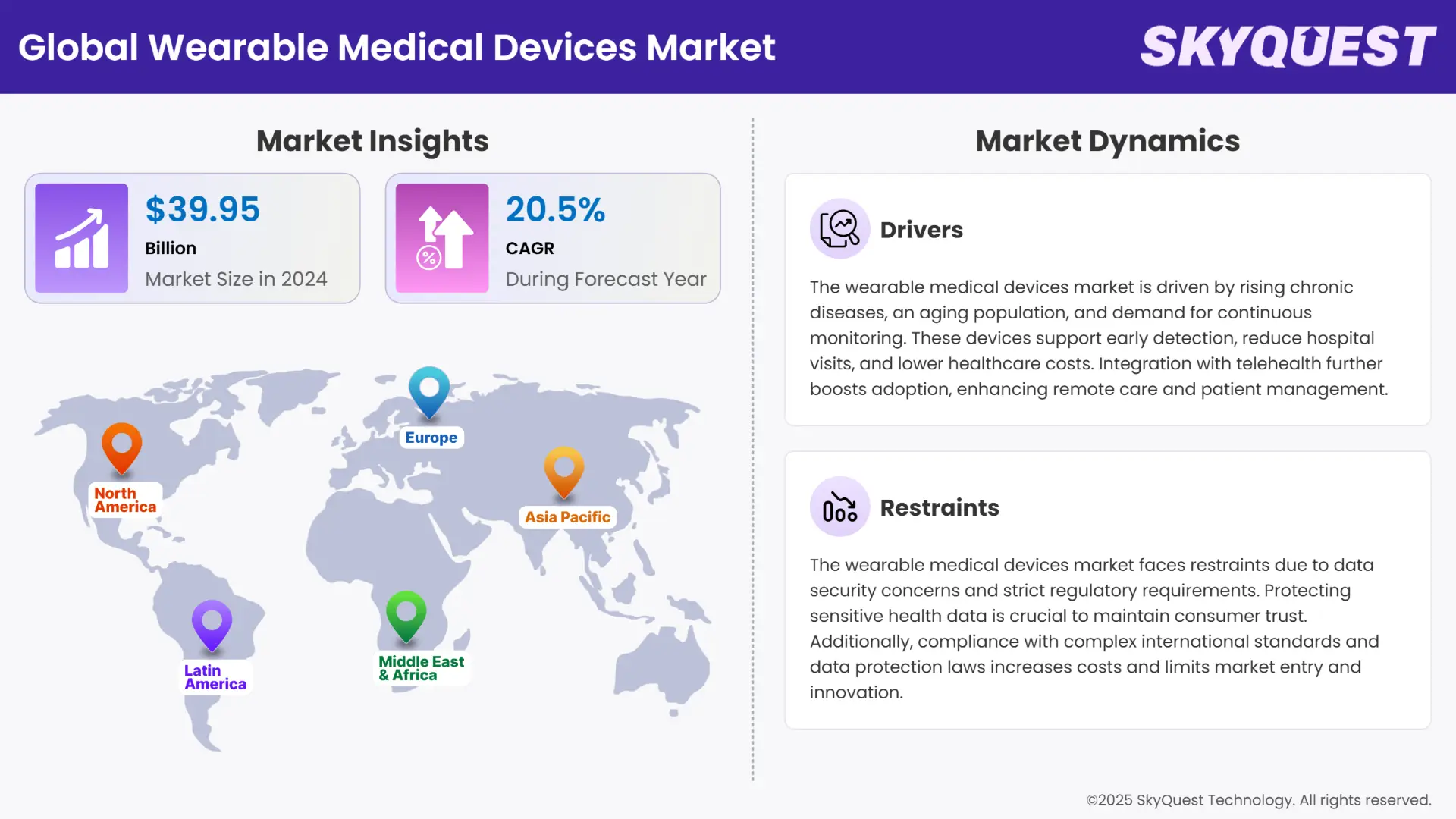
Global Wearable Medical Devices Market size was valued at USD 39.95 Billion in 2024 and is poised to grow from USD 48.14 Billion in 2025 to USD 213.99 Billion by 2033, growing at a CAGR of 20.5% in the forecast period (2026–2033).
Growing rates of chronic illnesses, aging population, and rising awareness of preventive healthcare are the main factors driving the global wearable medical devices market growth. Advances in AI, IoT, and sensor technology are also improving device outcomes. Accelerated regulatory approvals and favorable reimbursement policies are additional factors driving market expansion.
Moreover, the expansion of healthcare access in emerging economies, technological advancements, and strategic alliances have also resulted in increasing product development initiatives and market competitiveness. In addition, the wearable medical device sector has also grown significantly due to therapeutic developments and active product pipeline activities in recent years. However, the high costs of such devices and data privacy and security issues related to them act as huge blocks for market growth.
Since the wearable medical devices industry continuously invests in the development of new products, spending on research and development has played a significant role in the market's growth.
How is AI bringing Transformation to the Market?
Artificial Intelligence (AI) is transforming wearable medical devices market dynamics. AI helps with personalized, real-time health monitoring and predictive analytics. Wearable medical devices that use AI can provide proactive care by continuously collecting data and analyzing it. This, in turn, helps in early diagnosis and chronic disease management. This is steering the industry away from passive tracking and towards intelligent health solutions.
To get more insights on this market click here to Request a Free Sample Report
The global wearable medical devices market is segmented into product type, site, application, grade, distribution channel, and region. By product type, the market is classified into diagnostic devices, therapeutic devices. Depending on site, it is divided into handheld, headband, strap/clip/bracelet, shoe sensors and others. Depending on application, it is divided into sports and fitness, remote patient monitoring, home healthcare and others. According to grade, the market is categorized into consumer-grade and clinical. By distribution channel, the market is classified into online and offline. Regionally, the wearable medical devices market is analyzed across North America, Europe, Asia-Pacific, Middle East & Africa, and Latin America.
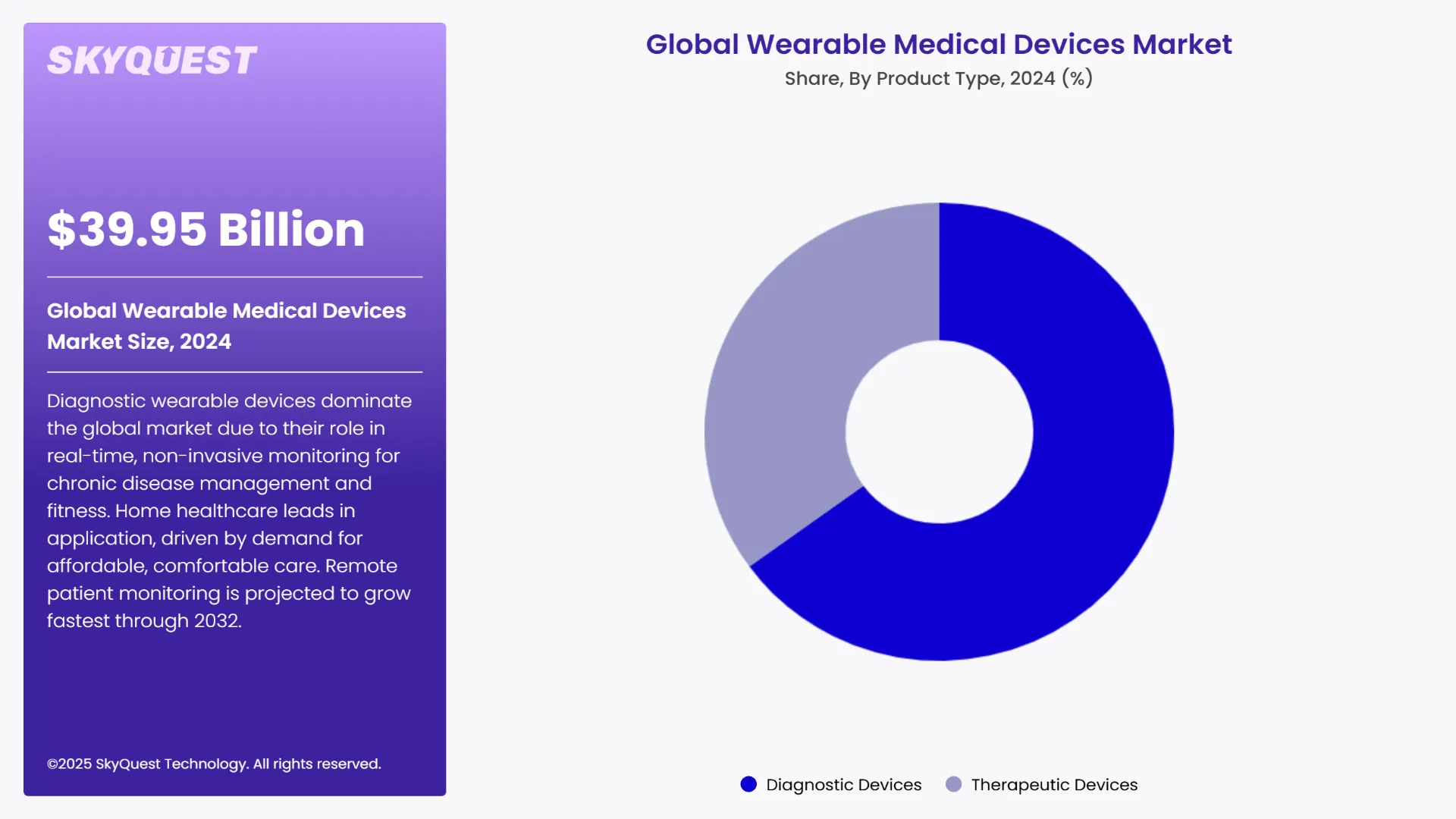
As per the 2024 global wearable medical devices market analysis, the diagnostic devices sub-segment held the largest share of revenue and controlled the market. Diagnostic wearable medical devices are widely used in vital sign monitoring, heart rate tracking, and continuous glucose monitoring. As they provide real-time, non-invasive insights, they are very useful in preventive healthcare, chronic disease management, and fitness tracking. People are becoming increasingly aware of the benefits of these devices in maintaining their health. Moreover, their integration with mobile health platforms and use in both clinical and consumer settings make them the most dominating type of product in the global wearable medical devices market.
The therapeutic wearable medical devices product category is expected to experience the highest compound annual growth rate (CAGR) through the forecasted period. Remote care solutions like insulin pumps, pain management systems, and rehabilitation tools are rising in demand among patients. The shift toward home healthcare is also contributing to its speedy growth. Enhanced usability, wireless connectivity, and expanding healthcare access are accelerating the adoption of these devices in both developed and emerging markets.
Based on the 2024 global wearable medical devices market forecast, the home healthcare category in the application segment dominated the market. The rising demand for chronic disease management, elderly care, and post-surgery recovery at home creates the need for wearable devices like glucose monitors, pulse oximeters, and blood pressure monitors. The preference of patients for at-home medical care, both from a cost-effectiveness and patient comfort point of view, continues to cause the widespread adoption of wearable devices in this segment.
The remote patient monitoring category is expected to have the highest growth rate during the forecast period of 2025-2032. Accelerated by the rise in chronic conditions, an aging global population, and increasing healthcare digitalization, this category sees use of wearables to transmit real-time health data to clinicians. The COVID-19 pandemic highlighted the need for non-contact care solutions. This pushed investments in remote technologies.
To get detailed segments analysis, Request a Free Sample Report
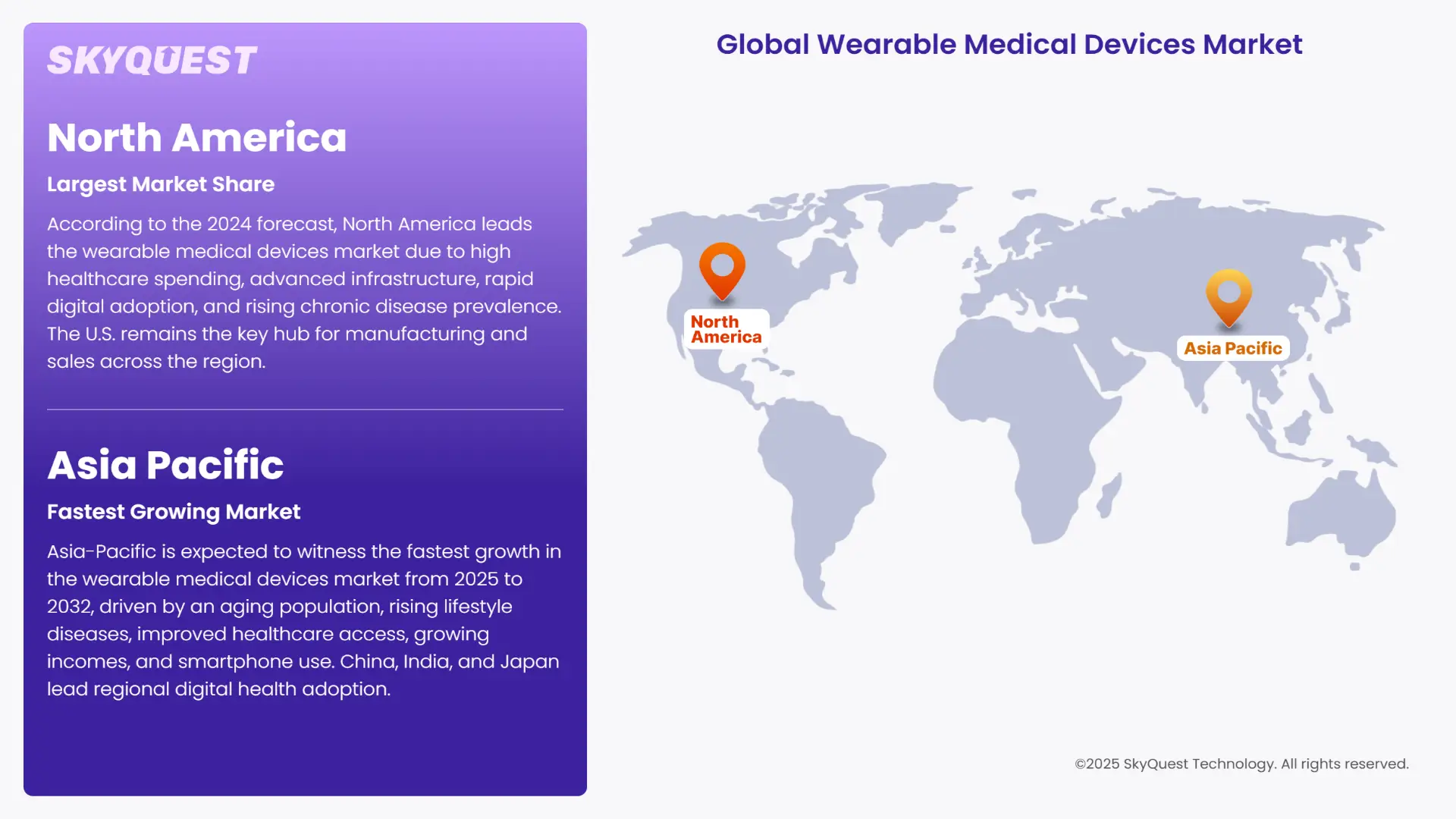
As per the 2024 regional forecast, the North American wearable medical devices market growth is predicted to hold the largest share among all regions in 2024. The high spending the region observes on healthcare along with factors such as rapid adoption of digital technologies in healthcare by people in the region and advanced medical infrastructure all contribute to its growth. The rising prevalence of chronic diseases also continues to spur adoption in the region. The US emerges as the hub for wearable medical devices manufacture and sales in the region.
U.S. Wearable Medical Devices Market
In North America, U.S. leads the wearable medical devices market share especially due to its advanced healthcare infrastructure, strong consumer awareness, and high adoption of digital health technologies. Many key players in the market such as Abbott Laboratories, Dexcom, Insulet Corporation, Boston Scientific, etc. are headquartered here. Increasing regulatory approvals have also played a key role in the wearable medical devices market growth.
Canada Wearable Medical Devices Market
Canada wearable medical devices market growth is focused on preventive care, aging population, and chronic disease management. Canadians are showing openness to smart health technologies. Collaborations between healthcare institutions and tech developers are encouraging innovation and product launches.
Asia-Pacific is predicted to grow at the highest rate in the wearable medical devices market growth over the projection period of 2025-2032. The growth in the region is led by the rising aging population and prevalence of lifestyle diseases among people in this region. Other factors such as expanding healthcare access, growing middle-class incomes, and increasing smartphone penetration also support greater adoption of health wearables. China, India, and Japan serve as major hubs of digital health ecosystems. All of these factors contribute to the fast rate at which the Wearable Medical Devices Market of Asia Pacific is growing.
China Wearable Medical Devices Market
The China wearable medical devices market expansion can be credited to various reasons. This expansion can be due to a changing market landscape that has strong government support for innovation in healthcare, rapid adoption of digital technologies, and high healthcare spending. It is home to global giants like Huawei and Xiaomi who have made wearables widely accessible.
Japan Wearable Medical Devices Market
Japan’s wearable medical devices market growth is spurred by its well-established healthcare system, aging population, high standards in healthcare, and adoption of medical technology at an early stage. Strong regulatory support, local innovation from companies like Omron Healthcare and Asahi Kasei Group, have also played huge roles in positioning Japan as an influential market for wearable medical devices.
Europe held a significant wearable medical devices market share in 2024 and is likely to continue so during the forecast period of 2025-2032. This can be due to the rising adoption of preventive healthcare and remote patient monitoring technologies in the region. Europe also benefits from supportive regulatory frameworks, an aging population, and increasing chronic disease incidence. Major markets like Germany, France and the UK lead growth, while other countries in the region also contribute to market growth.
Germany Wearable Medical Devices Market
Germany has the largest European market for wearable medical devices. Its growth is supported by strong healthcare infrastructure and digital transformation initiatives. The country’s focus on connected healthcare and reimbursement support for digital health applications has also encouraged adoption. The tech-savvy consumers drive uptake of wellness-focused devices. Germany’s regulatory and manufacturing ecosystem also encourages innovation and expansion of the market.
France Wearable Medical Devices Market
The France wearable medical devices market share is also experiencing steady growth. The market benefits from its government’s investments in digital healthcare transformation and growing demand for remote monitoring. French consumers are showing increasing acceptance of smart health technologies, while hospitals and care providers are incorporating wearables for patient data tracking in real-time. This makes the French Wearable Medical Devices Market a highly opportune market in upcoming years.
To know more about the market opportunities by region and country, click here to
Buy The Complete Report
Prevalence of Chronic Illness and Increase in Geriatric Population
Reduction of Healthcare Costs and Telehealth Integration
Data Security and Privacy Concerns
Regulatory and Compliance Concerns
Request Free Customization of this report to help us to meet your business objectives.
The competition in the wearable medical devices market is high. Key manufacturers focus on maximizing their business scope by reaching into new markets and developing new wearable medical technologies and devices. Companies like Medtronic, Abbott, and Dexcom focus on their products’ R&D, FDA approvals, and strategic partnerships to maintain leadership. For example, in the July of 2024, Linxens, a manufacturer of electronic components, and Nocturnal, wearable and implantable medical devices, partnered with each other to accelerate the development and commercialization of advanced wearable and implantable medical devices. They combined Linxens' expertise in biosensors and mass manufacturing with Nocturnal's specialization in ultra-low power medical hardware and software. Such alliances shape the competitive landscape of the market.
Miniaturization and Multi-Parameter Sensing
Expansion of B2B2C Distribution Models
SkyQuest’s ABIRAW (Advanced Business Intelligence, Research & Analysis Wing) is our Business Information Services team that Collects, Collates, Correlates, and Analyses the Data collected using Primary Exploratory Research backed by robust Secondary Desk research.
As per SkyQuest analysis, advancements in technologies and growing cases of chronic diseases are fueling the wearable medical devices market. However, high priced wearable medical devices and reliability and accuracy concerns are some of the major hampering factors for wearable medical devices market growth. North America is anticipated to lead the market due to growing technological developments, supportive government regulations, and heavy healthcare investments. Asia Pacific emerges as the fastest growing region in the market. Moreover, the growing focus on preventive healthcare and better connectivity and IoT integration are a few opportunities for market growth.
| Report Metric | Details |
|---|---|
| Market size value in 2024 | USD 39.95 Billion |
| Market size value in 2033 | USD 213.99 Billion |
| Growth Rate | 20.5% |
| Base year | 2024 |
| Forecast period | 2026–2033 |
| Forecast Unit (Value) | USD Billion |
| Segments covered |
|
| Regions covered | North America (US, Canada), Europe (Germany, France, United Kingdom, Italy, Spain, Rest of Europe), Asia Pacific (China, India, Japan, Rest of Asia-Pacific), Latin America (Brazil, Rest of Latin America), Middle East & Africa (South Africa, GCC Countries, Rest of MEA) |
| Companies covered |
|
| Customization scope | Free report customization with purchase. Customization includes:-
|
To get a free trial access to our platform which is a one stop solution for all your data requirements for quicker decision making. This platform allows you to compare markets, competitors who are prominent in the market, and mega trends that are influencing the dynamics in the market. Also, get access to detailed SkyQuest exclusive matrix.
Table Of Content
Executive Summary
Market overview
Parent Market Analysis
Market overview
Market size
KEY MARKET INSIGHTS
COVID IMPACT
MARKET DYNAMICS & OUTLOOK
Market Size by Region
KEY COMPANY PROFILES
Methodology
For the Wearable Medical Devices Market, our research methodology involved a mixture of primary and secondary data sources. Key steps involved in the research process are listed below:
1. Information Procurement: This stage involved the procurement of Market data or related information via primary and secondary sources. The various secondary sources used included various company websites, annual reports, trade databases, and paid databases such as Hoover's, Bloomberg Business, Factiva, and Avention. Our team did 45 primary interactions Globally which included several stakeholders such as manufacturers, customers, key opinion leaders, etc. Overall, information procurement was one of the most extensive stages in our research process.
2. Information Analysis: This step involved triangulation of data through bottom-up and top-down approaches to estimate and validate the total size and future estimate of the Wearable Medical Devices Market.
3. Report Formulation: The final step entailed the placement of data points in appropriate Market spaces in an attempt to deduce viable conclusions.
4. Validation & Publishing: Validation is the most important step in the process. Validation & re-validation via an intricately designed process helped us finalize data points to be used for final calculations. The final Market estimates and forecasts were then aligned and sent to our panel of industry experts for validation of data. Once the validation was done the report was sent to our Quality Assurance team to ensure adherence to style guides, consistency & design.
Analyst Support
Customization Options
With the given market data, our dedicated team of analysts can offer you the following customization options are available for the Wearable Medical Devices Market:
Product Analysis: Product matrix, which offers a detailed comparison of the product portfolio of companies.
Regional Analysis: Further analysis of the Wearable Medical Devices Market for additional countries.
Competitive Analysis: Detailed analysis and profiling of additional Market players & comparative analysis of competitive products.
Go to Market Strategy: Find the high-growth channels to invest your marketing efforts and increase your customer base.
Innovation Mapping: Identify racial solutions and innovation, connected to deep ecosystems of innovators, start-ups, academics, and strategic partners.
Category Intelligence: Customized intelligence that is relevant to their supply Markets will enable them to make smarter sourcing decisions and improve their category management.
Public Company Transcript Analysis: To improve the investment performance by generating new alpha and making better-informed decisions.
Social Media Listening: To analyze the conversations and trends happening not just around your brand, but around your industry as a whole, and use those insights to make better Marketing decisions.
REQUEST FOR SAMPLE
 REQUEST FREE CUSTOMIZATION
Major advancements in technology such as multi-parameter sensing, miniaturization, artificial intelligence (AI), and remote patient monitoring are transforming the functionalities of products, enhancing outcomes, and allowing for new use-cases across hospital and home settings.
New participants in these markets face substantial hurdles such as development costs associated with new devices, very complicated runway for local and international regulatory compliance, cumbersome data privacy laws, and meeting international medical device criteria and standards like ISO and GDPR.
A shift in consumer preferences toward home-based care trends such as fitness monitoring, remote care, and chronic disease management has created demand for real-time non-invasive devices, fostering innovation in usability, portability, and integration in mobile health.
A robust regulatory framework can promote growth via quicker approvals, reimbursements and new services, but regulations can also prove barriers to growth because of the high cost associated with regulation and compliance with international standards and others like GDPR which impact on data protection laws.
Industry partnerships to accelerate innovation, commercialization and technology collaboration through expertise. For example, through Linxens partnership with Nocturnal accelerated the enhancement of a new wearable device developed through biosensors integrate into ultra-low power hardware.
Estimates project that rapid growth will come in wearables therapeutics segments, particularly in remote care applications such as insulin pumps, and pain management devices driven by demand for home health care, and to provide wireless, simple technologies (that are useful).
Global Wearable Medical Devices Market size was valued at USD 39.95 Billion in 2024 and is poised to grow from USD 48.14 Billion in 2025 to USD 213.99 Billion by 2033, growing at a CAGR of 20.5% in the forecast period (2026–2033).
Dexcom Inc., Medtronic plc, Abbott Laboratories, Masimo Corporation, iRhythm Technologies Inc., Koninklijke Philips N.V., Omron Corporation, VitalConnect, Biotricity, Biobeat, iHealth Labs Inc., Withings, Garmin Ltd., Verily Life Sciences LLC, Boston Scientific, PHC Holdings (Senseonics), Asahi Kasei Group (ZOLL Medical), Biotronik, Cardiac Insight Inc., VivaLNK Inc.
The key driver of the wearable medical devices market is the increasing demand for remote health monitoring and personalized healthcare solutions, driven by rising chronic disease prevalence, aging populations, technological advancements, and growing consumer interest in proactive health management.
A key market trend in the wearable medical devices market is the integration of advanced technologies, including IoT, AI, and biosensors, enabling real-time monitoring, data analytics, and seamless connectivity with healthcare platforms for personalized and continuous patient care.
North America accounted for the largest share in the wearable medical devices market, driven by advanced healthcare infrastructure, high adoption of digital health technologies, strong R&D investments, and growing awareness of remote patient monitoring and preventive healthcare solutions.


Want to customize this report? This report can be personalized according to your needs. Our analysts and industry experts will work directly with you to understand your requirements and provide you with customized data in a short amount of time. We offer $1000 worth of FREE customization at the time of purchase.
Feedback From Our Clients


 USA (+1) 351-333-4748

